
Is democracy really the form of government citizens want?
Democracy is in trouble around the world and autocrats are on the rise. Why is there such dismay over the West’s predominant form of...
Read More
Democracy is in trouble around the world and autocrats are on the rise. Why is there such dismay over the West’s predominant form of...
Read More
Marie Colvin started as a journalist writing for a New York trade union. She ended up a war correspondent who changed people’s lives. Medical...
Read MoreSusan Ruel reflects on the life and career of Marie Colvin, an accomplished foreign correspondent killed in Syria in 2012. Colvin reported on major conflicts in Europe, the Middle East, Africa and Asia, believing someone has to go there and see what is happening. “She always told the stories of the ordinary men and women who bore the consequences of the power struggles and wars waged by political leaders,” Committee to Protect Journalists Executive Director Robert Mahoney said. With more journalists murdered or missing this year than in nearly all of 2021, the rights of journalists in war zones cannot be taken for granted.
Exercise: Ask students to discuss how media coverage of war and conflict zones has evolved and what they think accounts for the increased threat against journalists.

Russia’s invasion of Ukraine has pushed the global total of refugees to over 100 million. Refugees are like you and me — but not always...
Read More
How we perceive events like the war in Ukraine depends on our news sources. While never perfect, news media perform invaluable services. Russian...
Read MoreOUR CORRESPONDENTS Students in our programs benefit from a team of experienced foreign correspondents. News Decoder correspondents have worked for...
Read More
More than two-thirds of the world’s population live in nations that have not denounced Russia’s invasion of Ukraine. Some Cold War bonds...
Read More
We asked News Decoder correspondents why young people should care about Russia’s invasion of Ukraine. Here’s what they said. An...
Read MoreRussia’s invasion of Ukraine dominates the news. With so much changing so rapidly, it can be difficult to get a big picture view of the context, implications and side effects of the attacks. When you live far away from the conflict, it can be difficult to know why you should care, with all the other problems in the world, and what — and who — to believe.
In this compilation, News Decoder correspondents offer different perspectives to consider about the war in Ukraine and potential consequences around the globe — and even in space. They bring decades of experience covering politics, foreign affairs and conflict — many having been based in Russia and Eastern Europe — to help place the invasion in a larger context. Their commentary provides a launching point for discussion.
Exercise: Ask students what questions they have about Ukraine and how the conflict might have an impact on your country.

The term “woke” is caught up in America’s divisive culture wars. Will citizens in other nations adopt the notion describing those...
Read More
Thousands of refugees are in limbo in a forest straddling Poland and Belarus, caught in a humanitarian vice that is raising tensions in Europe. A...
Read More
After Kabul fell to the Taliban, the hurried evacuation of Afghans and COVID-19 have complicated efforts to find the refugees new homes overseas. A...
Read More
In 1958, 4% of Americans approved of marriages between Blacks and whites. Now 94% approve. Data shows increasing racial tolerance in the U.S....
Read More
Primitive tribes helped topple the powerful Roman Empire. Did attacks on the U.S. by Islamist extremists 20 years ago augur the end of a superpower?...
Read MoreWe often hear that history repeats itself. A core tenet of News Decoder’s mission is to help students place current events in a broader historical context. Correspondent Gene Gibbons looks beyond today’s headlines all the way back to ancient Rome to show how pride, corruption, strategic overreach and other political mistakes have contributed to the decline of superpowers, then and now.
Exercise: Ask students to debate the question in the headline, providing evidence for their position.

My generation was born after 9/11. Twenty years after that day, the attacks resonate with us, but we need historical context to grasp why they...
Read More
The world’s population is aging. How are we to pay for the pensions and healthcare of a burgeoning number of elderly? Elderly exercise with...
Read MorePopulation growth has long been seen as a threat to humanity, and government efforts to limit births have either failed (India) or led to imbalances and inequities (China). Bernd Debusmann takes a look at the problems that a slowing rate in population growth poses for societies — problems that younger generations will need to manage in coming decades. Global aging will require tough decisions so societies can support the elderly — decisions your students will be asked to make.
Exercise: Ask your students to examine their country’s demographic trends and to compare its policies with those pursued by nations with a similar demographic outlook.

Emboldened by the COVID-19 pandemic, autocrats are strengthening their grip around the world as democracy steadily loses ground. Police arrest a...
Read More
The U.S. Republican Party is badly split and America’s politics dysfunctional. Is there a way out of this mess? The Peace Monument, also known...
Read More
Donald Trump’s “Big Lie” — that Joe Biden stole the U.S. presidential election — has stoked a domestic revolt and tarnished...
Read More
Donald Trump knit close ties with Israel and Saudi Arabia. The new U.S. administration under Joe Biden is reassessing relations with the Middle...
Read More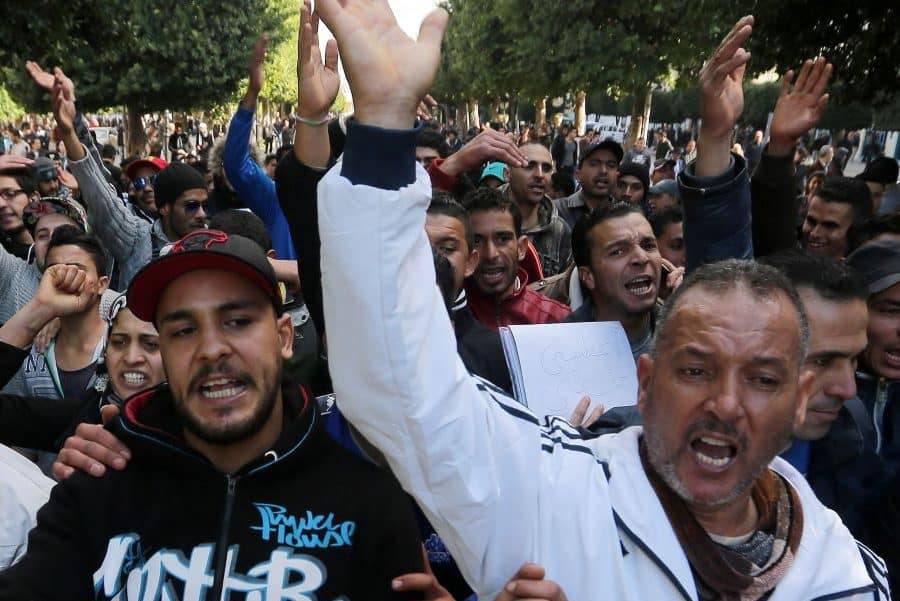
My friend Zied was bright and destined for a great career. Instead, he quit school — like so many students in Tunisia who opt for dropping out....
Read More
Once again, polls forecasting the outcome of a U.S. election were way off target. Why are pollsters so often wrong? Can polls be made more accurate?...
Read More