
Investigative reporters make good movie characters. In reality, the work isn’t sexy or exciting. But it is important. And more important, even you can do it.
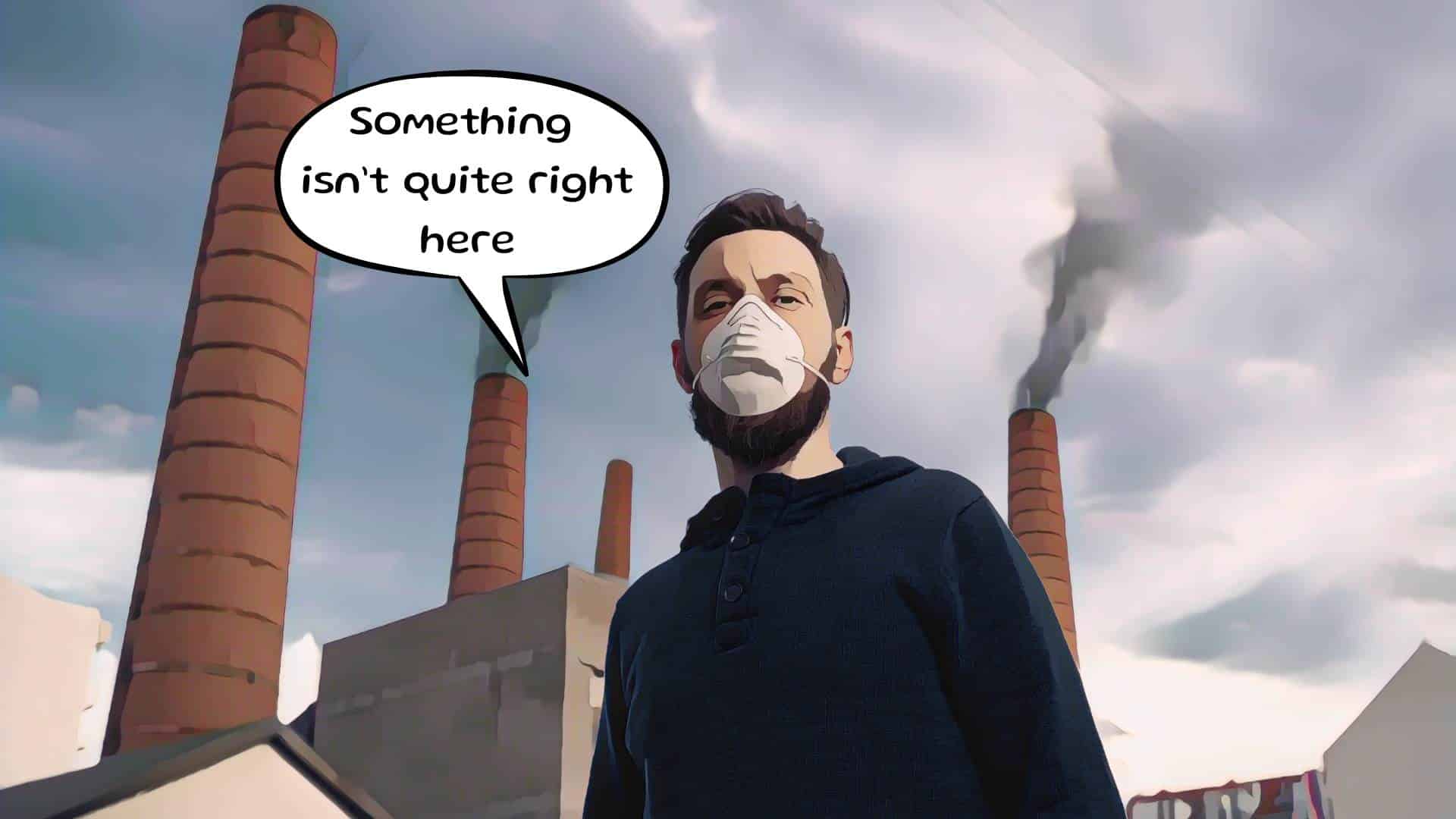
A man wonders if there is something wrong when a factory spews pollution. (Illustration by News Decoder)
Hollywood loves investigative reporters. The actors Denzel Washington, Cate Blanchett, Octavia Spencer, Jennifer Lopez, Mel Gibson, Constance Wu, Clint Eastwood, Jake Gyllenhaal and Daniel Craig all played them.
In the movies they bring down whole crime syndicates, evil corporate moguls and corrupt governments. They solve murders and save lives.
In reality, most investigative reporting isn’t so sexy or earthshaking. But it is important. Most journalists who do investigative reporting don’t call themselves investigative reporters. To them, going deep into a story to expose truth is just part of what it means to be a journalist.
So what is investigative journalism and how can you be an investigative reporter?
It starts with the sense that something is not quite right. It might be a community where no one will swim in the local lake. Or realizing that people within a four-mile radius have no food market. Or discovering that way more people are dying of cancer in one part of a state or country than another. Maybe schools in one district are way better funded than in the next one over.
Taking time to sort out the truth
What makes investigative journalism different is that once the reporter discovers that something might be wrong, they start seeking answers in different places and in different ways. They look for documents and data that establish there is a problem and talk to people who might be affected by the problem, as well as experts who can point them in the right direction and help them understand the situation.
This is different from daily reporting, where someone covers a press conference or riot or sports game — some event that needs to be reported immediately. Both forms of journalism are important. But to investigate a story means asking questions about things that aren’t announced, that aren’t getting any attention.
These stories sometimes take a long time to do, but not always. Sometimes it is just observing something not right: elevators in public buildings with long-expired safety inspection permits, or a food market in a poor neighborhood with much higher prices than one owned by the same company but in a wealthy neighborhood.
It wouldn’t be hard to find people affected by these problems: an elderly person who would be trapped if an elevator broke down, or shoppers who have to make hard choices about what foods they buy to feed their families. These stories can be done relatively quickly.
A story can mushroom.
Sometimes a small story done quickly ends up being a long story explored over months. In asking about that elevator permit, someone in the maintenance department tells you that’s the least of the problems and that the university or city buildings are so badly maintained they are a disaster waiting to happen.
Or you do a quick story on expired permits in elevators and people start contacting you about places where elevators keep breaking down and no one fixes them. Then elevator inspectors start calling you because their companies pay so poorly they can’t fill the jobs.
Then elevator companies contact you to explain how the laws regulating safety in buildings make no sense. So you end up writing one story after another as more people come forward and you have more things to report. The story widens and becomes even more important.
There are three things that make a story an investigative story:
1. There is a problem that affects people.
2. The reporter establishes the problem exists by some kind of evidence: anecdotal maybe by people who have been directly affected, or reliable documents or data. They don’t just report rumors or suspicions that something is happening.
3. The reporter takes the time to talk to the people affected by the problem, people with expertise and those in a position to do something about the problem.
Curiosity is the key.
There are common misconceptions. Investigative reporting is rarely about trying to convince people to talk who won’t. Mostly it is about taking the time and energy to find the people who are willing to talk or give you information in some way.
Investigative reporting isn’t any more dangerous than any other form of journalism. You are probably in more danger covering a political protest. War reporting is definitely more dangerous. You don’t need a particularly thick skin. You just need to be curious and stubborn.
Anyone can be an investigative reporter. Just be careful that you don’t make accusations against any person or organization without evidence to back that up. If you make accusations that turn out to be false you could be sued for libel and just fighting those types of lawsuits can bankrupt a person.
Investigative stories take more initiative and effort than what we call bread and butter journalism — the coverage of everyday events — but they can be deeply satisfying. Sometimes they lead to change. Laws get written or amended, money is budgeted, crimes get investigated, bad practices get stopped.
So what is investigative reporting? Simply asking questions that no one seems to be asking about problems that seem to be overlooked or ignored.
And those problems are everywhere, even in your city or town.
Questions to consider:
1. How is investigative reporting different than “bread and butter” reporting?
2. Whats one trait you need to be an investigative reporter?
3. Can you think of a problem in your school or area that you think should be investigated?

Marcy Burstiner is the educational news director for News Decoder. She is a graduate of the Columbia Journalism School and professor emeritus of journalism and mass communication at the California Polytechnic University, Humboldt in California. She is the author of the book Investigative Reporting: From premise to publication.
💡 More Tips Like This
This story is part of News Decoder’s open access learning resources.
Whether you’re a secondary student, studying at university or simply interested in learning new things, we can help you build your journalism skills and better understand big global issues.
If you are a student or a member of a News Decoder Club, check out our other learning resources.
If you are a teacher, check out our other classroom resources:
- News in the Classroom
- Educator’s Catalog of classroom exercises
And ask us about joining the News Decoder Club program.