Can we explain mass shootings in places like the Czech Republic or Serbia as American-influenced phenomena or is something else going on? We turned to one expert to learn more. Jason Silva. (Photo courtesy of Jason Silva) On 21 December 2023, Charles University in...
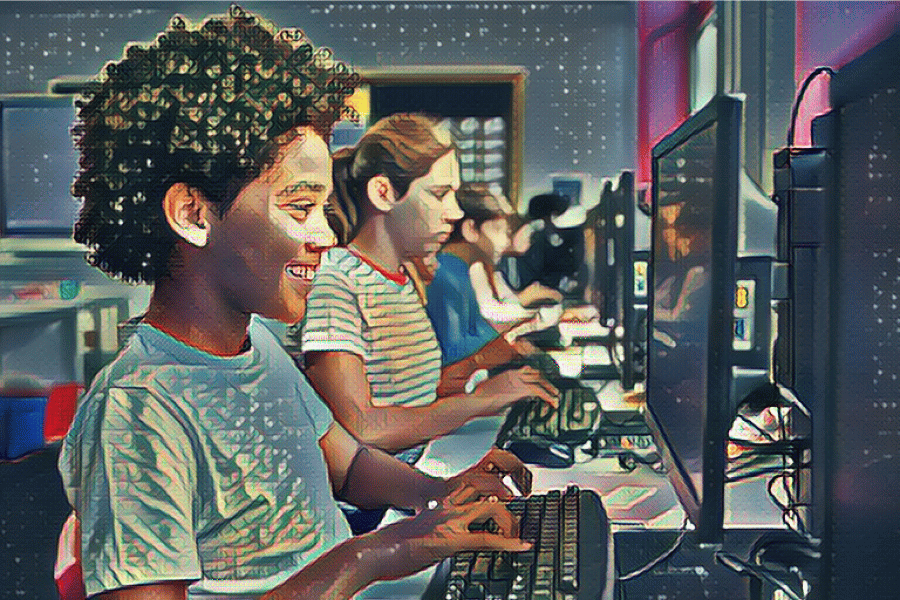
We turn to technology to solve our problems but most of it is designed by men. One woman believes girls can program their own solutions. Girls sit in front of computers as they learn to code. (Photo illustration by News Decoder) This article, by high school student...
Making sure wealthy countries can’t dump their plastic waste on poor nations is important. But how can we stop producing it in the first place? A man walks on a mountain of plastic bottles as he carries a sack of them to be sold for recycling after weighing them...
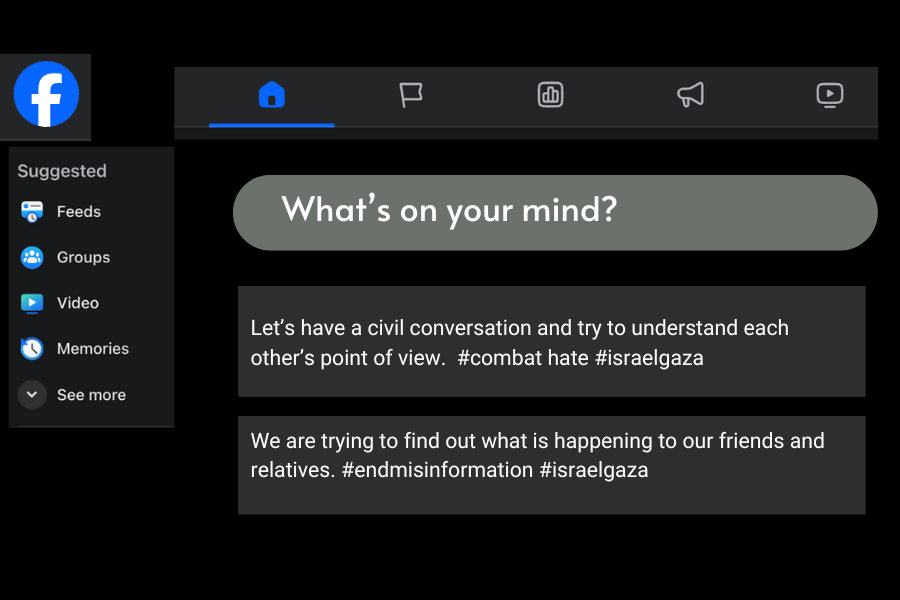
From Gaza to Israel to the United States some people are turning to social media for civil discussion. Can we stop disinformation about the Middle East? Posts on an imaginary social media page calling for civil dialogue about the Middle East. (Illustration by News...
Social media can be a double-edged sword — with the power to unite and to divide. How can students differentiate between disinformation and credible content? Journalism undergraduate student Ella Gorodetsky from the University of Wisconsin-Madison looks at social media posts about the Israel-Hamas war to investigate.
Exercise: After reading the article together, have students come up with a social media campaign to stop the spread of disinformation. In 160 characters or less, students should invent a catchy slogan to help others distinguish between credible and fake content. This activity should be done in groups of 2-3.
One parishioner argues that the Church should welcome gay members. The Pope is just now cracking open the door by offering a small blessing. Vatican City with an LGBT flag superimposed to seem waving in welcome. Photo illustration by News Decoder. Editor’s note:...
The Kurdish people in North Syria are attacked by Turkey to the north and Syria to the south. No one wants them there but they have nowhere to go. People attend the funeral of four Kurds in the town of Jinderis, Syria, 21 March 2023. The assailants shot the Kurdish...
Walk the streets of Zaragoza and Moorish architecture catches your eye. But learning about the history of the Moors in Spain takes more effort. The Palacio de Aljafería in Zaragoza, Spain. (Credit: Joshua Glazer) This article by high school student Joshua Glazer was...
For the 14th News Decoder Storytelling Competition, the winning stories tackled human trafficking, river conservation and climate change. In its first year of working with News Decoder, the Tatnall School in the U.S. state of Delaware took both first and second prizes...
It is hard on teens when families move to cities far away. What happens when you must move to a new country, again and again? Packed boxes in a house. Credit: Brazzo/Getty Signature Images This article, by high school student Marta Jansone, was produced out of News...
Lots of people watch whales. But telling males and females apart and one whale from another takes special expertise. One researcher is using AI to do that. A whale leaps out of the water. Credit: Josianne Bouffard This article, by high school student Keya Dutt, was...
This piece, by youth correspondent Keya Dutt of News Decoder partner institution School Year Abroad, dives into the world of marine science and artificial intelligence. Through interviews with a veterinarian working with whales off the coast of Mozambique, the article discusses the implications of AI for experts trying to learn more about life under the sea.
Exercise: Artificial intelligence has varying effects on different groups of people. Help students adopt multiple perspectives by engaging in a “Circle of Viewpoints” activity after reading the article. In groups of five, students will each adopt a distinct persona to answer the following questions: Should artificial intelligence be allowed in secondary schools? What, if any, should be the limitations to using this tool? Personas may range from: student, school principal, parent/guardian, classroom teacher, AI developer in your local community. In each group, give students 10 minutes to independently brainstorm the pros and cons of using AI in the classroom, then 20-30 minutes to come to a consensus as a group. All groups should then share their final conclusions with the class and reflect on the process of adopting multiple perspectives.