
by Helen Womack | 25 Jan 2021 | Europe, Human Rights, Politics
Vladimir Putin has ruled Russia with an iron fist for two decades. Now, dissident Alexei Navalny is testing the Kremlin leader’s enduring grip on power. Demonstrators clash with police during a protest against the jailing of opposition leader Alexei Navalny in...

by Natasha Comeau | 13 Jan 2021 | Americas, Educators' Catalog, Health and Wellness, Human Rights
Overcrowding, a flow of migrants, lack of resources — so many reasons Indigenous communities in Canada and elsewhere are vulnerable to COVID-19. Carol Dube, husband of Joyce Echaquan, is hugged by one of his sons as he breaks down while reading a statement in...
COVID-19 is a monumental news story, and Natasha Comeau has trained her reporting lens on Indigenous communities in Canada to capture a larger truth — that underprivileged peoples around the world are suffering disproportionately from the coronavirus. Her reporting is supported by an interview with an expert who predicted how many ventilators hospitals would need for COVID-19 by studying the H1N1 virus, which struck the United States in 2009. Comeau’s story is an example of how scientific research, on the surface obscure, is actually relevant to everyday concerns. Like MacCorkle, she uses simple language that non-experts can understand, ensuring the piece resonates with a broader audience.

by Barry Moody | 7 Jan 2021 | Europe, Government, Nationalism
Despite a Brexit deal with the EU, Boris Johnson’s popularity as UK leader has plunged as COVID-19 wreaks havoc, with his foibles on display. British Prime Minister Boris Johnson departs 10 Downing Street for parliament in London, 30 December 2020. (EPA-EFE/ANDY...

by Natalie Jesionka | 31 Dec 2020 | Americas, Health and Wellness, University of Toronto Journalism Fellows
A Honduran nonprofit that builds schools and tackles poverty hopes to outlast the pandemic. Its financial hardship is shared by nonprofits globally. Shin Fujiyama, fourth from left, and colleagues in Honduras (Photo courtesy of Shin Fujiyama) Shin Fujiyama has spent...

by Elena Townsend-Lerdo | 23 Dec 2020 | Contest winners, Contests, Educators' Catalog, Human Rights, Student Posts, Thacher School, United States, Youth Voices
Incarcerated people in a California prison run a newspaper that raises awareness of social justice issues and offers a new chance to those in prison. Jonathan Chiu (Photo by Christie Goshe) This story won a third prize in News Decoder’s Ninth Storytelling...
Elena Towsend-Lerdo introduces us to a convicted murderer who finds redemption at a newspaper run by prisoners in California’s oldest jail. The San Quentin News is online and accessible to readers around the world. Townsend-Lerdo interviews Jonathan Chiu, who was released after serving 16 years of his 50-year sentence, and a journalism professor who trains prisoners, providing first-hand insight into incarceration and rehabilitation. Those are meaty issues, but the student at La Jolla Country Day School avoids sweeping statements to offer us a peek into the U.S. criminal justice system and a unique path to atonement. Who could your students interview to learn about criminal justice?

by Joy Chinaza | 9 Dec 2020 | Africa, African Leadership Academy, Contest winners, Educators' Catalog, Human Rights, Personal Reflections, Politics, Student Posts, Youth Voices
I joined protests against police brutality in my home country of Nigeria and saw them almost become a war, then a rude awakening for youth. Protesters in Umuahia, Nigeria, October 2020 (All photos courtesy of Eje Studios) This story was a runner-up in News...
Joy Chinaza takes us into the streets of Nigeria to join young people protesting against police brutality. Like youth elsewhere this year, she is driven by anger over rights abuses perpetrated by police charged with protecting civilians but who instead turn weapons against minorities. A shared sense of injustice motivates Chinaza and millions of others around the globe, making her story a metaphor for youthful outrage. But the personal details in the tale by the African Leadership Academy student, including the beating her own brother suffers, add poignancy that sets her account apart. Make sure students note how the first-person pronoun draws them into the story. And how her outrage — so common among youth — is tinged with ambiguity at the end.

by Stella Mapenzauswa | 7 Dec 2020 | Africa, Religion
Many Africans see religion as a path to prosperity. Self-professed prophets are soliciting church donations that bankroll their own lavish lifestyles. Anointing water from T.B. Joshua’s Synagogue, Church of All Nations in Johannesburg, South Africa, 14 February...
by Herchi Abdslem | 4 Dec 2020 | Africa
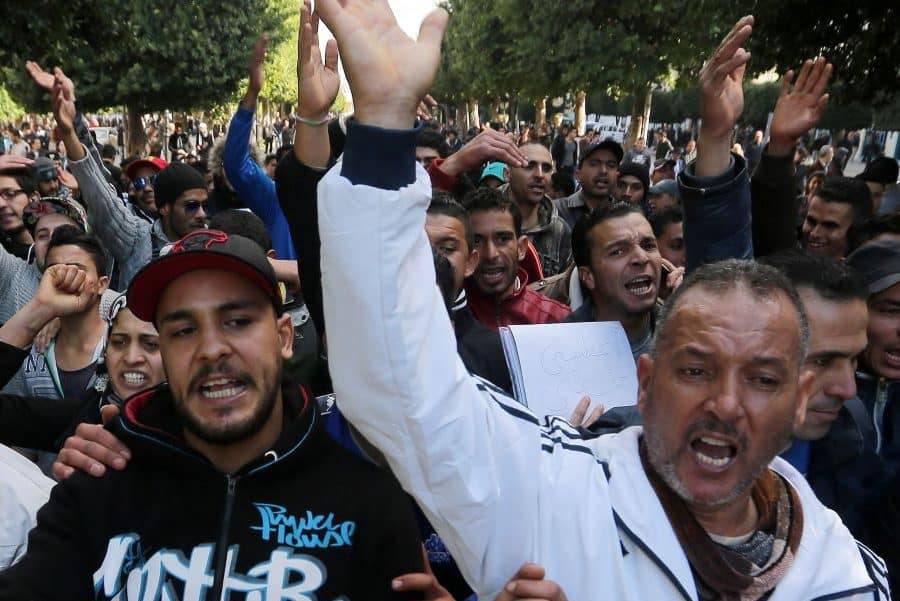
My friend Zied was bright and destined for a great career. Instead, he quit school — like so many students in Tunisia who opt for dropping out. Unemployed graduates demonstrate in Tunis, Tunisia, urging the government to provide them with job opportunities, 22 January...

by Jasmine Li | 1 Dec 2020 | China, Culture, Educators' Catalog, Health and Wellness, Student Posts, Westover School, Youth Voices
COVID-19 left me in limbo in the United States, full of fear and anger. Then I returned home to China to face criticism before reuniting with my family. An empty John F. Kennedy International Airport in New York (All photos by Jasmine Li) So this is where I am going...
The coronavirus pandemic has put strains on students, their families, schools, entire communities. But Jasmine Li, a Chinese student at Westover School in the United States, provides a first-person account of the special difficulties facing foreign nationals caught in limbo as COVID-19 triggered global travel restrictions. Li cannot return to her temporary home at school, and when she finally makes it home to China, she discovers some compatriots consider her a traitor and urge her to leave. Adolescence can be a difficult period of self-discovery, but Li’s painful experiences are the product of a globalized world that, in normal circumstances, offers extraordinary opportunities but which, during a pandemic, sees forgotten borders re-emerge. Ask each student to describe their most difficult moment during the pandemic. How do their experiences compare?

by Barry Moody | 1 Dec 2020 | Africa, Decoders, Educators' Catalog
A military conflict has broken out in Ethiopia, raising fears of instability and a humanitarian crisis in the strategic Horn of Africa. Tigray refugees in eastern Sudan, 22 November 2020 (AP Photo/Nariman El-Mofty) A military conflict in northern Ethiopia has raised...
Your students may have noticed news stories about Ethiopia of late. But most accounts skip the background and context that enable young people to understand why conflict there matters to them. Barry Moody, one of News Decoder’s most experienced correspondents, explains how fighting between federal forces and rebels is raising fears of a humanitarian crisis in one of the world’s most strategic regions. Can your students think of other repressive regimes that, when overthrown, yielded chaos and conflict? Led by a Nobel Peace Prize laureate, Ethiopia is a cautionary tale for those seeking quick, democratic reforms in ethnically diverse countries.
