
With so much health info online, many people scroll for medical advice instead of seeing a doctor. Is that bad?
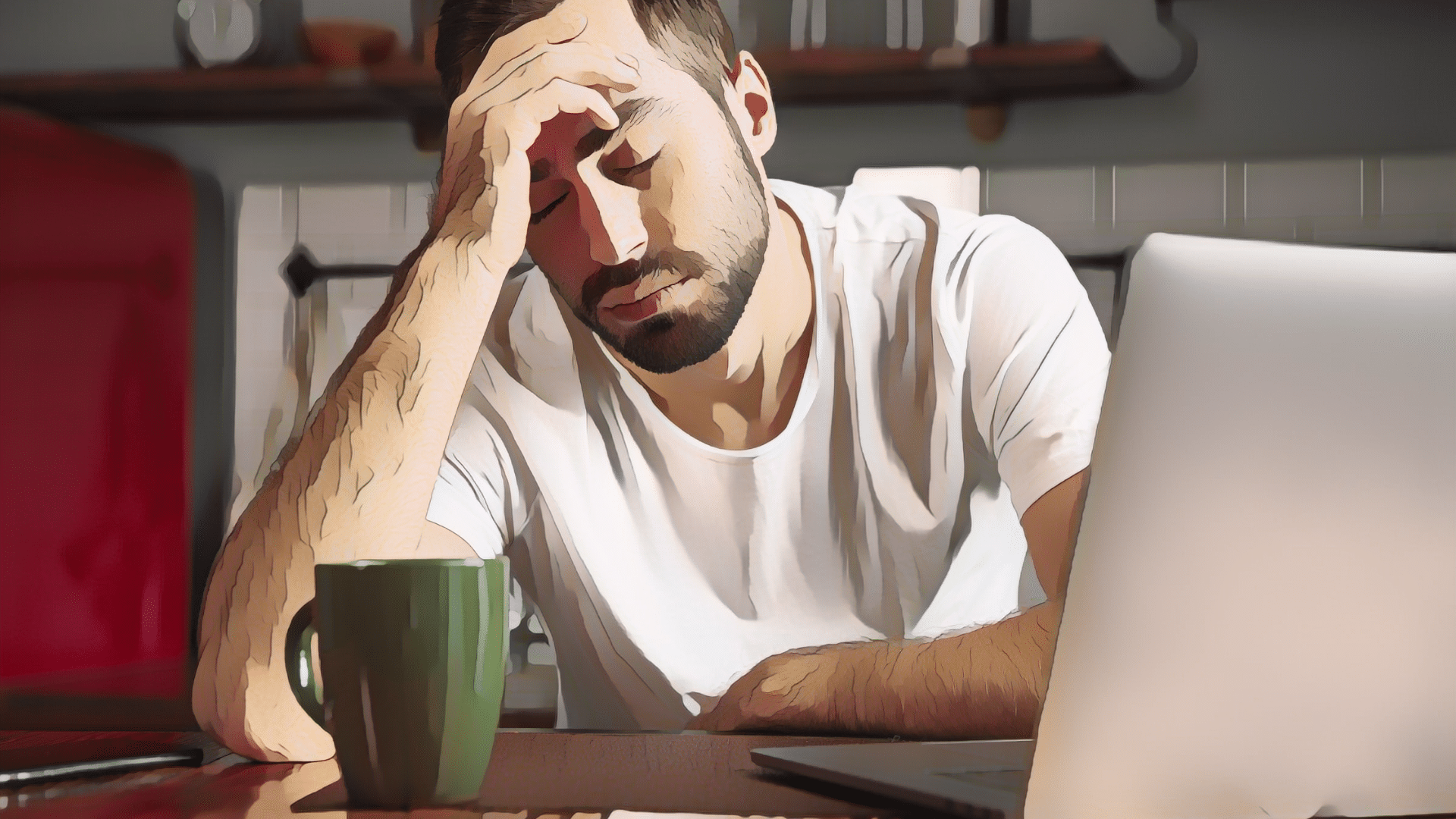
A man with a headache searches online for health information. (Credit: Dean Drobot)

This article is the third in our week-long series to recognize World News Day. Check out the other stories:
• Why people turn to trusted news only when they think they need it
• Why people avoid reading the news and why that is harmful
In all our articles, News Decoder strives to provide context to complex issues and teach global awareness through the lens of journalism. Explore how we work with classrooms and educational programs.
Five teaspoons of baking soda, four apricot kernels and treatments of black salve for cancer. Green juice cleanses, colonics and a strict supplement regime to kill parasites and heal gut health. Cinnamon for diabetes.
These are all examples of claimed “treatments” that have circulated online as supposed “cures” for the symptoms and diagnoses that people face daily.
When people read of cases where someone healed naturally from a chronic and life-threatening disease through scientifically-unproven and unconventional methods, they question who and what to trust when it comes to health information.
A detox diet to cure a sinus infection or a stomachache can seem more enticing than a trip to the doctor and an expensive round of antibiotics. Why go to the doctor at all if you can Google a diagnosis?
“Social media certainly is accessible and at your fingertips,” said Dr. Anish Agarwal, an emergency physician and digital health researcher. “This is both the power and potential danger in it. Nowadays it’s much easier for people to open their social media apps and come across someone giving health advice rather than trying to find and talk to a health care professional.”
You know your body, don’t you?
This outlook doesn’t come as a surprise, given that a 2024 Edelman Trust report found that 65% of people globally feel empowered to manage their own health.
People want more control over their health. A 2025 study by the nonprofit health information organization KFF found that more than half of the adults polled said they use social media to find health information and advice at least occasionally. Most adults, the study found, said that they had seen health-related content on social media within the previous month.
Through social media, people form parasocial relationships — one-sided psychological bonds with influencers, fictional characters or celebrities — that make them feel connected. This connection can make them more susceptible to trends.
When it comes to a vulnerable topic such as our health, people often feel uncomfortable talking to their friends and family and even their physician, but more comforted by influencers’ transparency and lived personal experiences and stories.
These can be powerful connections, said Jeff Niederdeppe, professor of communication and public policy at Cornell University and director of Cornell’s Health Communication Research Initiative.
“If you can make a connection with another human being, about how they experience a health issue, and resonate emotionally rather than just facts and knowledge, that tends to be important,” Niederdeppe said. “And I think what stories can do for good and bad is make connections without having to offer evidence of those connections, like, I did this thing, and then this other thing happened to me.”
Believability wins out.
Christopher McKinley, professor of communication and media studies at Montclair State University who specializes in health communication, said that regardless of how much data is out there on various digital platforms, people will see one story or one anecdote, and identify with that person’s experience.
“They’re engaged, they’re captivated in their story,” McKinley said. “It has emotional resonance for them.”
Online stories and anecdotes can seem more believable, he said. “And it resonates more with you, and it can influence your subsequent judgements and decisions, much more than data can,” McKinley said.
Social media has the power to create buzz and repetition around health messaging. After displaying repeated messaging to a cohort of 845 people, a 2023 study by the Harvard T. H. Chan School of Public Health revealed how social media algorithms are designed to promote engagement with repetitive content. That can lead to changed perceptions surrounding public health because users can see how popular an idea or influencer is.
“And that can lead people to make what we refer to as a kind of message shortcuts, mental shortcuts, saying, ‘Oh well if everybody’s clicking like, or everybody’s sharing this, then that must be true’,” McKinley said.
Power of repetition
Once a social media app customizes a user’s algorithm, similar messaging can begin to accumulate on a user’s feed over time. Niedereppe said that at some point a health message becomes so strong it can actually change someone’s behavior
“If I was to say, the single most important factor is repeated exposure to consistent messaging from different sources at different points in time,” he said.
Agarwal said that sharing health information through social media can foster a sense of community, but it doesn’t come without risks.
“I think the danger with health information on social media is that for the average person, you may not know the background of the person posting,” Agarwal said. “Remember anyone can share their thoughts or opinions on health on these platforms, but it does not make them an expert or someone you should trust with your own health decision making.”
Even certified doctors who take to social media to post about potential cures or treatments aren’t aware of each viewer’s personal medical history. McKinley said you should always talk to your doctor about any information you receive online.
“If you have the opportunity to verify that information with your provider, your doctor that you go to who really knows your personal experience, your personal health history, probably the most, that’s an important person to verify it with,” says McKinley.
Websites such as the Mayo Clinic, Centers for Disease Control, National Institute of Health and Medline Plus are verified websites that people can turn to for trusted and fact-checked health information. These websites are run by government health experts, medical scientists, epidemiologists and other healthcare professionals with extensive and certified knowledge in the field.
While social media and medical misinformation has made its mark in the world of public health, it has also opened doors for collaborative discussions between patients and doctors.
But that creates a challenge, said Niedereppe.
“We don’t always know in social media what is being paid for versus what is an authentic experience,” he said.
Questions to consider:
1. Why do you think many people avoid going to the doctor when they are sick?
2. What might a doctor provide that you might not get from an online health site or influencer?
3. Have you sought health information online and did it help you?

Haley Davis is a graduate of Indiana University, where she studied media advertising and psychology. She currently works in New York City and writes about health, media and emerging trends.