
When all hell breaks out you want to know what’s happening. But you can’t expect news producers to exist if you only support them when you think you need them.
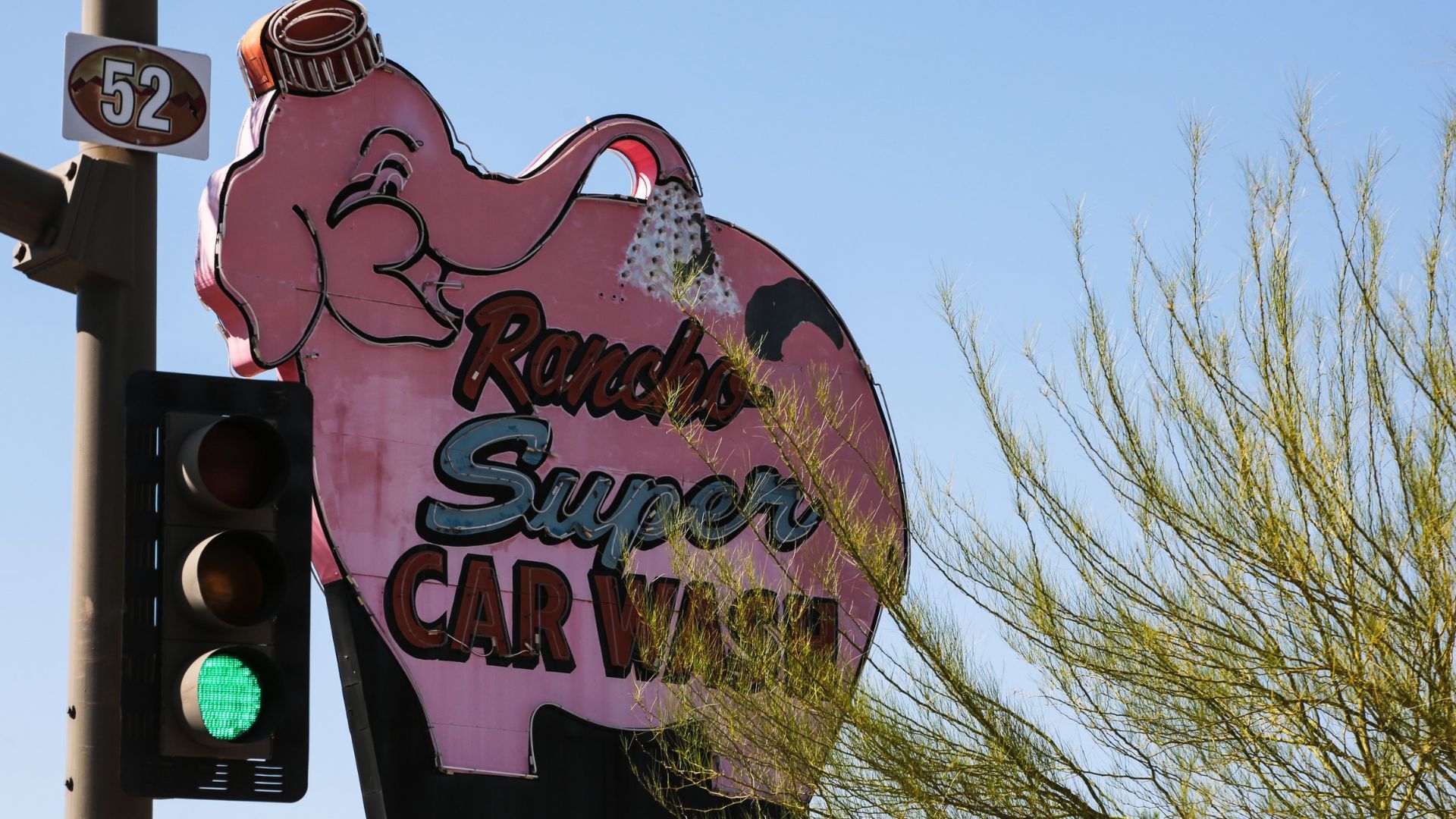
The Rancho Super Car Wash vintage neon elephant sign in Rancho Mirage, California, February 2020. (Photo by LB Photo Co)
In 1992 I was a poorly paid local reporter in the town of Rancho Mirage, a wealthy enclave in Southern California. One evening I sat in a small room around a long table trying to pay attention. It was an official meeting of the city council and the agenda was dull.
But then the owner of a Chinese restaurant complained that proposed new rules would force her to replace her sign. Turned out the new rules would require every business to replace their signs. That woke me up.
Along the main drag into Rancho Mirage was the Elephant Car Wash, famous for its giant neon sign of a pink elephant spraying water from its trunk. It had been there forever (or as long as neon signs existed). Under the new rules, it would have to come down.
The story I published, with a giant photo of the giant sign, caused an uproar. The council ended up ditching the law. In 2023, it designated the Elephant Car Wash sign an historical landmark.
Okay, my story didn’t save any lives. Still, it is a small example of how local reporters can and do spur outcries that result in change or stop something bad from happening.
Or at least they did. These days, local reporters and local newspapers are an endangered species. Far more common are “news deserts” — towns and whole regions that lack any news site.
News deserts
So dire is the situation in the United States that the state of California is about to become the latest state to adopt a law that would grant tax credits to news organizations for the hiring of local reporters. It is expected that this would amount to some $40 million a year to local news enterprises in California alone, raised by ending a tax loophole for companies that pay their CEOs a whopping amount of money.
It would provide credits of $20,000 per position for the retention of up to five journalists and $15,000 for each journalist after that; $15,000 for new hires and $7,500 for part-time positions.
We need to replicate these efforts all over the world. News is one of those things you hate spending money on but — like a fire extinguisher or first aid kit — are you sure glad you have it when it’s needed.
Reliable news is a public necessity like a good road or a bridge. You wouldn’t expect people to individually pay for a road or bridge and that’s why we have taxes. Taxes are like a shared fund everyone contributes to so everyone benefits from things they couldn’t afford on their own.
Next Monday is World News Day, the focal point for a week of articles, videos and podcasts by publishers all over the world to remind people of the importance of trusted news.
World News Day
News Decoder will do its part. We begin with this story. On Monday, we will publish an article by News Decoder Intern Isabel Wen on what trusted news means to her, as a young person.
On Tuesday we’ll publish a story by News Decoder alum Haley Davis about what happens when people turn to untrustworthy sources for health information.
On Wednesday we will republish a story about how people should start their own local news sites where there are news deserts.
And on Thursday we will offer up a selection of News Decoder stories by our correspondents and students that show the importance of trusted news.
Remember, for that fire extinguisher to work when you need it, it has to be routinely serviced. That first aid kit is no good if you don’t replenish the bandages and antiseptic cream from time to time.
If we want news to be available when you need it, we have to support it.

Marcy Burstiner is the educational news director for News Decoder. She is a graduate of the Columbia Journalism School and professor emeritus of journalism and mass communication at the California Polytechnic University, Humboldt in California. She is the author of the book Investigative Reporting: From premise to publication.
Nice