
Many cultures and religions around the world maintain traditions that cause physical harm. Why are so many practiced on young girls?
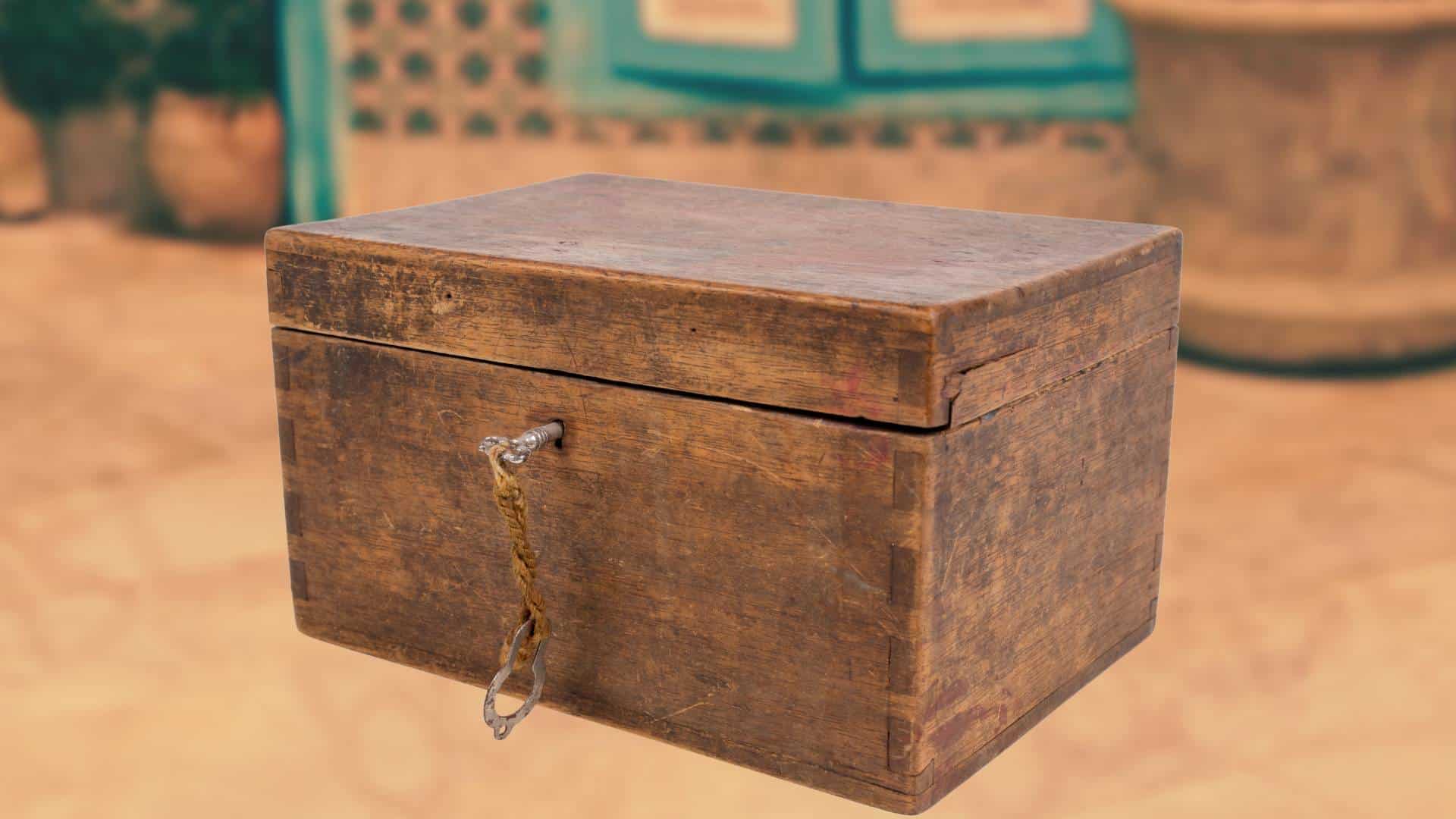
A locked wooden box symbolizes the “closing” of a girl to protect the family’s honor. (Illustration by News Decoder.)
The sharp blade pressed through Roua’s skin as she held her skirt higher. She wanted to scream, but Khalti (aunt) Jalila kept shushing her, finishing the seventh and final cut while citing words she couldn’t understand, words that seemed out of this world.
This is the story of Roua, a 25-year-old Tunisian woman I know who is trying to navigate love and intimacy in the shadow of a practice that marked her body and mind at eight years old. She told me the story from her childhood memories.
“Mabrook,” the elder said to Roua when she finished. That’s congratulations in Arabic. Her mouth tasted metallic with her own blood, the blood from her cuts that she was fed mixed with raisins and dates. Roua’s eight-year-old self felt confused, angry, innocence drifting away for a position bigger than her childish mind could grasp.
Thirty minutes earlier, she was playing with her Barbie dolls outside with the other girls. Now, she was stuck in a room that suffocated her with every second, full of chaos and women she didn’t know who kept kissing her cheeks. Her eyes locked with her mother’s who looked proud and happy, but at the same time, she saw fear and somehow regret. Roua couldn’t really understand.
“Tasfih” is a traditional practice in many Arabic countries, including Tunisia, where I am from, that practitioners believe will protect women when, in reality, it does the opposite.
The value of virginity
Tasfih is exercised on girls’ bodies during childhood, before reaching puberty, with the ultimate goal of symbolically “closing” the vagina. Done to prevent men from having sexual intercourse with the girl, it supposedly protects her hymen and, therefore, her virginity.
Virginity in Arab countries is considered a collective symbol of family honour, only to be “broken” when the girl gets married, where the woman symbolises the sacred desire.
The oldest woman in the neighbourhood performs the ritual itself, which can be done in different ways. One of the most common methods has a girl sit on a box while the practitioner makes seven cuts on her left thigh, feeding her raisins and dates mixed with blood while reciting incantations that resemble black magic spells called “tlasim.”
The box is then symbolically locked with a key, representing the “closing” of the girl. Personally, such a practice did not exist in my community; seeing ourselves as modern, my family chose to protect me from even hearing about it.
It mostly existed in more traditional settings and they saw it as traumatizing. There is a lack of information from government sources about it as most research conducted on this topic is recent.
The purpose of traditions
This raises a critical question: Why do so many cultures and religions maintain harmful traditional practices? The answer is complex.
Many argue that cultural practices are designed to safeguard women’s dignity, safety and social roles through customs around dress codes, family honor and gender-specific responsibilities. They believe these traditions preserve identity, stability and respect within communities.
But there’s another perspective, one Roua has lived: what is framed as “protection” can reinforce inequality, restrict autonomy and enforce stereotypes.
These practices often serve patriarchal interests more than women’s well-being. They persist because they’re woven into the fabric of cultural identity, passed down by women to women, making them difficult to question without seeming to reject one’s heritage entirely.
In Roua’s story, this practice has been passed on through generations and even her mother was a victim. She is firm that this practice should stop with her. The damage it caused her socially is significant: the constant fear of whether she actually remains “closed forever” creates mental stress that affects her love life, intimacy and her relationship with others.
She grew up feeling insecure in her femininity, feeling that something was taken from her and is missing.
“I grew up not knowing if I was broken or if the world around me was,” Roua said. Unfortunately, her story is not the first nor the last as countless women who grew up carrying a wound they were told was given out of love.
A girl’s role in society
Such a practice may appear to be protection for a girl, but it’s deeper than that. It’s protection for how society views her and her family rather than protection for her actual well-being.
Many women who have been victims of this practice believe, due to popular culture, that it involves black magic and has affected their love and sexual lives.
Doctors, however, see the impact as being both mental and physical, causing medically diagnosed conditions like vaginismus, a condition of involuntary tightening of the vaginal muscles during vaginal penetration, considered a psychological reflex.
What is agreed upon is that this practice harms women not only physically but also mentally. The impact continues for years, even after a woman gets married, manifesting in forms like vaginismus, fear of intimacy and lasting psychological trauma.
This is physical and mental abuse, intended to safeguard women, but in reality only empowering a masculine society that objectifies women under the name of honour and societal morals.
Global practices that harm women
Tasfih is not an isolated practice. Across Asia and Africa, deep-rooted traditions often place virginity at the centre of cultural identity: breast ironing in Cameroon, where girls’ chests are pressed with heated objects to delay puberty; “Trokosi” in Ghana, where girls are sent into ritual sexual slavery as a reparation for family sins; and female genital mutilation practised across 30 countries.
While framed as protective or respectful, these practices still harm women from across the globe.
Unfortunately, statistics are still lacking; no official numbers are known about how popular Tasfih is nowadays. What is certain is that it’s in decline, but the stories of its victims, like Roua’s, are not silenced.
Meaningful work is being done, in Tunisia for example, artistic work like the film “The Devil’s Seed” by Mohamed Khalil Bahri is trying to unveil this practice. Global organisations like The Desert Flower Foundation work worldwide to fight female genital mutilation and raise awareness.
It is time to realise how much a practice intended to “protect” women only harms them. It doesn’t protect the girl; it protects the family against a society with misogynistic views that see women as objects whose value is limited to their virginity.
It protects families from the disappointment that on a daughter’s wedding night, she wasn’t able to bleed and so failed to “prove” her purity to a husband and community that demands physical evidence of her worth.
The blade that cut Roua’s thigh at eight years old was never about her safety. It was about control, about reducing her body to a symbol of family honour, about preparing her for a world that would value her virginity more than her voice.
And that is the sharpest cut of all.
Questions to consider:
1. What is Tasfih and why is it practiced?
2. Why do so many families still practice traditions that require cutting into a young person’s body?
3. Can you think of a tradition practiced in your culture or religion that some people think should be abandoned?
Yosr Manai is in the second year at the African Leadership Academy. A Tunisian global citizen, Yosr lived in the United States through the Kennedy-Lugar YES Program and currently lives in South Africa. She loves animals, baking, painting and fencing and cares deeply about advocacy and social justice.