In North India, people are learning to co-exist with an animal that has long terrified them.
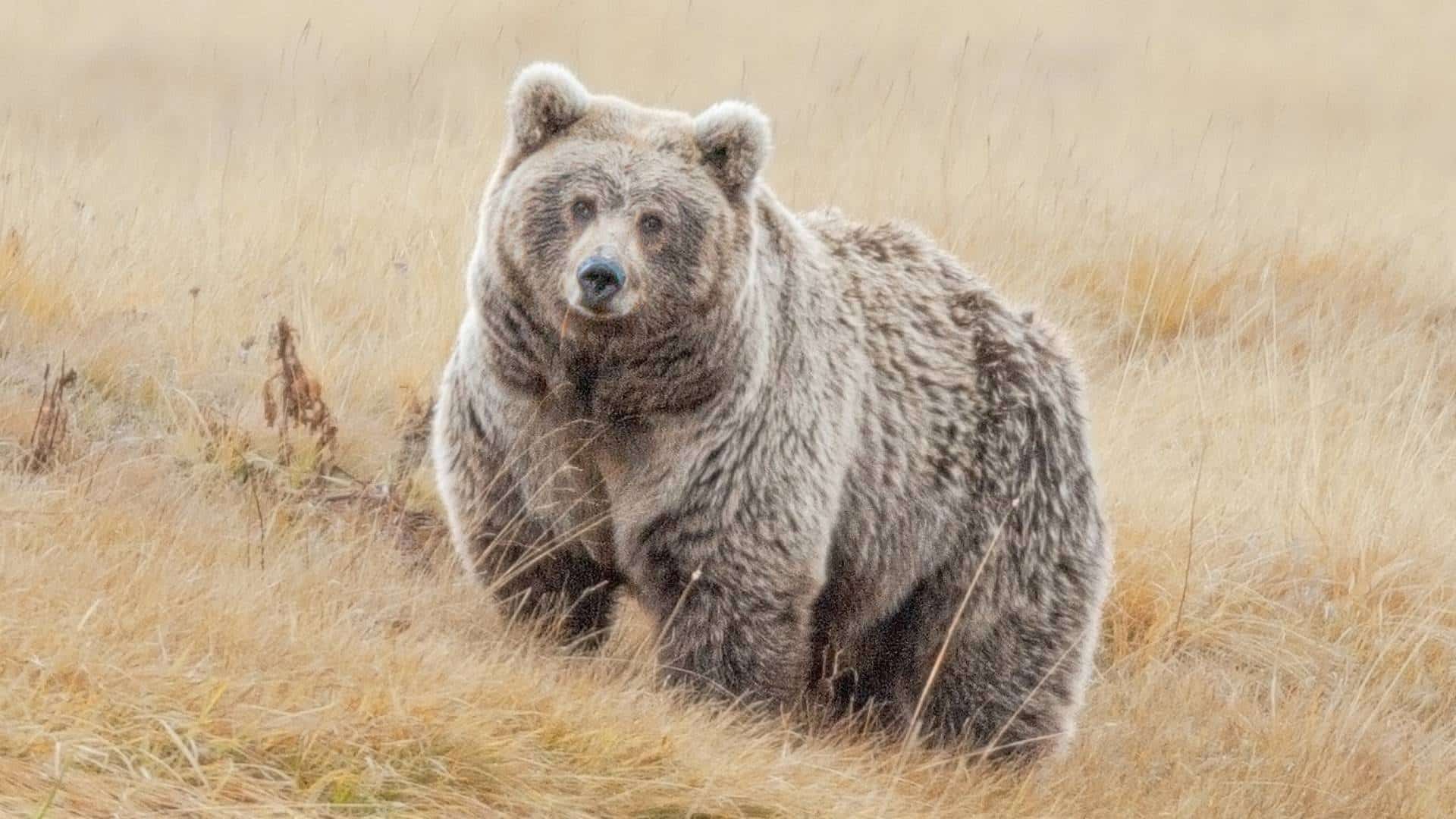
A Himalayan brown bear at Deosai National Park, Skardu, Pakistan. (Photo by Nadeem Khawar.)
This article was produced exclusively for News Decoder’s global news service. It is through articles like this that News Decoder strives to provide context to complex global events and issues and teach global awareness through the lens of journalism. Learn how you can incorporate our resources and services into your classroom or educational program.
For decades, encounters between humans and bears in the Drass and Suru valleys of North India meant panic.
Families would bang utensils, light fires and gather in groups to drive the animals away. Livestock losses were common, and in a region where a handful of animals can sustain a household through winter, even a single incident could be devastating.
This is a region where winters plunge below minus 30 degrees and food is scarce for months.
But a quiet shift is underway. A community-led effort is redefining what it means for humans to coexist with the Himalayan brown bear in one of the world’s most fragile mountain ecosystems.
“I grew up fearing them,” says Mohammed Mehrajuddin, a resident of Kargil and now a trained community responder. “If we heard a sound at night, we assumed it was a bear. The instinct was always to chase it away before it harmed us.”
Saving the Himalayan brown bear
That fear was not unfounded. As roads expanded and settlements grew, traditional bear habitats shrank.
Open garbage dumps, unsecured ration stores and livestock sheds became easy targets, especially during the bears’ pre-hibernation feeding phase when they consume large amounts of food to survive winter.
By 2021, dozens of conflict incidents were being reported across the city of Kargil. Poultry farms were ransacked, shops damaged and orchards raided.
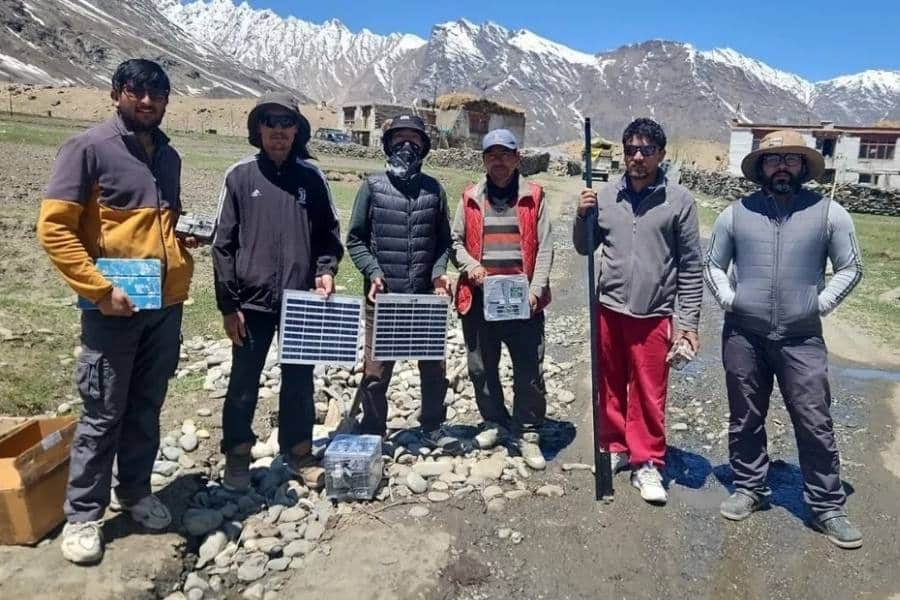
It takes a team of people to help the Himalayan brown bear coexist with humans. (Photo courtesy of WWF India)
“People didn’t know who to call or how to respond,” recalls a local wildlife researcher involved in the programme. “Confusion often turned into aggression.”
But in 2022, that began to change.
With support from the World Wildlife Fund in India, a group of local volunteers — now known as the “Bear Brothers” — was formed across villages in Kargil district. The idea was simple but radical: equip local residents with the knowledge and tools to respond to bear encounters safely, without harming the animals.
Reading footprints in the snow
Today, the group includes labourers, shopkeepers, students and farmers who patrol villages, monitor bear movement and respond to distress calls.
“We realised the bears are not attacking us out of anger,” Mehrajuddin said. “They are just hungry. Once you understand that, your reaction changes.”
Members of the group are trained to read footprints, track movement patterns and calm residents during encounters. They also act as the first line of response, often reaching sites before officials.
Mohammed Umar, one of the early volunteers, recalls a close encounter that changed his perspective.
“I once came face to face with a bear near my poultry pen,” he said. “We both got scared and ran. That moment made me realise they are as afraid as we are.”
Learning not to panic
At the heart of the programme is a blend of traditional knowledge and modern technology.
Solar-powered deterrent systems, known as ANIDERS (Animal Intrusion Detection and Repellent Systems), have been installed along village peripheries. These use motion sensors to detect large animals and trigger flashing lights and loud sounds to gently drive them away.
Camera traps help map movement patterns, while early-warning alerts allow villagers to secure livestock before an encounter escalates.
“These systems give people time,” said a field coordinator working in the region. “Time to act calmly instead of reacting in panic.”
Equally crucial are predator-proof corrals — reinforced livestock shelters built with iron frames and cemented walls. Earlier structures designed to keep out snow leopards proved ineffective against bears, which are stronger and more persistent.
“We had to redesign everything,” the coordinator explains. “Now, the new corrals can withstand even a determined bear.”
A predator as part of an ecosystem
For families like that of Mohammed Muzammil in Mushkow Valley, these interventions have been transformative. “Before, we used to lose animals every year,” he says. “Now, we feel more secure. We can sleep at night.”
Beyond infrastructure, the programme’s most significant impact has been psychological.
In villages where bears were once chased with fire, responses are now measured and coordinated. Children who grew up hearing warnings now watch their parents participate in conservation efforts.
“There is a visible shift,” said a local schoolteacher in the town of Drass. “Earlier, the bear was a symbol of danger. Now, it is also seen as part of our environment.”
This shift is critical for a species that is both rare and vulnerable. The Himalayan brown bear is protected under India’s wildlife laws, but its population remains alarmingly low, with estimates suggesting only a few hundred individuals across the region.
Cohabitation between species
Slow breeding, habitat fragmentation and climate change have further compounded the threat.
“Conservation cannot succeed without communities,” said a wildlife expert associated with the initiative. “You cannot protect an animal if the people living alongside it feel unsafe.”
In some villages, coexistence is also opening new economic opportunities.
In Mushkow Valley, Muzammil has converted his home into a homestay for tourists hoping to catch a glimpse of the elusive bear. The post-hibernation months of April and May draw visitors from across the country.
“People come here just to see the bear,” he says. “Earlier, it was a problem. Now, it is also a source of income.”
Managing conflicts
However, challenges remain. Compensation for losses is often delayed and not all damages — such as poultry or property — are covered under existing frameworks.
“Compensation is not just about money,” said one programme volunteer. “It builds trust. When people feel supported, they are less likely to retaliate.”
To bridge these gaps, volunteers assist families in filing claims and navigating procedures, ensuring that support reaches those affected. Despite progress, coexistence in Ladakh remains delicate.
In 2024, a bear entered a village pond area in search of food, killing several puppies before being safely guided away by responders. Incidents like these underline the constant tension between survival needs — both human and animal.
“Conflict will not disappear completely,” a conservationist notes. “But it can be managed.”
A community works together
As climate change alters food availability and pushes wildlife closer to human settlements, such models of coexistence are becoming increasingly relevant.
What makes the Ladakh initiative stand out is its emphasis on local ownership. Instead of imposing solutions from outside, the programme builds on community participation, cultural understanding and shared responsibility.
“This is not just about saving bears,” Mehrajuddin says. “It is about learning how to live together.”
Across the high-altitude villages of Drass and Suru, that lesson is taking root. The clatter of utensils at night no longer signals panic, but preparedness. Patrol groups move with purpose. Lights flicker on as warning systems activate. Doors are secured and livestock is sheltered.
In these small, deliberate actions lies a larger story — one of adaptation, resilience and coexistence.
At a time when human–wildlife conflict is rising across the globe, the effort unfolding in North India offers a rare counter-narrative. It shows that even in the harshest landscapes, where survival is a daily challenge, space can still be made — for both people and the wild.
And in that shared space, fear can slowly give way to understanding.
Questions to consider:
1. How have people changed how they respond to bears in parts of North India?
2. How are predators important parts of ecosystems?
3. Is there an animal you are afraid of that you still think should survive in nature?

Tauseef Ahmad is a Delhi-based freelance journalist. He has worked with news organizations including The News International, Al-Jazeera, Article 14, Polis Project, Fair Planet and Mongabay. He tweets @wseef_t.