
So many news stories put people to sleep. To wake readers up, tell them a little story about one person’s experience.
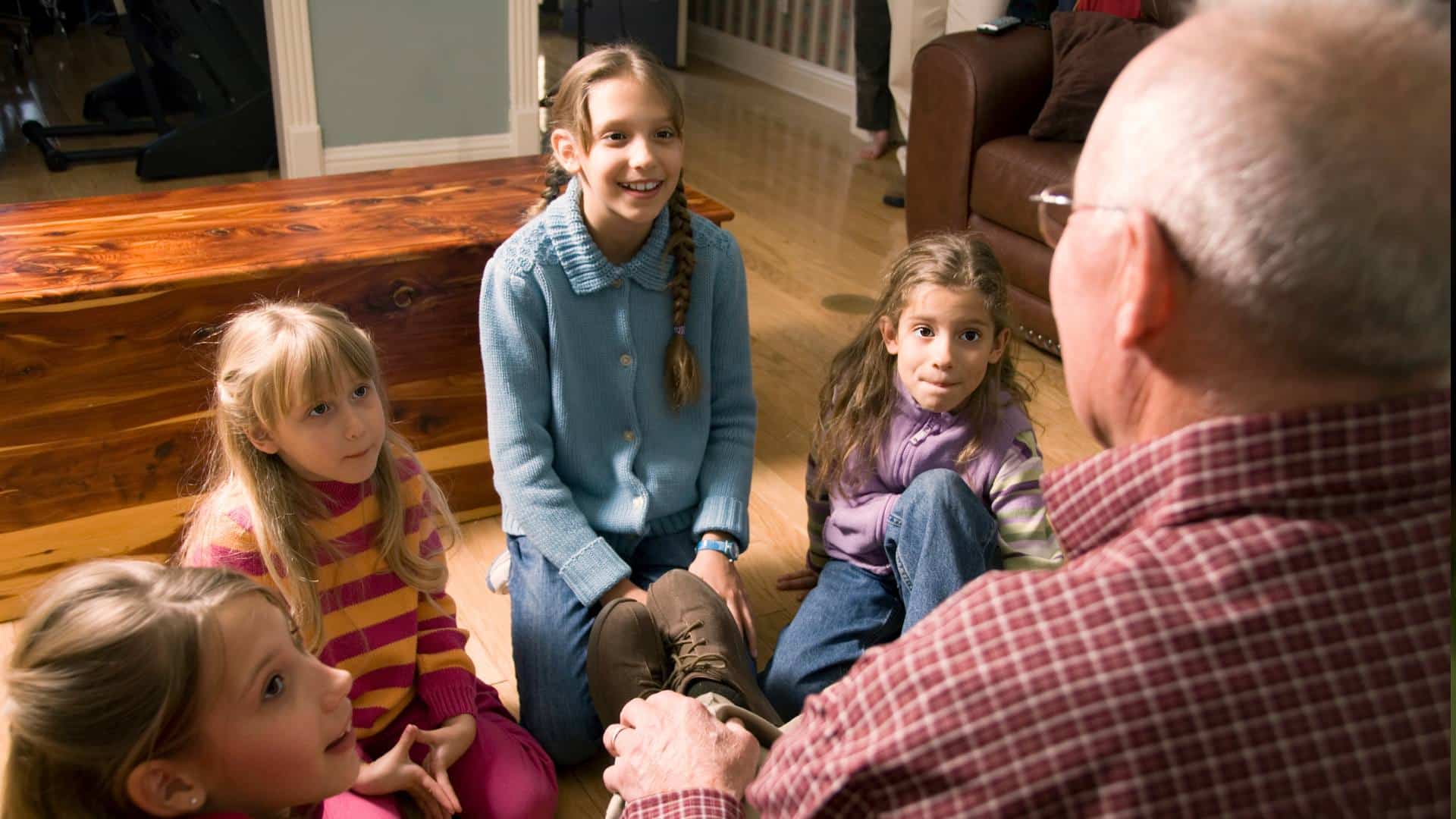
A grandfather telling a story to children. (Photo by Blue Cutler/Getty Images Signature)
Has this happened to you? A parent or teacher started lecturing you about something and just as you were tuning out they said something like: Did I ever tell you about how that happened to me?
Since the subject was how you should stay away from drugs, or try not to get pregnant or in trouble with the law, you perk up. This boring person in front of me actually experienced something interesting?
What they give you is an “anecdote” — a small story about something that happened to them to help you understand a problem or help illustrate a point they are trying to make.
Anecdotes can wake up people who are tuning out.
I still remember a social studies teacher I had in seventh grade. I can’t remember anything about the social science topics but I remember how he told us about how he encountered scorpions in the desert when he had a job picking dates from palm trees.
No one ever fell asleep in his class.
Keep your readers awake.
The same holds for news stories. The more tedious the topic, the more you need to keep them awake with an interesting story. But how do you get those interesting anecdotes in interviews?
People don’t often offer up personal stories out of the blue. You have to coax those stories out of them.
I once got out of my dad — a New Yorker born and bred — a story about how he had dated a woman named Thelma Fine who was from a rich Southern family. It came after I asked him if he went to bootcamp when he was drafted as a soldier in World War II (he served just as the war ended).
There are questions you can ask to pull stories out of people. These questions come in once the conversation turns onto a particular point. Then you ask:
Did that ever happen to you?
The person might say no. Or: Well, sort of.
Then you can say:
What do you mean?
After they explain how it really isn’t the same thing, you can ask:
When did that happen? Or where did that happen?
Keep at it.
The details will come out piecemeal, but you should keep pushing: How did that happen? Or something like: What led you to that point? Or: What preceded that?
Or you can ask: What was the one thing you remember about that time? (That’s how I got that story about Thelma Fine. It wasn’t the grueling exercises or bad food or camaraderie he remembered. It was a beautiful Southern belle he knew for a short time before he met and married my mom.)
Then you can drill down to details: How did you meet? What did you do?
After that you just keep prompting: Then what did you do? Then what did you do? Then what happened?
And you ask details that will make the story. How did that make you feel? Do you remember what you wore? What was the temperature like? What was the house, apartment, town, city, area like?
Keep asking all kinds of simple questions until you can see the story like a scene in a movie. No detail is too small.
And the more questions you ask, the more the person will open up. Because people love telling stories but often have no one to tell those stories to.
Try it. Find someone you know, anyone, and see if you can wheedle a story out of them.
Then write that story up.
Questions to consider:
1. What is an anecdote?
2. Why do so many news stories put people to sleep?
3. Can you remember a story someone told you that fascinated you?

Marcy Burstiner is the educational news director for News Decoder. She is a graduate of the Columbia Journalism School and professor emeritus of journalism and mass communication at the California Polytechnic University, Humboldt in California. She is the author of the book "Investigative Reporting: From premise to publication."
💡 More Tips Like This
This story is part of News Decoder’s open access learning resources.
Whether you’re a secondary student, studying at university or simply interested in learning new things, we can help you build your journalism skills and better understand big global issues.
If you are a student or a member of a News Decoder Club, check out our other learning resources.
If you are a teacher, check out our other classroom resources:
- News in the Classroom
- Educator’s Catalog of classroom exercises
And ask us about joining the News Decoder Club program.