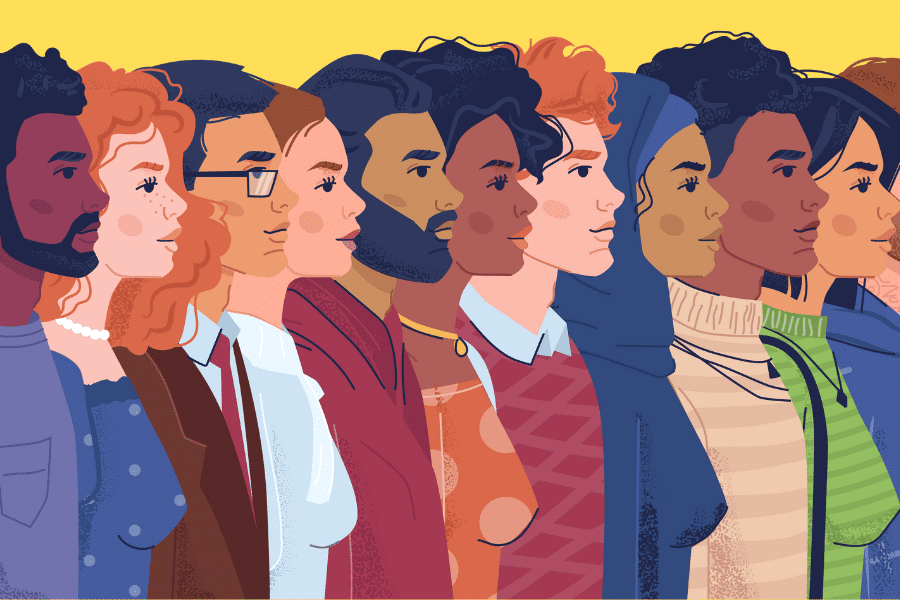
We asked young people from five countries this question: Is it time for young people to take charge? The answer is yes. They showed us different ways do it. (Credit: Sensvector via Canva) Journalism and activism can be powerful tools for change. Each week in our News...
Artificial intelligence shows promise and peril. But some people might find it more comforting to tell their problems to a machine than a human. A young man talks to a robot therapist. (Illustration by News Decoder) This article, by high school students Sienna Mamoun...
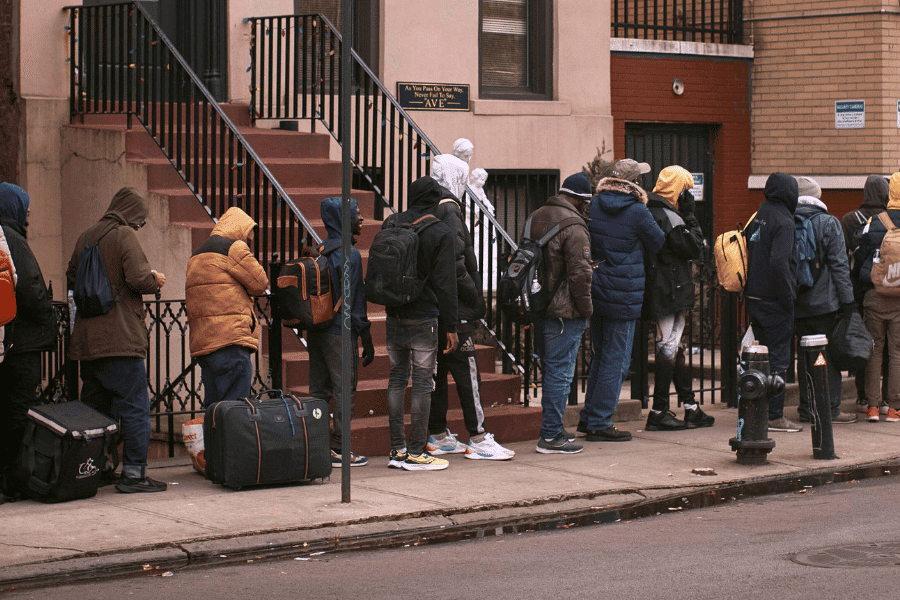
Immigrants seeking asylum in New York City struggle to get help meeting basic needs. Nonprofit organizations struggle to fill the vacuum. Migrants queue in the cold as they look for a shelter outside a migrant assistance center at St. Brigid Elementary School in lower...
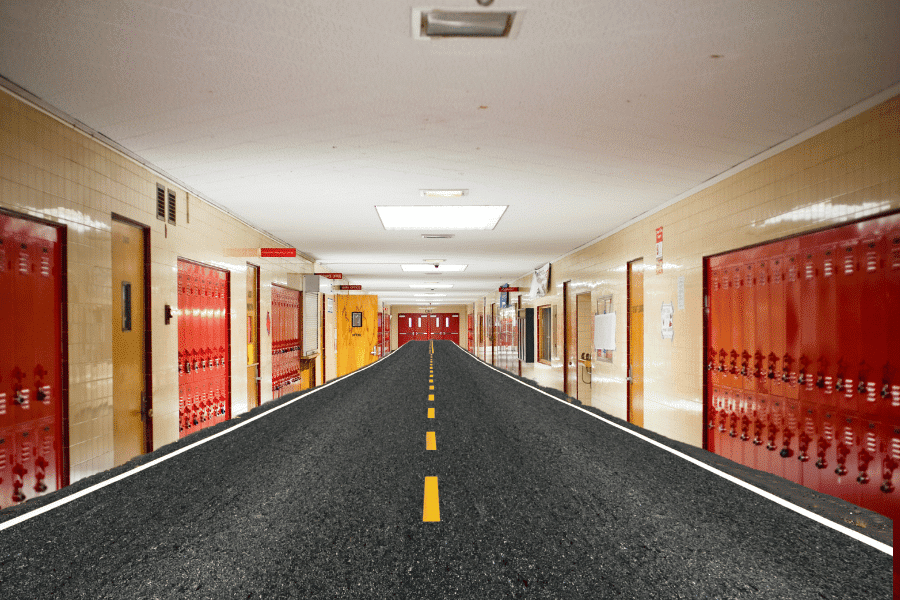
News Decoder asked four young women for advice for high school students. They say the future is what you make it but it might not be what you expect. A highway starts out of a high school corridor. (Illustration by News Decoder) In News Decoder’s Top Tips, we...
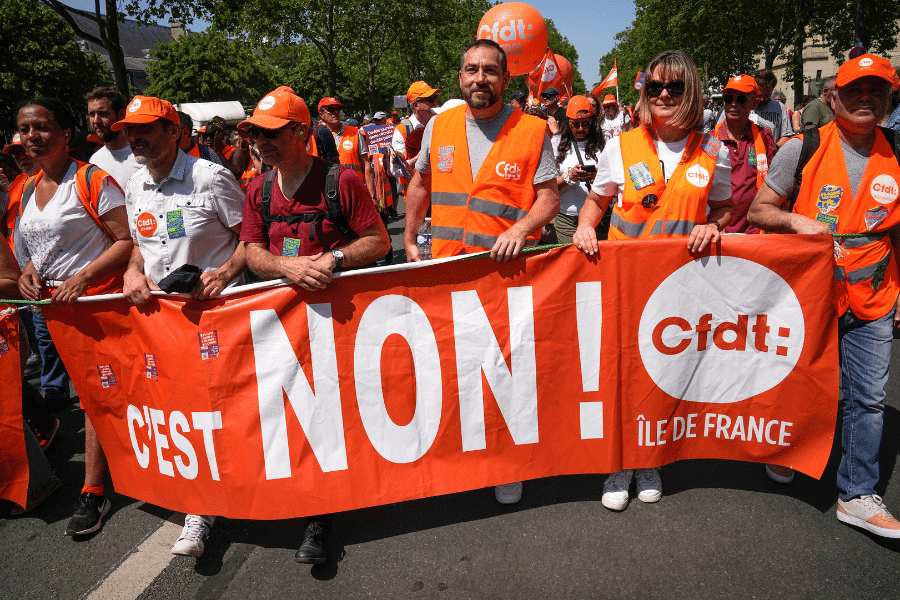
When you think of France, you might picture sitting at a café. But taking to the streets to air grievances is as French as Beaujolais. Protesters in Rennes, France march over pension reforms and more, April 2023. (Photo credit: Clover Choi) This article, by high...
A one-week workshop produced three winners in our storytelling contest. Across the Atlantic, St. Andrews Episcopal in Mississippi tied for second place. Stories produced out of a week-long media camp at Realgymnasium Rämibühl Zürich (RGZH) took three prizes in...
Some worry that the prosecution of Julian Assange could set a precedent for prosecuting anyone who disseminates information gathered by whistleblowers. WikiLeaks founder Julian Assange shown being taken from court, where he appeared on charges of jumping British bail...
Are wealthy countries responsible for mitigating the effects of climate change in developing countries? Students take up the debate — and find common ground. (Credit: Badmanproduction/Getty Images) “Developed countries should make a sincere effort to mitigate the...
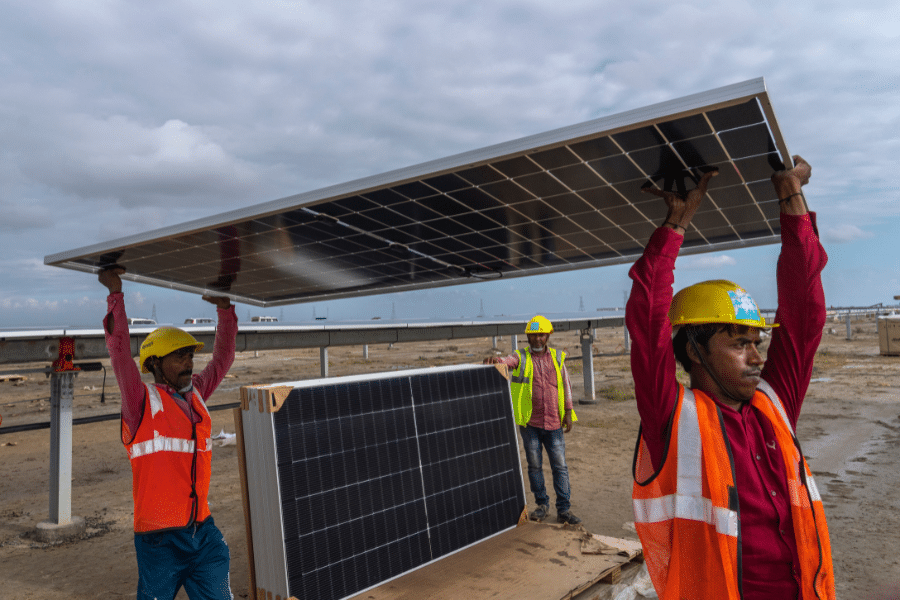
Meeting a growing energy demand can go hand-in-hand with the green transition. This is what India could show the world. Workers carry a solar panel for installation at the under-construction Adani Green Energy Limited’s Renewable Energy Park in Gujarat, India,...
India’s position as a growing global economic leader, a leading producer of renewable energy and as a large consumer of energy puts it at the center of the debate on climate-friendly energy transition. Preety Sharma looks at how if India successfully manages the move towards greener energies, it will serve as a model for low and middle-income countries as they develop economically while striving to meet climate goals.
Exercise: Individually, or in groups, students put their research skills to the test. Use the following questions as a guide to finding out more about this topic.
What is energy transition? How does it relate to the UN SDGs? What energies should we transition to and what are the issues surrounding using each of these? What would a ‘model for low and middle-income countries’ look like?
Find examples of countries that have grown and managed energy transition well.
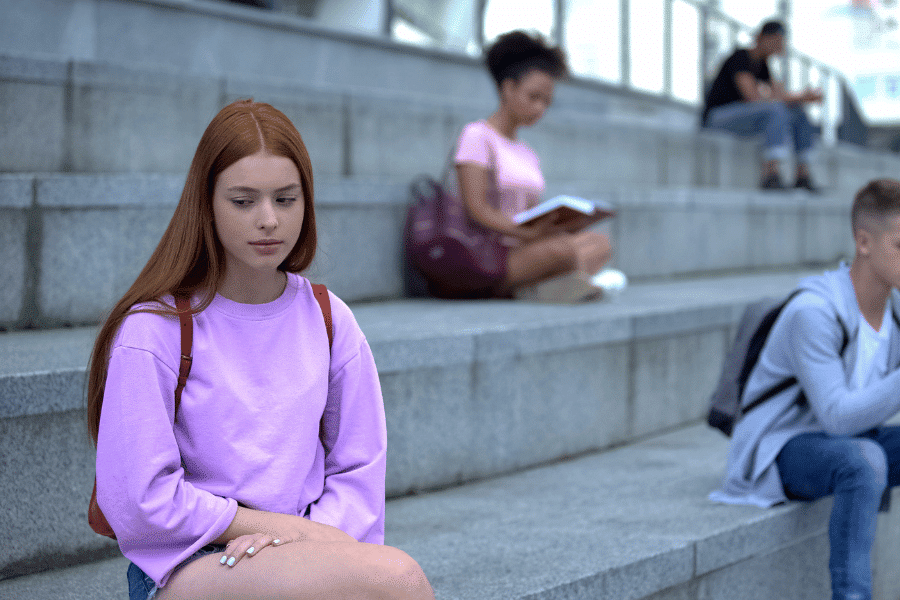
Long after teens returned to school, the isolation they endured during lockdown had ramifications we are just now seeing. A teen sits on stairs feeling lonely. (Credit: Motortion/Getty Images) This article, by high school student Chloe Kennedy, was produced out of...