
We often hear how respect goes both ways. But talk to any teen and they’ll tell you that rule only seems to apply when you reach a certain age.
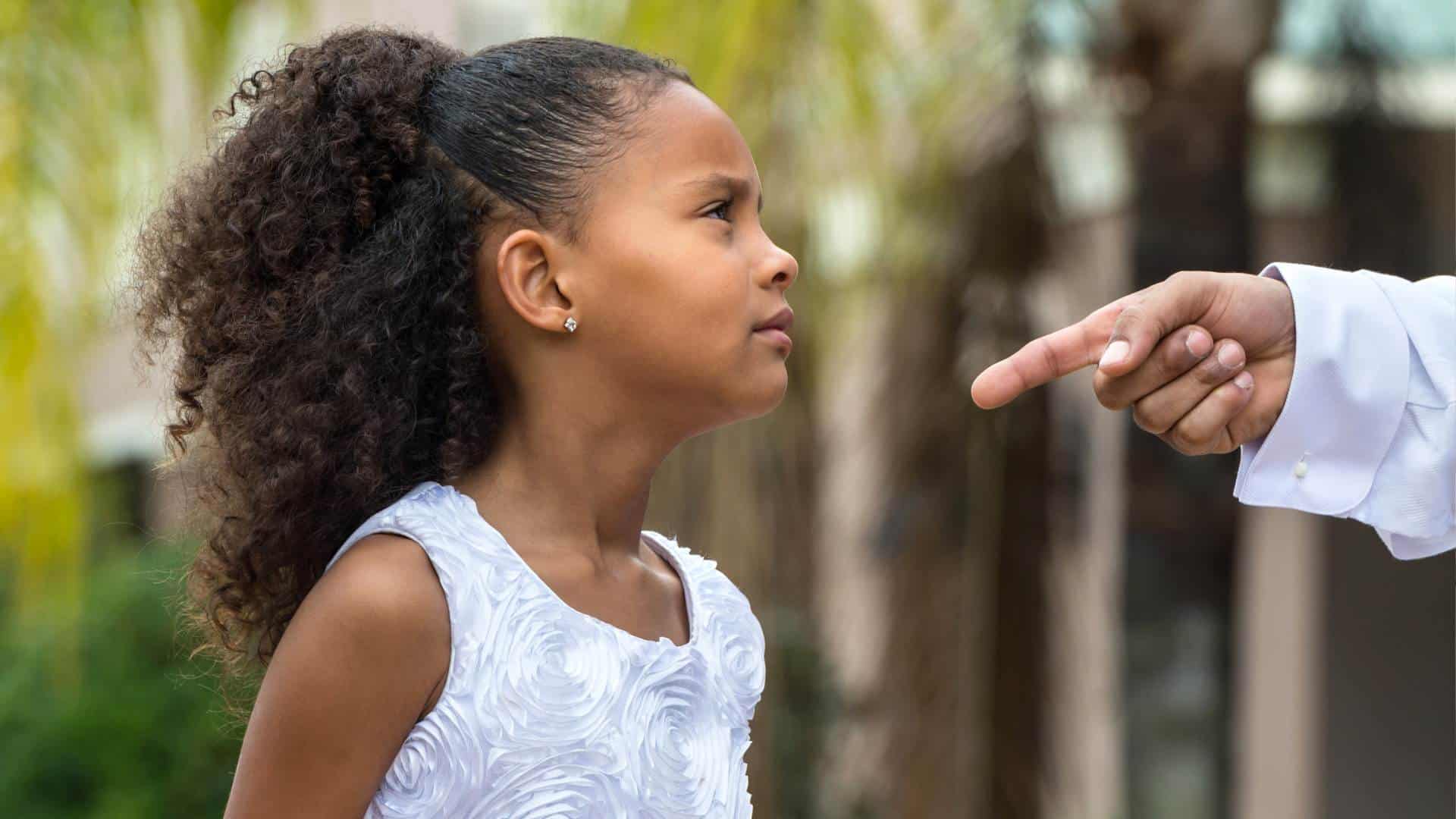
An adult scolds a child. (Photo by Juanmonino/Getty Images Signature)
This article was produced out of News Decoder’s school partnership program Bukhona Babusise Vilane is a student at African Leadership Academy in South Africa, a News Decoder partner institution. Learn more about how News Decoder can work with your school.
“Don’t raise your voice.”
“Don’t wear your bright orange lipstick, or they’ll think it looks tacky.”
“Speak calmly, DON’T sound upset.”
I don’t remember anyone ever sitting me down and saying, “You will have to earn respect,” but I learned it anyway.
I learned it in very subtle but impactful ways. In the ways adults corrected my tone before they corrected my argument and how I began rehearsing sentences in my head before speaking them out loud.
Age-old expectations
Growing up, many parents, including mine, taught their children to “Respect your elders.” But I don’t remember hearing adults speak about respecting the youth with the same urgency.
My older sister and I used to argue constantly about this. She’s three years older than me and whenever our debates escalated and I raised my voice back to her, she would say, “Respect your elders.” I would always respond, “Respect me.”
Even from a young age, I couldn’t wrap my head around this. Did turning 16 suddenly make someone more deserving of dignity than someone who was 13? Did age automatically grant more superiority? Did it mean I deserved less patience? To be heard less?
Those arguments planted a deep-rooted question in me that hasn’t left since: Why is respect something we must earn?
Somewhere along the way, respect became linked to hierarchy. Older versus younger. We’re taught that respect flows upwards, towards “power,” not towards each other.
Earning respect
As children, we learn quickly that obedience earns approval and are taught that “talking back” is disrespectful. They challenge our tone and not our logic. But here’s what I don’t understand. Why is questioning seen as disrespect? Why is emotion seen as rebellion?
This concept has been widely studied. American psychologist Philip Zimbardo, known for his “Stanford Prison Experiment” researched power dynamics and showed how easily humans equate authority with entitlement. When someone is positioned “above” another by age, title or status, they often feel justified in demanding compliance rather than mutual understanding.
Perhaps that’s where it all originates.
Maybe respect became something to earn because societies function more smoothly when younger people comply. It maintains order and protects hierarchy, keeping its systems stable.
But stability doesn’t equate to fairness.
When dignity is conditional
When respect is conditional, only one side gets to benefit from it, while the other is left dissatisfied. It taught us young people that our dignity is negotiable, that our voice must be measured and our emotions filtered. It taught us that we should shrink ourselves so that others remain comfortable.
In this same manner, shrinking becomes the default in actions like softening your voice when speaking to them and adding an extra “sorry” at the end of an apology or smiling while agreeing.
I am certainly not arguing that respect should ignore behaviour. Harmful actions should have their consequences. But what if basic respect, basic human dignity, was the starting point, not the reward? What if respect were something all people possessed unless they actively lost it through their actions? Why do we assume young people must prove themselves worthy of being taken seriously?
I still think about those arguments with my older sister. They were never that deep, but because they revealed something foundational. I wasn’t arguing to win, but to be recognised.
To be heard without shrinking. And I think that’s what most young people want. Not dominance. Not control, but respect.
Questions to consider:
1. Why are young people told they must respect their elders?
2. In what ways might a young person’s voice be ignored?
3. Do you think that older people have better ideas than do children or teens? Why?

Bukhona Babusise Vilane, born and raised in Johannesburg, South Africa, is a young Black woman passionate about youth voices, equality and social awareness. She has strong beliefs which support youth’s self-expressions and equal opportunities for all.