She loves immersing herself in diverse settings and learning foreign languages. Alexandra Gray epitomizes News Decoder’s global mission. Alexandra Gray in Rome in May 2022. Over two weeks in November, we’re spotlighting some of our talented alumni and...
From living in a refugee camp to starting a nonprofit while at the African Leadership Academy, this News Decoder alumnus aspires to be a writer. Varlee S. Fofana speaking to the Liberian Youth Foundation after receiving a Community Service Award for contributions to...
She has launched a nonprofit and researched democracy in Zambia, all while studying in the U.S. This News Decoder alumna has set her sights high. Lughano Bupe Kabaghe takes a selfie with students and a member of parliament after a workshop in Kitwe, Zambia facilitated...
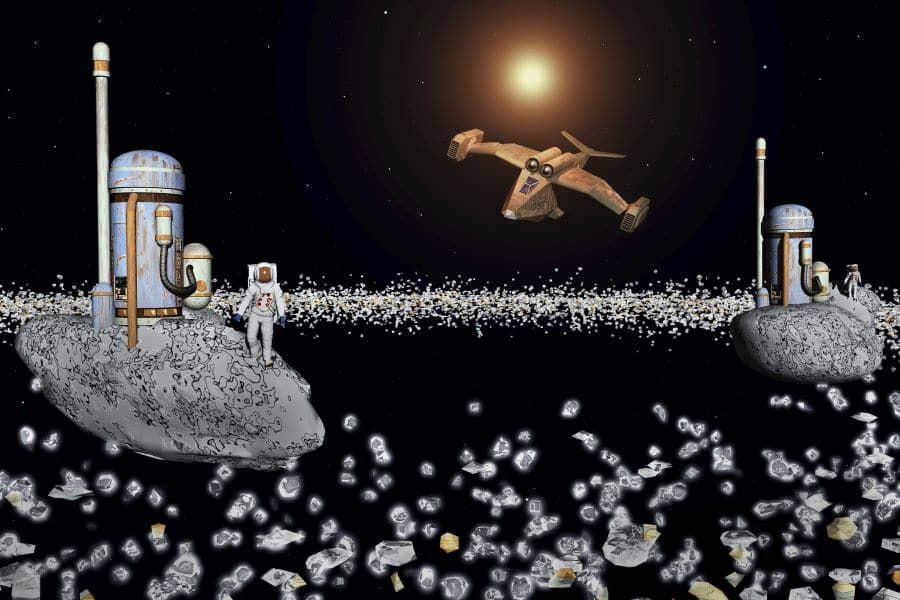
When leading educational publishers look for articles that decode complex issues for youth authoritatively and clearly, they turn to News Decoder. Tira Shubart turns cosmology into understandable stories about the importance of space to humankind. (AP Photo/Stocktrek...
Alternately revered and vilified, Mikhail Gorbachev shaped history as the last Soviet leader. Our correspondents recall his impact and legacy. Soviet President Mikhail Gorbachev waves during a military parade marking the anniversary of the Bolshevik revolution, Red...
At a time of sharp division between the West and Russia, News Decoder remembers an era when another intractable divide was bridged. At the height of the Cold War, two adversaries, U.S. President Ronald Reagan and Soviet leader Mikhail Gorbachev, forged an agreement to reduce nuclear arms. Alternately revered and vilified, Gorbachev shaped history as the last Soviet leader and the one whose decisions helped lift the Iron Curtain. To mark Gorbachev’s death, News Decoder correspondents who covered the collapse of the Soviet Union examine how the former Soviet leader’s legacy has evolved over time.
Exercise: Gorbachev left an ambiguous legacy. He is heralded in much of the West but viewed less favorably in Russia. Can your student’s identify other historical or contemporary figures who are viewed in a contradictory way? What’s at the root of such contradictory perspectives?