
In South Asia, decades-long animosities divide nations and the people within them. Cricket operates on a different plane and that’s something all can agree on.
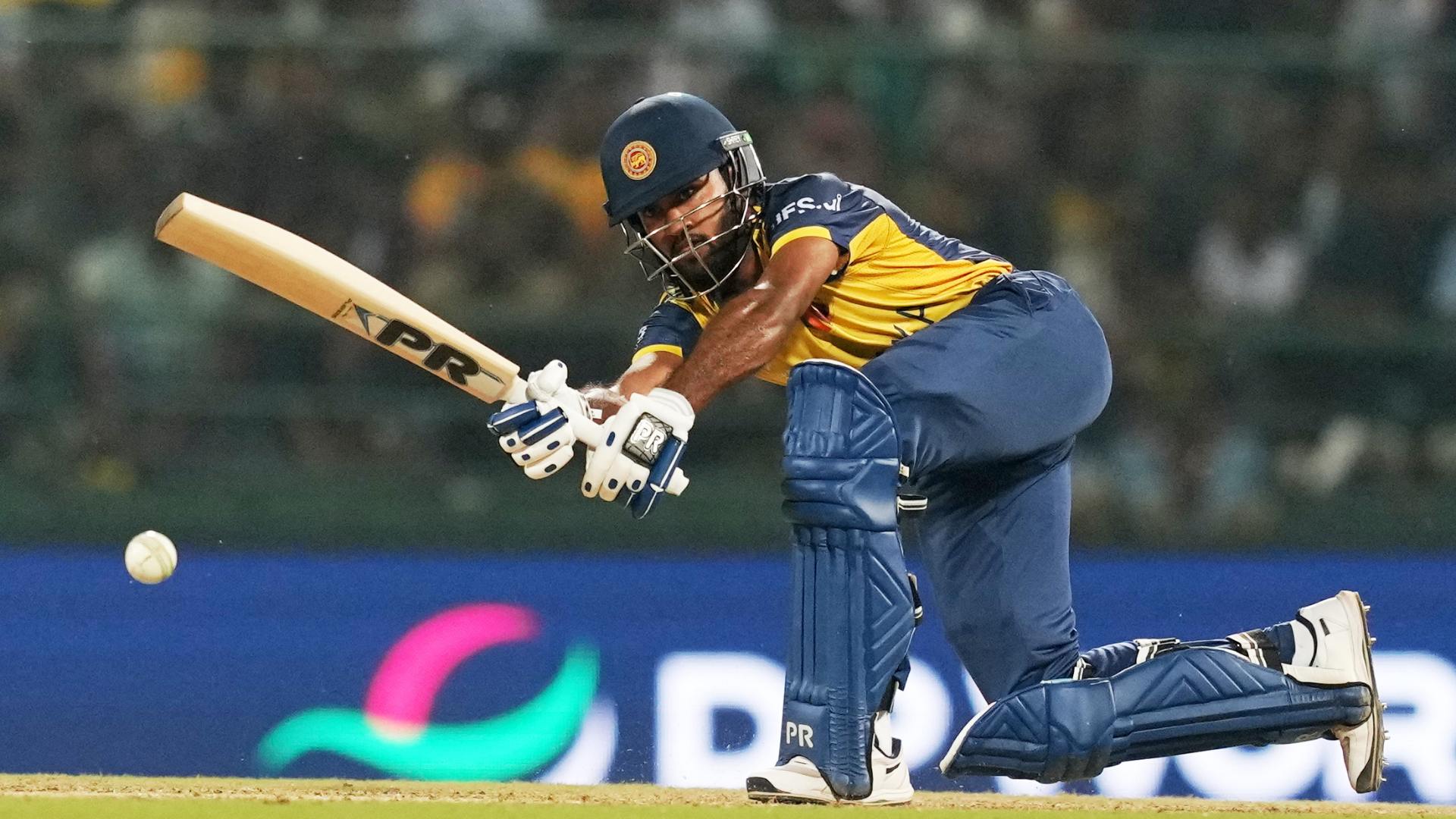
Sri Lanka’s Pavan Rathnayake plays a shot during the T20 World Cup cricket match between Pakistan and Sri Lanka in Pallekele, Sri Lanka, 28 February 2026. (AP Photo/Eranga Jayawardena)
This article was produced exclusively for News Decoder’s global news service. It is through articles like this that News Decoder strives to provide context to complex global events and issues and teach global awareness through the lens of journalism. Learn how you can incorporate our resources and services into your classroom or educational program.
The guns fell silent in war-wracked Sri Lanka in February 1996. India, Pakistan and Sri Lanka were hosting the international cricket finals and Australia, then cricket’s reigning champion, was playing Sri Lanka — a novice having played just Test cricket for 15 years.
The final was being played in Pakistan. India and Pakistan, which had fought each other for decades, fielded a joint team for a friendly match in Sri Lanka to show solidarity with the island nation after Australia and West Indies declined to tour citing security concerns.
Sri Lanka was in the throes of a 15-year bloody conflict between government soldiers and the Liberation Tigers of Tamil Eelam (LTTE) rebels who demanded a separate state for the country’s minority Tamil community. Dozens of combatants and civilians were dying daily in the battles.
But the reverence given to the game of cricket by Sri Lanka’s 21 million population, irrespective of caste, creed or status, overcame the hostilities; the two warring sides decided to have an unofficial ceasefire during the 1996 final, enabling the whole of Sri Lanka to watch the match on TV or listen to running commentaries on radio.
The result? A historic win by Sri Lanka against a cricket giant! A virtual David vs Goliath episode on the cricket field.
A sport marred by corruption
Thirteen years later in 2009, government forces would win the battle by wiping out the LTTE in a conflict that resulted in lives lost, infrastructure destroyed and the economy badly dented.
Fast forward to 2026. The Sri Lankan government has ordered the administration that ran Sri Lanka Cricket to step down. This came after years of political wrangling, powerful business interests, vote-buying and corruption. To top it off, Sri Lanka was losing more matches than winning and drawing criticism from all quarters.
In April of this year, the government appointed a new interim committee to administer the game.
When Sri Lanka won the World Cup in 1996, there was less than 300,000 rupees (that’s a paltry US $940 at today’s rates) in the kitty. Thirty years later, Sri Lanka Cricket (SLC) is rolling in funds, billions of rupees in fact, even though performances by the Sri Lankan teams are below par.
Understand, in South Asia, cricket is akin to a religion — particularly in India, Pakistan and Sri Lanka, where it is played in villages and small towns by young people. It is also popular because it can be played with a tennis ball (in professional cricket it is a hard ball) and a bat made out of wood. In some cases in the villages, it is made out of a coconut tree branch.
A remnant of colonialism
If you live in a country where people are crazy about basketball or football you an imagine the same popularity given to cricket, where it is the number one sport in South Asia. The people here adore their cricketers –– until they perform badly, that is. Whenever India or Pakistan teams lose badly, fans turn against the cricketers, in some cases setting fire to their properties.
Sri Lankan cricketers have been spared of such assaults but at a recent match in Sri Lanka which the host nation lost, angry fans booed the team members — the first time the public has turned against the cricketers.
Cricket was introduced to the island (then known as Ceylon) in 1832 by the British during the latter’s colonial rule of South Asia. It was not only popular in the capital Colombo but also in tea growing areas in the hill country where most of the estate managers were British.
Many clubs emerged with British planters playing the game. That was the golden era when cricket was considered a ‘gentlemen’s’ game and played with dignity, discipline and camaraderie and where the best team wins and everyone rejoices, unlike today.
Now, owing to the advent of big money — the game has been marred by bitter on-field confrontations, sledging behind the stumps and constant fines imposed on players for indiscipline and bringing the game into disrepute.
Today, money controls the game and business interests thrive. That was evident too in the Sri Lanka case.
A sport run in a way that’s not cricket
For years, Sri Lanka Cricket (SLC) — controlled for seven years by businessman Shammi Silva and his coterie of supporters — became a fiefdom of a select few; funds doled out to favourite clubs, manipulating selection of cricketers for the national sides and abuse of funds. Silva won three elections as President of SLC unopposed, using unscrupulous tactics.
According to renowned cricket writer Rex Clementine, interim cricket committees are not alien to Sri Lanka nor are they frowned upon by the International Cricket Council. In a column 3 May in the Sunday Island newspaper he wrote that it was such committees that did the work to clean up cricket in the first place.
“The rot, as many would argue, set in during the era of Mahinda Rajapaksa when such interim committees were used less as repair kits and more as patronage platforms,” he wrote. “Mahinda used the cricket board to give positions to his friends. He was always loyal to his friends. In turn, his friends showed their loyalty back to Mahinda by awarding the lucrative television deal of Sri Lanka Cricket to his second son’s company.”
The Rajapaksa family, led by Mahinda Rajapaksa, a former two-term Sri Lankan president of the country, has had a powerful grip on power in the political history of the country. Rajapaksa has been accused of corruption and widespread abuse of power.
The current administration, led by the left-leaning President Anura Kumara Dissanayake, has vowed to take action against members of the Rajapaksa family.
Cricket as big business
Today SLC is the richest entity in the country, in part through doling out TV rights for matches played in Sri Lanka and hosting matches. SLC is a registered sports organisation under the Ministry of Sports and its administration is mandated by an election.
But the government has a right to sack the office bearers, when the occasion demands, and appoint a temporary committee to put the house in order before the next election is held.
In the present case, the nine-member committee is headed by former minister and banker Eran Wickramaratne, considered an upright politician, and includes three top former Sri Lankan cricketers, Sidath Wettimuny, Roshan Mahanama and Kumar Sangakkara.
They have a tough task in restoring confidence in the administration whose immediate task is a total overhaul of the governance structure of SLC and ensure merit-based selection of national sides.
Sri Lanka won its first Test match in 1985 against India, just four years after gaining Test entry, and revolutionised modern day strategies by some accelerated scoring in one-day matches. Will Sri Lanka recover its lost glory? Only time can tell.
Questions to consider:
1. How can sport bring people together?
2. Why did India and Pakistan decide to field a joint cricket team to play in Sri Lanka in 1996?
3. In what ways are sports harmed or improved when they become big business?

Feizal Samath is a Sri Lankan who covered the war between Tamil Tiger guerrillas and government troops, and the leftist insurgency attempting to overthrow the government, for Reuters. A journalist for nearly four decades, he more recently has covered economic development in Sri Lanka for a newspaper in Colombo. A social activist and guitarist, Samath founded a concert series that has raised millions of rupees for children’s charities.