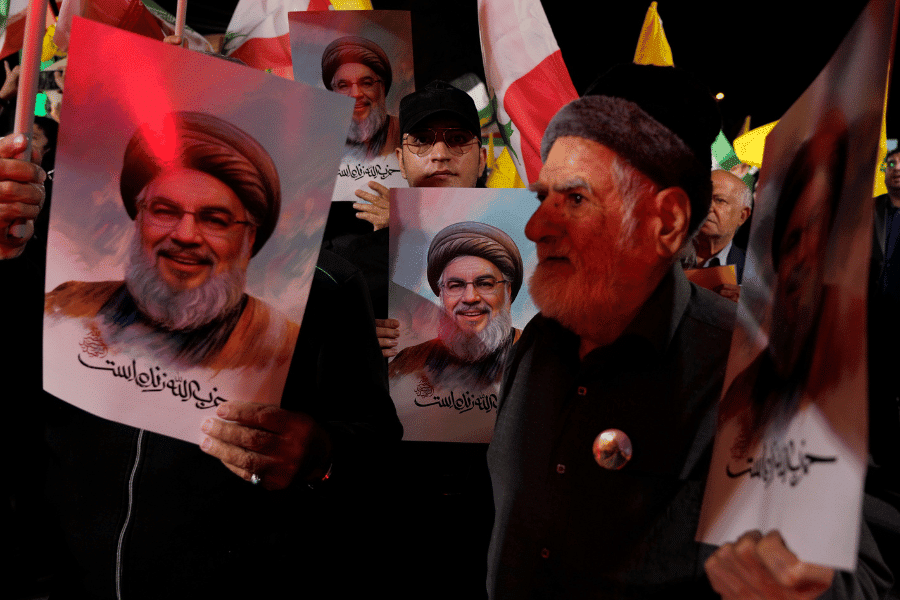
The assassinations of leaders of Hamas and Hezbollah, an invasion of Lebanon and the all-out assault on Gaza beg the question: Does Israel have an end game? Iranian demonstrators hold posters of slain Hezbollah leader Hassan Nasrallah during an anti-Israeli protest in...
Change in leadership in the two countries brings the possibility of rapport. But there is a long history of hostility that is hard to overcome. Supreme Leader Ayatollah Ali Khamenei, left, speaks after giving his official seal of approval to newly-elected President...
The Houthis, battle-hardened from years of fighting a civil war in Yemen, have proven to be a formidable adversary to Israel and its allies in the Red Sea. A Houthi forces helicopter approaching the cargo ship Galaxy Leader on 19 November 2023. Yemen’s Houthis...
As Hartwell’s term on News Decoder’s board concludes, we recognize her enduring contributions to our nonprofit and the world of education at large. News Decoder · Decoder Podcast: Janet Hartwell The Decoder Podcast typically features conversations with...
Even as the U.S. and China stare each other down, China is bridging conflicts in regions the U.S. once dominated. Are we looking at a new world order? Iran’s Foreign Minister Hossein Amirabdollahian, left, hold hands with his Saudi Arabian counterpart Prince...
Some experts say that the world is entering a period of a renewed Cold War. This Decoder from ND correspondent Jim Wolf dives into the role China plays as new allegiances are formed and countries take ideological stands on democracy versus autocracy. Help your students draw the connection between past and present with this classroom article.
Exercise: After reading the article as a class, have students create a Venn Diagram comparing and contrasting what the article describes as a potential “new world order” and the first Cold War between the United States and Soviet Union. For both past and present, students should consider: major world powers, alliances (including non-aligned nations), proxy conflicts/Cold War “hotspots”, effectiveness of diplomacy, ideological conflicts, etc.