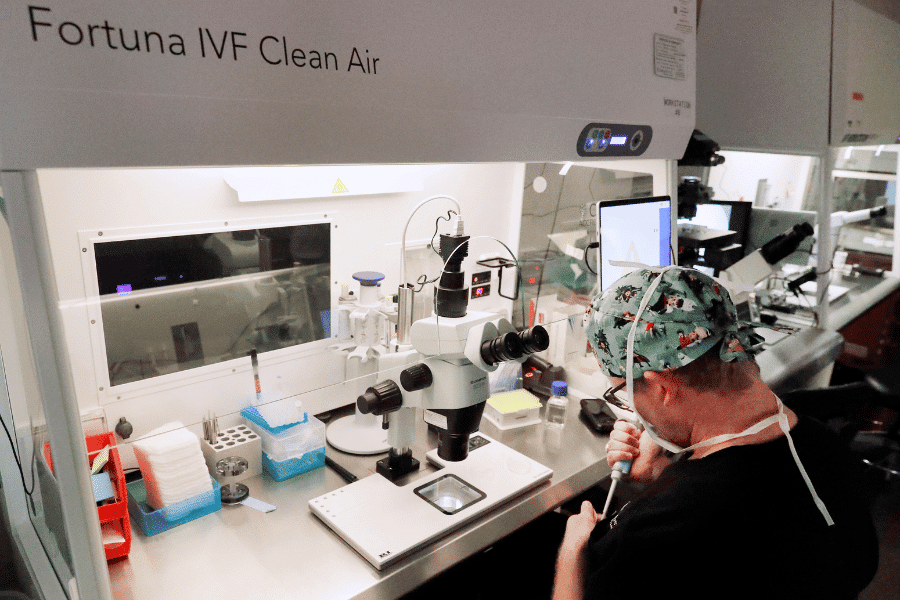
Everyone has an origin story. For one woman, that story begins with the love between a husband and wife. And a petri dish. Lab staff prepare small petri dishes, each holding several 1-7-day-old embryos, at the Aspire Houston Fertility Institute in vitro fertilization...
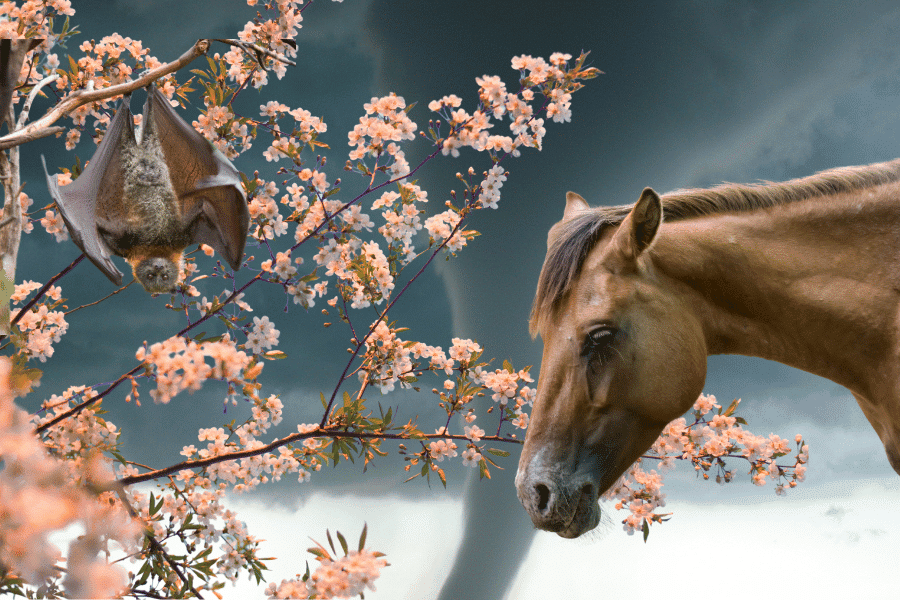
A cyclone can affect trees which impact insects and animals spreading diseases to people. Doctors are realizing that individual health is part of an ecosystem. A bat, a flowering tree and a horse against the backdrop of a tornado. (Illustration by News Decoder) This...
How is having a C-section connected to deforestation? How can a cyclone off the coast of Australia affect the population of fruit bats and horse trainers? Health and science correspondent Maggie Fox dissects the concept of One Health for students in this latest Classroom #Decoder. In the accompanying classroom activity, get students thinking about their own thinking in an exercise in metacognition.
Exercise: With this article, students will engage in The 4 C’s protocol, adapted from Project Zero of the Harvard Graduate School of Education. Students will read the article then answer the 4 C’s. (1) What connections do students draw between the text and their own lives? (2) What ideas or assumptions in the text do they want to challenge or learn more about? (3) What is the text’s key concept or takeaway? (4) How did the text change the way students thought about the topic? Did the text inspire a change in attitude or action? Have students underline or annotate the text in response to each question. Share responses in small groups, then as a larger class.
Some think there is a global conspiracy to promote harmful vaccines. But doctors and health experts agree: Vaccines are safe and they save lives. Measles vaccine, conceptual image (Photo by: SCIENCE PHOTO via AP Images.) Editor’s note: On 24 January 2024, the...
In recent years, the rise of measles reported by the World Health Organization is cause for concern. It doesn’t help that vaccine misinformation keeps many parents from immunizing their children against the disease. Get the facts straight and debunk vaccine myths in this piece by health and science correspondent Maggie Fox.
Exercise: After students read the article, divide them into groups of three. Each group should select a vaccine myth presented in the article and create a public service announcement (PSA) debunking the myth. The PSA should be short and catchy, and may be presented through any format of choice: text, images, video, multimedia, etc. The class will vote on the best PSA.
A spiral-shaped algae is cheap and easy to grow. It’s so nutritious that NASA thinks it can power people to Mars. On earth it can keep kids healthy. Spirulina powder. (Credit: Madeleine Steinbach for Getty Images) An algae that has been around since before...
We pass down our eye color and baldness to our kids. It seems we also pass along health problems from bad food we consume and smoke we inhale. Two hands hold a fast food burger against the backgrop of DNA strands. Illustration by News Decoder This article was...