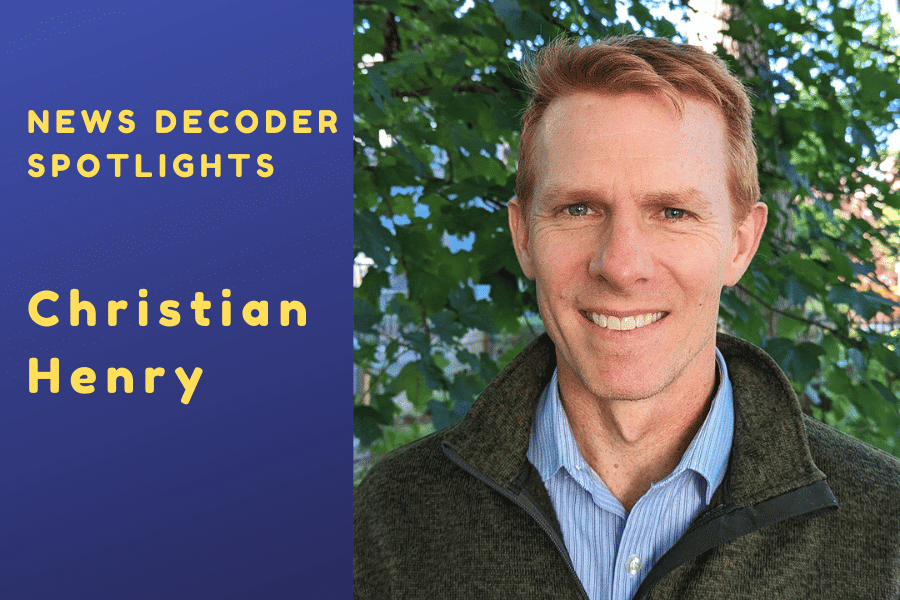
The new board president of News Decoder’s nonprofit wants to help students tell their stories and discover a wider world. Nouvelles-Découvertes Board President Christian Henry. Christian Henry has a portal in his office. To some, it’s a photo of a turquoise-water...
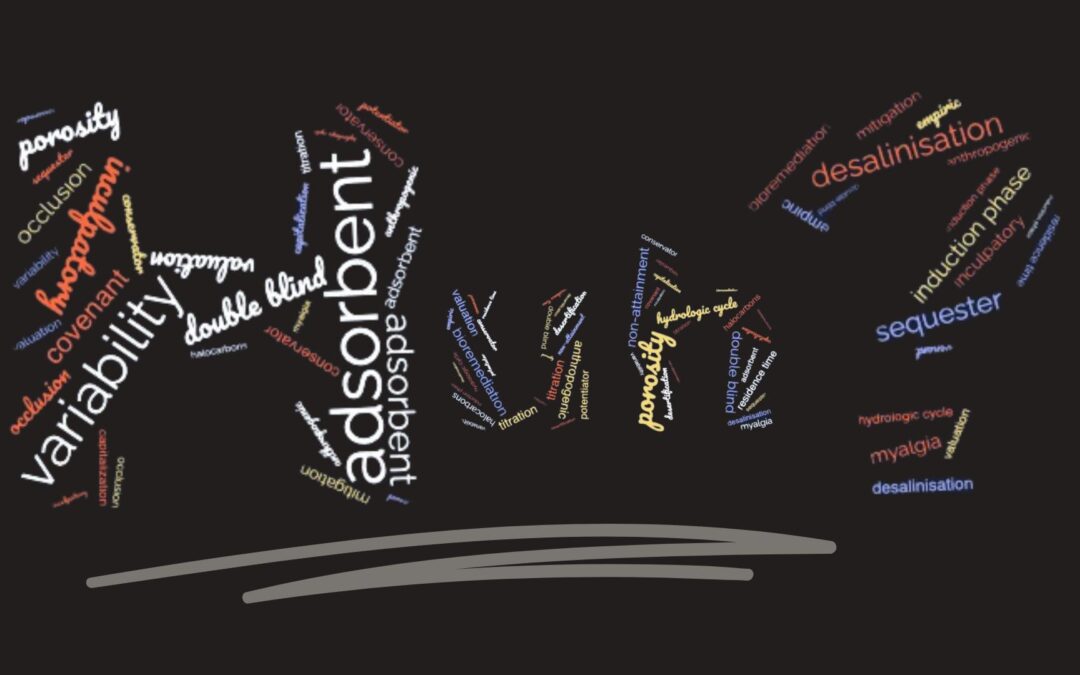
Within professions, people use terminology to be precise. But for communication, clarity requires simple language. A confusion of terminology forms the word Huh? (Illustration by News Decoder) This article was produced exclusively for News Decoder’s global news...
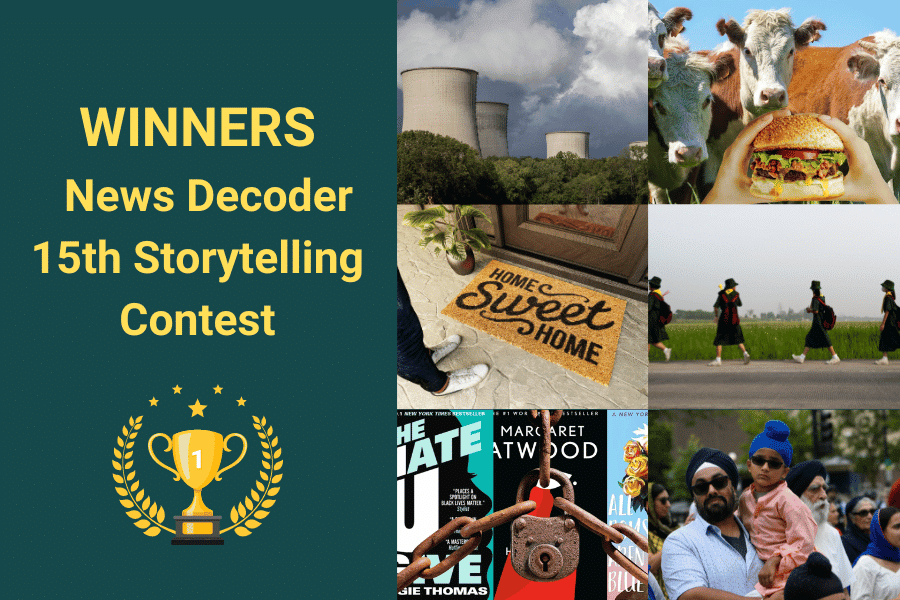
A one-week workshop produced three winners in our storytelling contest. Across the Atlantic, St. Andrews Episcopal in Mississippi tied for second place. Stories produced out of a week-long media camp at Realgymnasium Rämibühl Zürich (RGZH) took three prizes in...
Are wealthy countries responsible for mitigating the effects of climate change in developing countries? Students take up the debate — and find common ground. (Credit: Badmanproduction/Getty Images) “Developed countries should make a sincere effort to mitigate the...
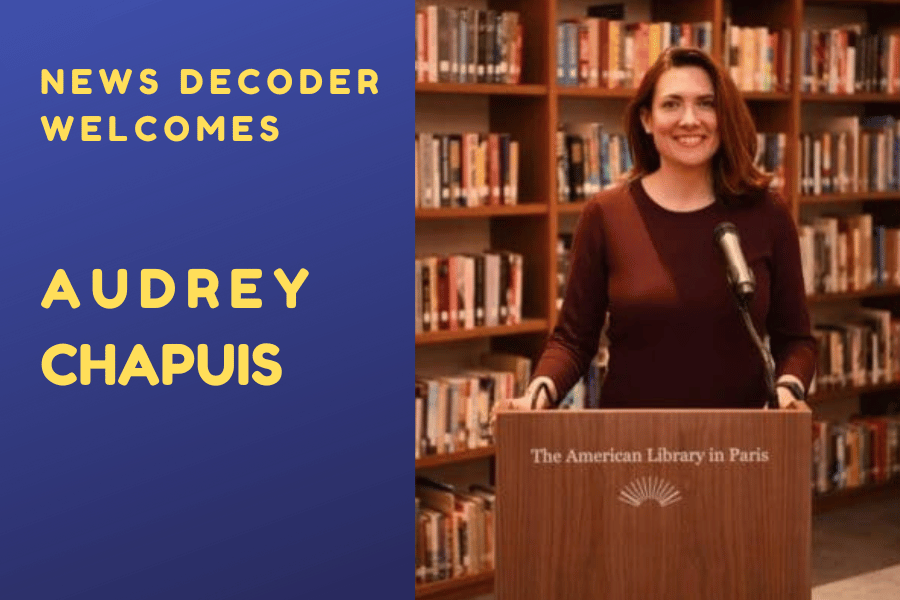
Our new board member wants to foster the insatiable curiosity we all have, whether through a book pulled off a shelf or a digital site like News Decoder. Audrey Chapuis giving a talk at the American Library of Paris. (Credit: Krystal Kenney) Ask Audrey Chapuis what...
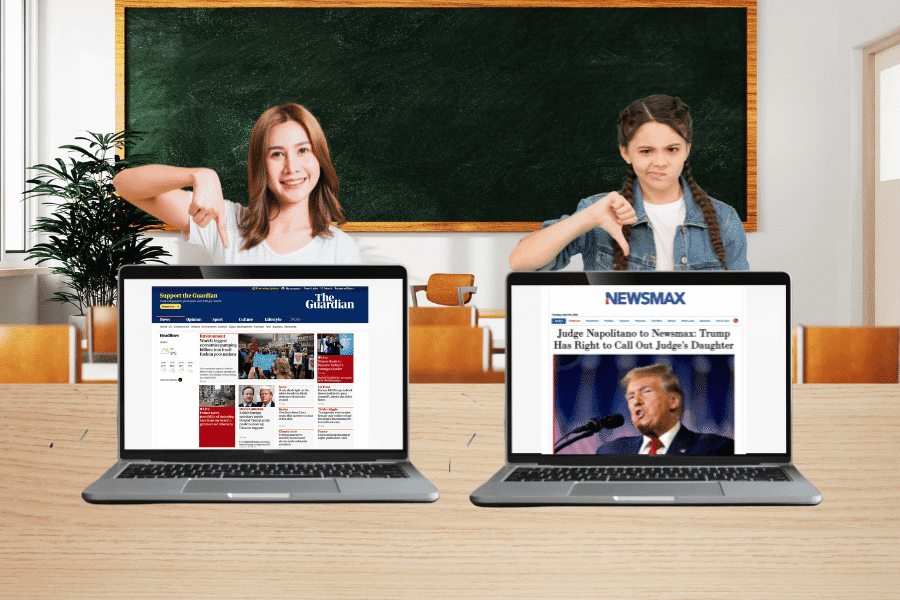
News and media literacy groups are calling on Europe to include journalism in media literacy education. Students need to know how to spot news they can trust. A teen points to a site that can be trusted while another gives a different site a thumbs down. Illustration...
Young people engage with the news in its many, diverse forms but they can’t always trust its reliability or may not verify sources. It is vital that young people be able to discern between real news and fake, verified trustworthy sources and polemic, propaganda or clickbait. In this piece, Aralynn Abare McMane talks to news and media literacy groups and explores why they are calling for Europe to include journalism in media literacy education.
Exercise: In order to better understand the wider issues surrounding media literacy, ask students to choose one of the organizations or projects mentioned in the article. They should undertake independent research into what they do. In groups, they can look into their chosen organization or project and prepare a short presentation summarizing what they do and the key issues they address. They should then reflect on why this organization exists, what problem it solves and how its objectives help students like them in the real world.
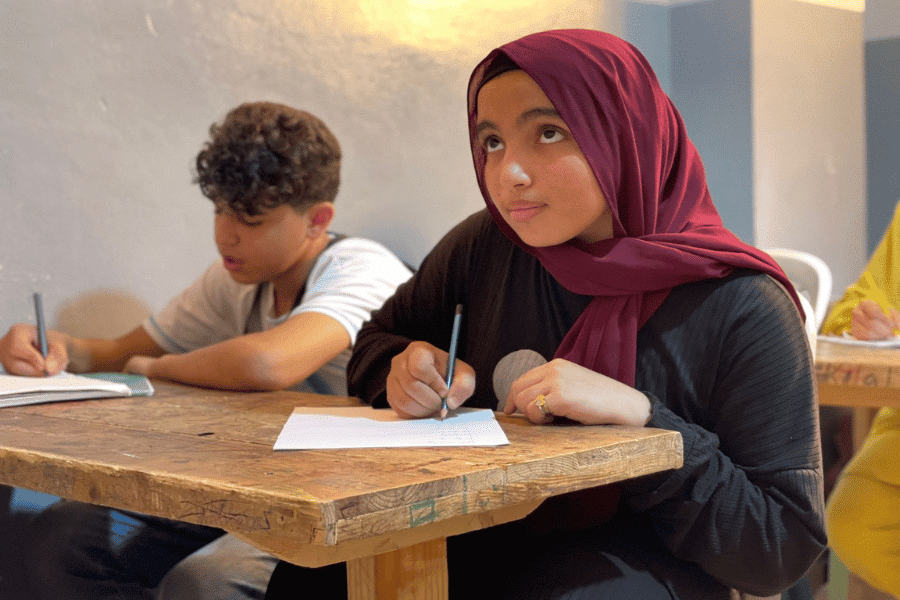
Desperate to give daughters a safe life, some refugees marry them off early. One organization in Lebanon is showing girls that there is an alternative. Batoul, age 13, in an Alsama classroom in Lebanon. Batoul came to Alsama two years ago illiterate because her...
Girls face barriers to education due to poverty, cultural norms and practices, traditional gender roles, societal pressure and gender inequality. Katharine Lake Berz looks at how education and gender equality play a crucial role in redressing the balance and keeping girls worldwide from early marriage.
Exercise: Read the article. Use the ‘Questions to Consider’ below it as a starting point for discussion. Find out more about the importance of girls’ education and think about why it should be a priority. For further reading and research, use the following information on girls’ education: Girls Not Brides, World Bank. Discuss why this issue should be a priority and how it relates to SDG 4 and SDG 5. You could screen this ‘School is just the start’ TED Talk by Angelina Murimirwa (8min) and discuss the key points in groups.
One student compared two schools in different countries and found that where the focus was on academics over community, students were more satisfied. What’s that all about? Students discuss amongst each other in a classroom. (Credit: FatCamera/Getty Images)...
Amina McCauley experienced climate change in the ancient forests of Tasmania. Now she wants students around the globe to understand its effects. Amina McCauley sits among the fern trees in Wellington Park, Tasmania. (Photo courtesy Amina McCauley) Concern about...
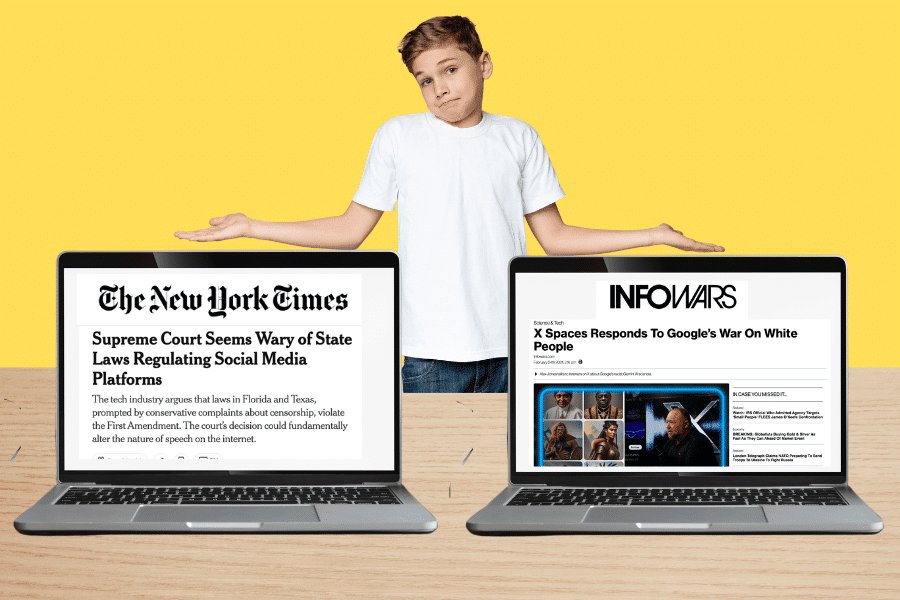
If a child is old enough to learn to read, it’s time to teach them to be media literate. But how to implement that in schools takes some problem solving skills. A teen shrugs at the difference between two computer screens. One shows an article by the New York...
Today’s students are digital natives, but are they digitally literate? In this Classroom #Decoder, guest writer Michael Leedom of the University of Toronto surveys media literacy curriculums around the globe, finding that media literacy education in Finland may be the world’s most robust.
Exercise: Read the article with your class, then have students try their hand at “lateral reading”. This is defined in the text as “checking the credibility of a claim by consulting other sources. Rather than remaining on a website with questionable information to find answers, known as ‘vertical reading’, students are taught to open a new tab and see if new information conflicts with what more trusted websites offer.” Present students with a web page and have them verify the credibility of that page by practicing lateral reading.