
Live out of suitcases for months at a time, and you learn what to leave behind. It’s not the physical stuff that matters but connections you make and keep.
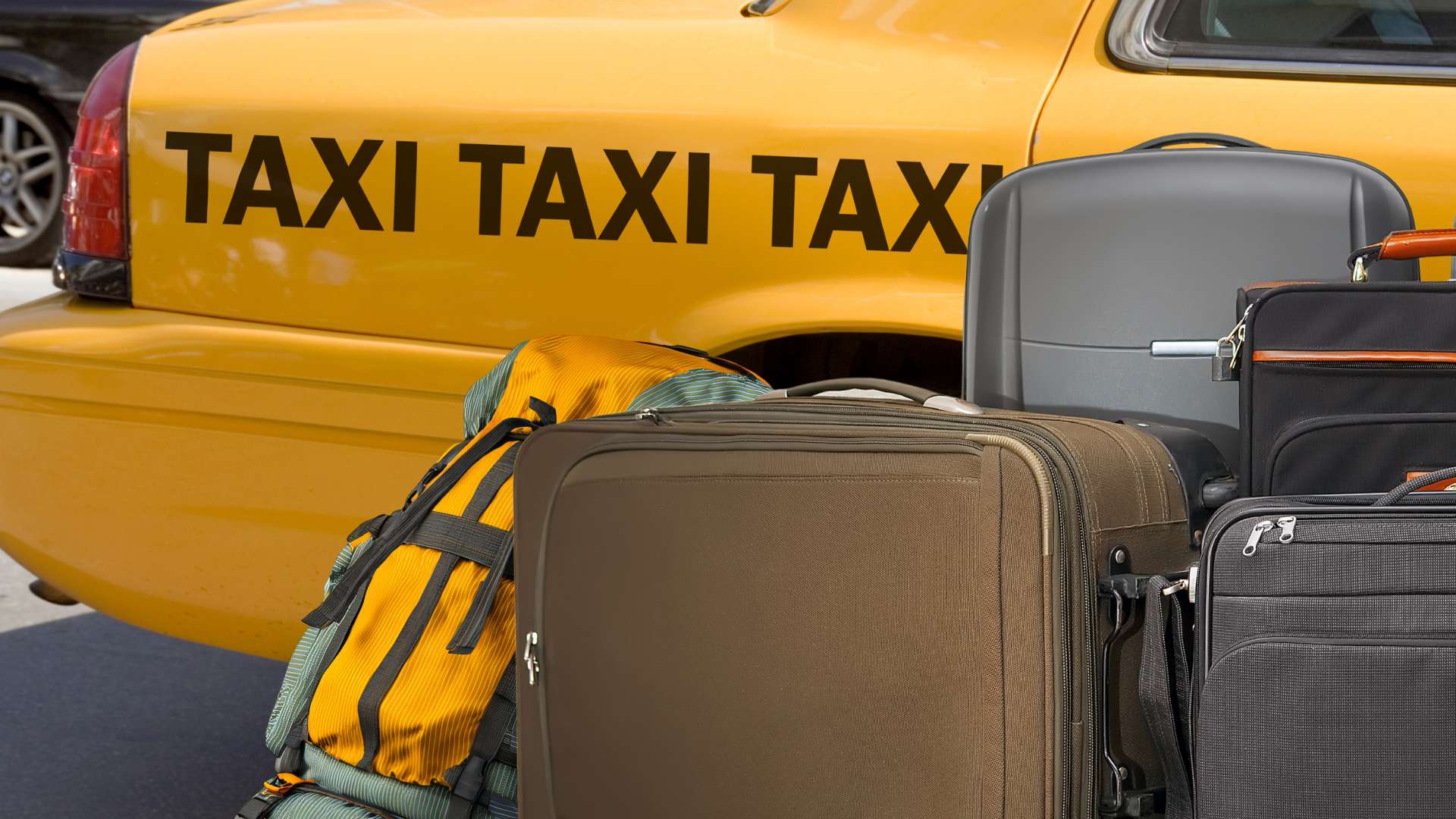
Suitcases beside a taxi. (Illustration by News Decoder.)
This article was produced exclusively for News Decoder’s global news service. It is through articles like this that News Decoder strives to provide context to complex global events and issues and teach global awareness through the lens of journalism. Learn how you can incorporate our resources and services into your classroom or educational program.
In six months I will move again. It will be my seventh move in less than two years.
I’m not homesick for Calgary, Canada, where I started this journey. But I am tired of searching for new friendships and, sometimes, of carrying more clothes — and emotions — than I can fit into two suitcases
When I try to describe what moving around is like, I remember one moment. It was my second day in Peru, and everywhere around me were mountains of sand. Not a single plant in sight, not even a cactus.
The sun was strong and I felt the beginnings of a sunburn. After multiple stops and a wild dune buggy ride through the desert where I held on for dear life, I made it to the top of one of the sand dunes. I moved around to the other side and looked down. There it was: Oasis de la Huacachina, a shimmering pool of water surrounded by palm trees.
The wind was blowing harshly. In that moment, I was grateful that my face was covered with the brightly coloured bandana I had bought from a vendor who was upset I could pay only in American dollars and warned me he would charge me more. I hadn’t had enough time to convert money to Peruvian soles.
This is the cost of not being prepared with cash in the right currency for unexpected purchases that happen on a trip.
Preparing for the unexpected
Being a nomad is like going through a desert, trying to be as prepared as possible only to be faced with the unexpected — strong winds blowing sand in your face and getting overcharged for the things you didn’t know you would need.
But once you get to the top of the sand dune and look down at the oasis, you appreciate the journey you’ve made.
The nomadic life isn’t as romantic as the internet paints it to be. Between the excitement of new places and adventures is the challenge of creating and maintaining a sense of community.
This journey started back in 2023 in Calgary. I was having dinner with friends and talking about the awful job market and how I’d managed to land only remote work on temporary contract.
“You know, I think I’m probably going to leave Calgary soon,” I heard myself say.
Embarking on a journey
I had absolutely no plan for how that was going to happen. But almost a year later I got married. My husband had finished his first year of residency and needed to move for training opportunities in various cities. We would spend only one to three months in each city before moving on.
Like most young adults, I left my hometown to start something new. The packing part was easy. The hard part was saying goodbye to the familiarity of Calgary — my family, friends, the parks I visited regularly and my favourite cafés.
The journey began in Calgary, and carried us to Kingston, a town on Lake Ontario, for four months, from where we relocated to Montréal for one month. We moved to Toronto for three months, where we then traded the snowy weather for the warm desert in Lima, Peru for just over two months. From there, we returned to Toronto for another three months before arriving in Baltimore in the U.S. state of Maryland.
As we moved from place to place over the course of 13 months, I realized I wasn’t homesick. Instead, I was weighed down by the things I’d grown so attached to. With each move, I faced this dilemma: Pack them up again or let them go before starting over again.
After almost four months in Kingston, the time had come to pack up again. There was stuff everywhere. Bags of clothes sat on the living-room floor and overfilled boxes of household items covered the kitchen floor.
What you pack and what you leave
I couldn’t take everything with me, yet as I was folding clothes I found that my suitcases weren’t filling. The donation bags seemed to be getting bigger and bigger. At that point, I was repulsed by the number of clothes I had. Did I really need four pairs of jeans? In normal circumstances, my answer would have been yes. Then, I needed functionality and I didn’t know how to achieve that.
What was replaceable if I later changed my mind?
I was nostalgic as I sifted through the piles — recalling the memories attached to those items. “They’re just things,” I told myself. I found a folder filled with cards from friends and families. I didn’t have it in me to throw them out, so I stuffed them in my backpack. It wasn’t like they were replaceable items you can buy at a store.
The worst part of moving so frequently is that distance doesn’t make the heart grow fonder. It makes communication challenging and if you can’t catch someone by phone, many things — life updates and check-ins — are lost through text messages.
The best part of moving so frequently is you get to be a tourist while living like a local: You have the best of both worlds. You learn your neighbourhood so well you find shortcuts to get to your favourite places. You earn the right to learn about local gems and can still visit the cliché tourist spots without feeling the embarrassment a local would. That was the highlight of my month in Montreal — I’d finish work and hop on the subway to explore. Every day was its own adventure, trying new restaurants, shopping at local grocery stores and catching up with work colleagues in the area.
Finding meaning in new places
I celebrated my birthday in Montreal for the first time outside of my hometown. I’m not much of a birthday person, but I was disappointed that many of my friends had forgotten my birthday. On a positive note, some friends did remember, and those birthday text messages were special. I decided to celebrate with some “restaurant hopping,” trying a savoury meal at one restaurant, going for dessert at another and trying interesting snacks all in the same night. It was the first time I tried ramen, a Japanese noodle soup, and the first time I ordered in French.
The month flew by and it was time to move to Toronto. The good news is I hadn’t fully unpacked, because I knew that my time in Montreal was short. I somehow did make friends, but we didn’t keep in touch after I moved.
For some reason, surface-level friendships were easier than having to worry about whether people would want to keep in touch, and I wouldn’t feel the pressure of having to reach out or go through the cycle of feeling disappointed if they wouldn’t get back to me. I was still grieving how many of my close friendships in Calgary had gone static.
A few weeks later, we moved to Toronto and I joined a running club. I was shy at first, but I slowly warmed up and made friends. I didn’t bother to take my new friends’ phone numbers or make plans outside of the running club, because I knew I would soon be leaving. One of my best friends in Calgary had a baby girl during my time in Toronto and I couldn’t visit over the holidays to celebrate because I was preparing for my next move.
For some reason, deciding what stays and what goes never gets easier. You just get better at the time management part of it and start earlier — or stay up later getting the job done. We were packing until 3 a.m. on the day we were leaving for Lima, Peru, where my husband was going to take a tropical medicine course. A few hours later, we boarded the flight.
Meeting people in Peru
Lima is one of the most beautiful cities I’ve ever visited. It’s a desert that sits on the Pacific coast, offering the best of both worlds: an ocean and a stunning oasis.
By this point, my work contract had ended and could not be renewed due to budget changes. I was initially worried that I would be bored or miss out on professional growth. I decided that it would instead be a once-in-a-lifetime opportunity to try new activities, travel and reflect on what I wanted my professional career to look like.
I expected to encounter many English speakers in Lima, because it was the capital, but I was mistaken. I didn’t want to rely on Google Translate for basic conversations because I wanted to immerse myself in the culture and everyday life. So I enrolled in Spanish-language classes.
I met people from all over the world who had come to Peru for all kinds of reasons, including business, backpacking across South America and simply to learn Spanish.
This is probably my favourite part of moving around: You get to meet people from all walks of life, with various backgrounds and experiences, who teach you things you never otherwise would have learned.
Nomads find each other
I made friends with a girl my age who worked in marketing in London and was visiting her father, who had a business in Peru. One American man in his late 60s had married a Peruvian woman and was planning to retire in Lima.
Another was a businessman who opened restaurants all around the world and was looking to break into the Peruvian market.
And I met a Canadian from the Greater Toronto Area whom I probably would never have crossed paths with had it not been that we were in Peru at the same time. I had wonderful conversations with her during our walks in the Miraflores neighbourhood.
While learning Spanish, I also stepped out of my comfort zone and tried new activities. I sand-boarded, where I rode down a sand dune in the desert south of Lima, surfed on the Pacific Ocean, hiked the famous Machu Picchu — an ancient Incan citadel located in the Andes Mountains — and took a chocolate-making class during which I roasted my own chocolate beans.
It was through enjoying all of these adventures and writing about my experiences to family and friends that I decided to try journalism and a few months later, applied for a fellowship in Journalism and Health Impact at the University of Toronto’s Dalla Lana School of Public Health.
Accepting the changes that take place
I returned to Toronto months later. It was spring and I got to see cherry trees in blossom, enjoy walks by the harbour and prepare for my next move, this one to Baltimore, Md. I reconnected with old friends, shared my adventures in South America and realized that although we don’t talk as much as we used to, living far apart does change the dynamic of a friendship. It’s not a bad thing, it’s just different and that’s okay. It’s fine to keep in touch with friends on a semi-annual basis and meet in person when given the chance.
I discovered that it’s not fair to assume things will stay the same when I was the one who moved away.
Shortly after moving to Baltimore, my childhood best friend got married in Calgary. The timing was difficult and I had to miss it. My friends who did attend FaceTimed me during the reception. It was like I was there, but I also wasn’t.
It was difficult, but I came to learn that the way I conducted friendships also changed. Distance created challenges in the way I showed up and, although my friends never called me out on it, I’m certain now that they probably felt emotions similar to mine. Long-distance friendships are not easy and that’s part of the baggage that comes with nomadic living. My best advice is to show up when you can and reach out when you miss them.
Flash forward to today: I did apply to the journalism fellowship and was accepted. I’m glad I did because I’m enjoying writing and reporting on health topics I’m interested in.
In the meantime, I have another six months until I move again. I don’t know where I’m going next. I’m riding the wave and ready to embark on my next adventure when the time comes. I have a community of people with whom I meet regularly and, although I’m not sure how those relationships will change when I move again, I know these are the kinds of feelings that can fit in my suitcase.
Questions to consider:
1. What was one thing the author learned after moving from place to place?
2. What is one disadvantage of moving every few months?
3. If you were to move from the country you now live in what would you miss?

Hanan Hammad is a writer and strategist exploring how communication and innovation shape public understanding — particularly around health misinformation. She has worked across public, corporate and research sectors, contributing to organizations including Deloitte and the Canadian Human Rights Commission. Having lived in five cities over the past year, she brings a curious, dynamic perspective to her work. Hanan is currently a fellow in Journalism & Health Impact at the Dalla Lana School of Public Health.