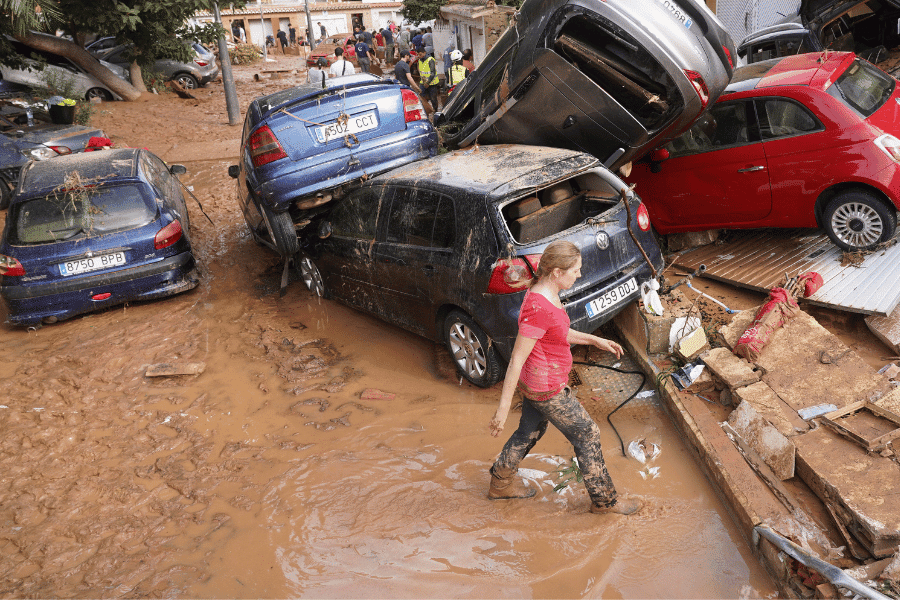
Financial markets are so connected that floods, drought or war in one country can sink an economy halfway across the globe. How does that work? A woman walks by piled up cars after floods in Massanassa, just outside of Valencia, Spain, 1 November 2024. (AP...
New laws that affect what church people can pray in could cost Ukraine support from those who believe in religious freedom. Metropolitan Epiphanius, the head of the Ukrainian Orthodox Church, blesses water during a traditional Epiphany celebration in Kyiv, Ukraine, 6...
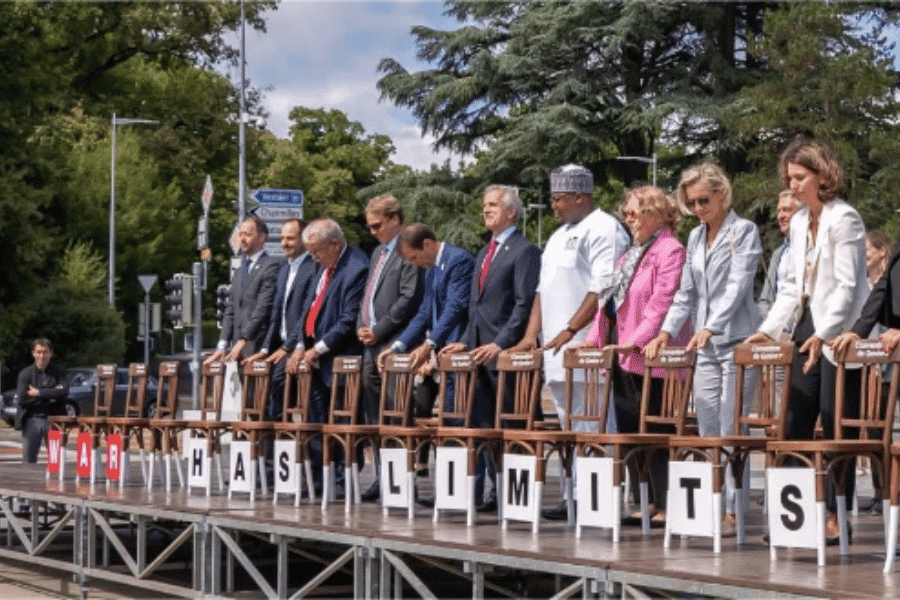
Russia didn’t attend the 75th birthday of the Geneva Conventions. Are the treaties that govern how nations conduct war still relevant in today’s chaotic world? Members of the UN Security Council mark the 75th anniversary of the signing of the Geneva...
Use this piece to explore international relations, geopolitics, the politics and history of conflict. Last month marked the 75th Anniversary of the Geneva Conventions. Russia didn’t attend. Political Scientist Daniel Warner decodes whether the treaties that govern how nations conduct war are still relevant in today’s chaotic world.
Exercise: Debate. Split students into groups. In each group, divide students into two teams. One will defend the Geneva Conventions, the other is against the conventions. In preparation, watch this video and share the ICRC website. Each team undertakes research to build an argument for their case. Ask students to debate the issue. After the debate, discuss the difficulties teams had in supporting their arguments.
Go back three decades and the trend was towards global democracy. Now we see rising authoritarianism. Are we looking at global autocracy? Military tanks. (Credit: Mikhail Shapovalov/Getty Images) This article was produced exclusively for News Decoder’s global news...
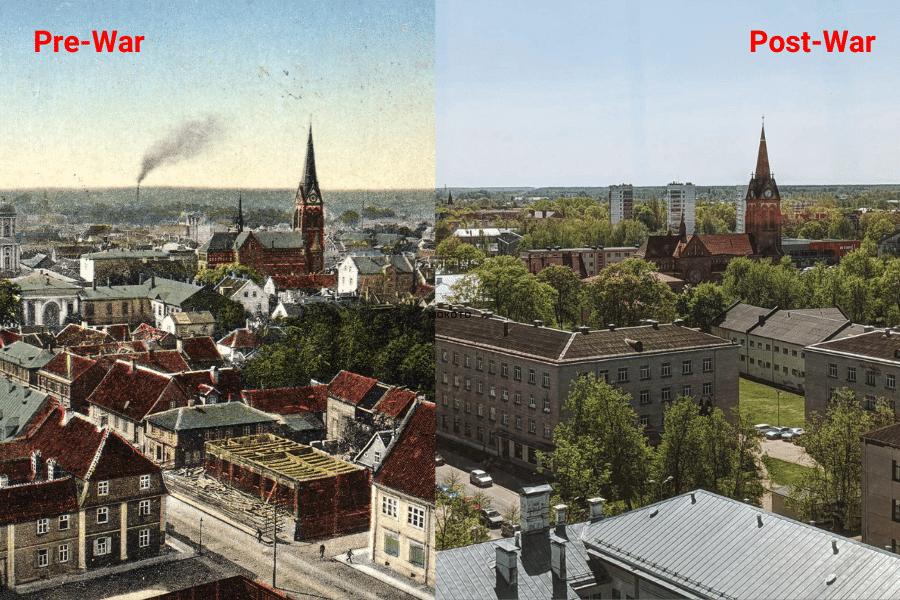
It’s been 34 years since the Soviet Union controlled Latvia, Lithuania and Estonia. But the Ukraine conflict has people thinking: Are we ready for war? Two photos show Jelgava, Latvia. On the left is Jelgava before World War Two (Credit: The Archive of Jelgava...