Instead of scaring people into climate action, Adam Fishman thought he could start a ripple effect by starting with some gratitude. Adam Fishman This article and two-part video interview by author Ali Cappola was a Silver Prize winner in the Climate Champion Profiles...
To bring a fish back from the brink of extinction, people must push for protection over pollution. An Atlantic sturgeon. (Credit: Delaware Department of Natural Resources and Environmental Control) This article, by high school student Annette Khosravi, was produced...
Student author Annette Khosravi from ND school partner The Tatnall School delves into the world of conservation in this piece about saving the Atlantic sturgeon. Highlighting News Decoder’s mission to connect the local to the global, this text serves as an example of how local activism may lead to widespread positive impacts.
Exercise: Ask students to look into the environmental and social organizations in your local community. What types of local groups could they contribute to? What is the broader significance of civic engagement? After completing their research, students should each come up with and present a 90-second “elevator pitch” for the organization they researched, including a specific call to action for others to get involved.
In the fifth of six monthly conversations, three experts ask: can the way nations spend money help bring about the change needed to cool the Earth? The fifth Ecologues discussion featured (right to left) Juan Pablo Arellano, Marlowe Hood and Bianca Getzel with...
We’re seeing decreasing snow in mountain regions around the world. But there is more at stake than a photographic background or the perfect ski run. People work on a tarpaulin which cover the ice of the Corvatsch glacier, near Samedan, Switzerland, 5 September...
To keep plastics out of the waste system, Ved Krishna decided to change the way food service products were made. Yash Pakka founder Ved Krishna. Photo courtesy of Ved Krishna. This article, by author Samaya Chauhan, was a Silver Prize winner in the Climate Champion...
This article, from youth author Samaya Chauhan of India, won a Silver Prize in our Climate Champion Profiles Challenge, organized in partnership with Global Youth & News Media. Samaya profiles Ved Krishna, an entrepreneur and innovator who sees climate solutions in the ordinary and quotidian.
Exercise: Divide students into groups of two to three. In these groups, have them brainstorm items they use every day that may contribute to climate change. Examples may include: cell phone, water bottle, pieces of clothing, backpack, etc. How might these everyday, commonplace items be re-conceptualized so they support positive climate action? Look back to Ved Krishna’s profile for inspiration.
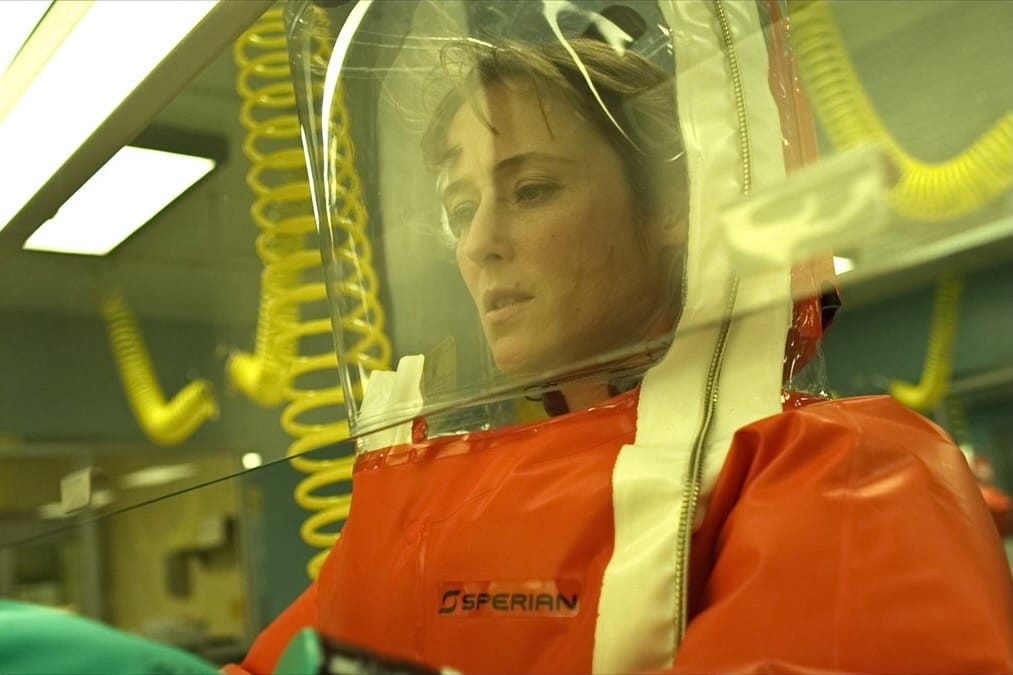
In the movies, the solution for global disasters comes at the nail-biting end. Not so in real life. It won’t be The Rock that saves this rock we live on. Dr. Ally Hextall, played by Jennifer Ehle, tries to save the world from a virus in the movie Contagion. ...
In the fight against climate change, technology is often seen as a panacea that absolves corporations and individuals of the responsibility to act. The narrative reads as follows: with new technology, we can continue to live as we always have, without reducing consumption and waste. In this latest Decoder, correspondent Sarah Edmonds explains why this is not at all the case.
Exercise: The article decodes several types of climate technologies making headlines now, notably: nuclear energy, solar power, carbon capture, hydrogen and wind energy. Divide your class into five groups, each taking on one of these technologies to investigate. They should start with the information presented in the article, then conduct outside research online using reputable sources. Each group should then discuss the benefits and drawbacks of their assigned climate technology, and elect a spokesperson to share their findings with the class.
Children across the globe were invited to tell the world, through art, what needs to be done to save our planet from climate change. These are their messages. Julia, 10, from Brazil created this logo for her local news outlet, Jornal da Criança based in São Paulo,...
Half of the world’s habitable land is used to produce our food, while the other large areas are contaminated by fertilizers, pesticides and sewage. How can we feed the world without causing harm to the planet? Alice McCrum, Emma Heiling and Sébastien Treyer at...
There are all kinds of dangers associated with climate change. Can we still have healthy lives amid rising seas and extreme weather? Photo illustration by News Decoder. This article is one in a series of decoders examining critical aspects of climate change. They are...
In New York’s Soho neighborhood, a small museum hopes to stimulate dialogue and spur the public to push for change across the globe. A passerby looks at the front of the pop-up site of the Climate Museum in Soho, New York City. All photos by Enrique Shore for...