Ask an AI app if it will kill off journalism and you get a nuanced answer. But from a human point of view, things seem more black and white. A room filled with computer servers serves as a newsroom. (Illustration by News Decoder) This article was produced exclusively...
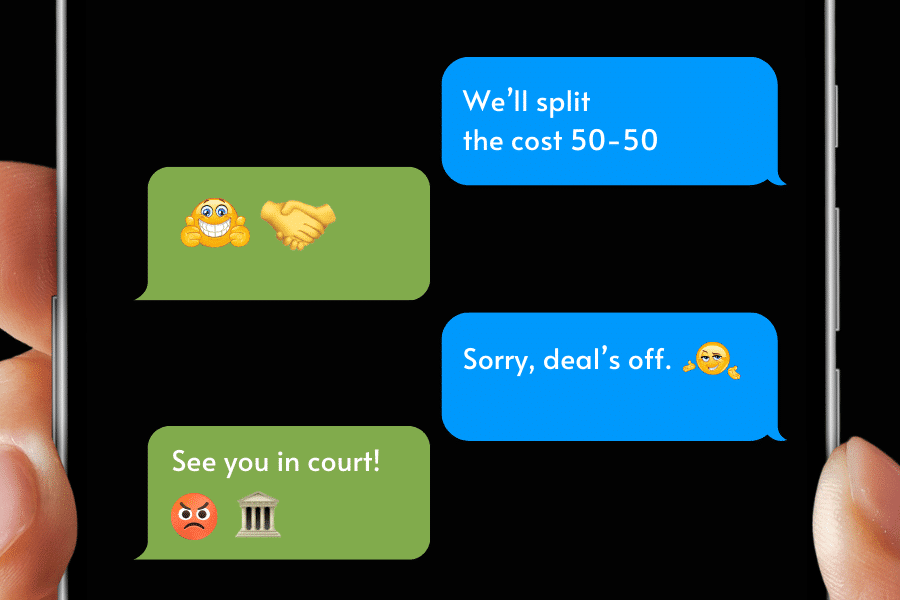
Courts around the world are considering promises made via text message as legally-binding contracts. Text messsages depict a reneged deal. (Illustration by News Decoder) This article was produced exclusively for News Decoder’s global news service. It is through...
Amina McCauley experienced climate change in the ancient forests of Tasmania. Now she wants students around the globe to understand its effects. Amina McCauley sits among the fern trees in Wellington Park, Tasmania. (Photo courtesy Amina McCauley) Concern about...
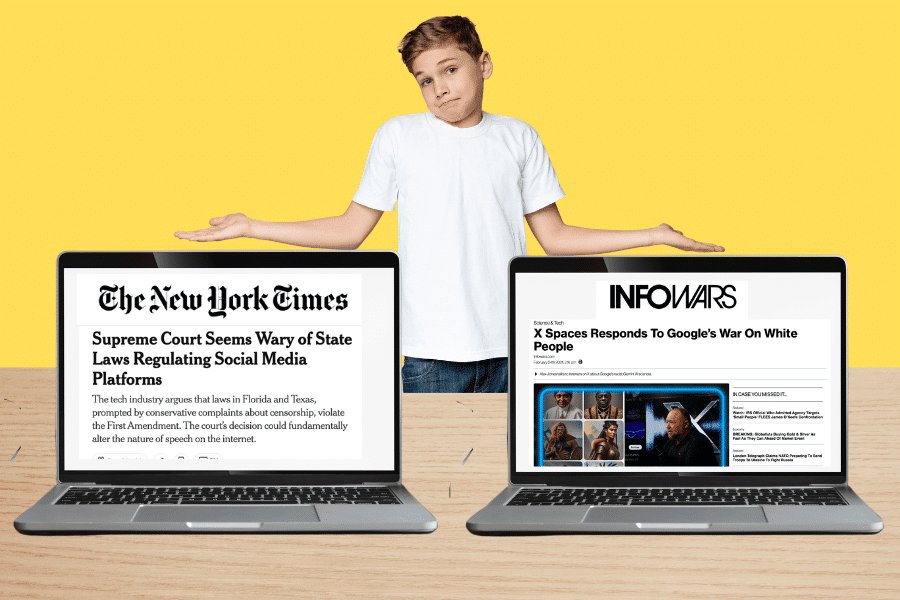
If a child is old enough to learn to read, it’s time to teach them to be media literate. But how to implement that in schools takes some problem solving skills. A teen shrugs at the difference between two computer screens. One shows an article by the New York...
Today’s students are digital natives, but are they digitally literate? In this Classroom #Decoder, guest writer Michael Leedom of the University of Toronto surveys media literacy curriculums around the globe, finding that media literacy education in Finland may be the world’s most robust.
Exercise: Read the article with your class, then have students try their hand at “lateral reading”. This is defined in the text as “checking the credibility of a claim by consulting other sources. Rather than remaining on a website with questionable information to find answers, known as ‘vertical reading’, students are taught to open a new tab and see if new information conflicts with what more trusted websites offer.” Present students with a web page and have them verify the credibility of that page by practicing lateral reading.
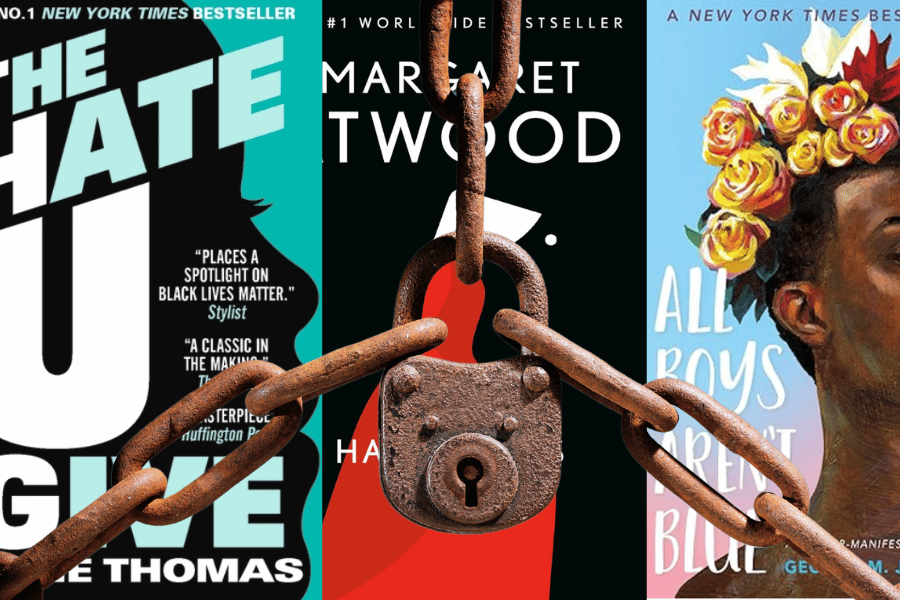
In more regions around the world people want to keep some books out of the hands of youth. But these are the books that engage kids the most. A heavy chain and lock covers three novels at the heart of book banning controversies. (Illustration by News Decoder) This...
Book bans have historically been linked to authoritarian regimes. In recent years, we’ve seen the rise of book bans in democratic countries, too. This is a disturbing trend, and young people are noticing, too. In this piece from high schooler Emily Ireland of St. Andrew’s Episcopal School in the U.S. state of Mississippi, prompt student thinking on censorship and banning books with an evidence-based reasoning activity.
Exercise: Read the article with your class. Then, launch a class discussion on whether there are book topics that should or shouldn’t be banned in public schools in your country. Be sure to get into the nuances of this complicated topic: if some topics are inappropriate for certain audiences, who should be responsible for restricting access? Should it be governments, parents, schools? How might these parameters change from country to country, depending on context? This activity is well-suited to be a complementary teaching tool on a lesson about civil liberties (e.g. in the United States, the Bill of Rights).
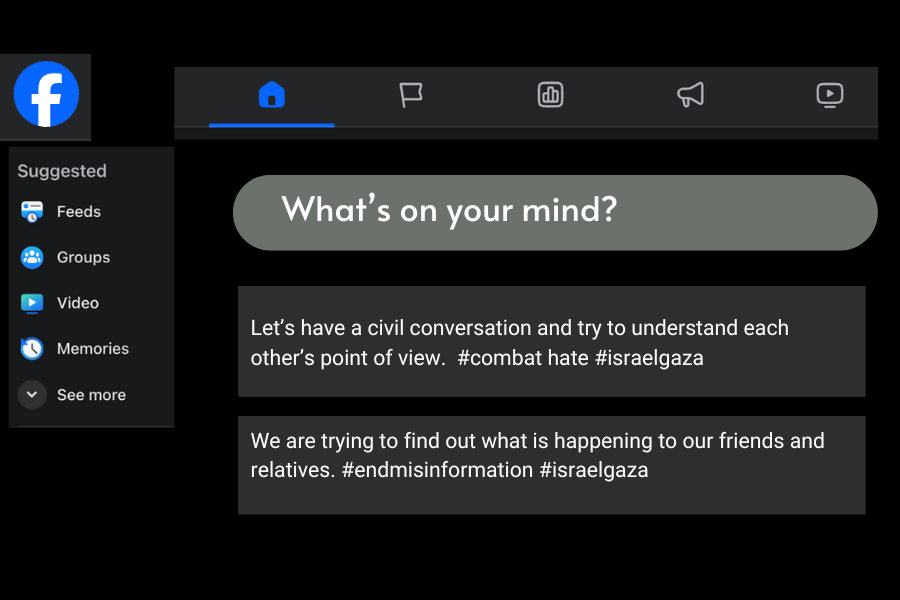
From Gaza to Israel to the United States some people are turning to social media for civil discussion. Can we stop disinformation about the Middle East? Posts on an imaginary social media page calling for civil dialogue about the Middle East. (Illustration by News...
Social media can be a double-edged sword — with the power to unite and to divide. How can students differentiate between disinformation and credible content? Journalism undergraduate student Ella Gorodetsky from the University of Wisconsin-Madison looks at social media posts about the Israel-Hamas war to investigate.
Exercise: After reading the article together, have students come up with a social media campaign to stop the spread of disinformation. In 160 characters or less, students should invent a catchy slogan to help others distinguish between credible and fake content. This activity should be done in groups of 2-3.
The public is hungry for free online news. That appetite endangers the existence of news organizations that produce it and democracies that nurture them. Big dogs representing Facebook, Instagram, TikTok and Google are shown harnessed but not muzzled. (Illustration by...
Garbage in Paris. Death of a statesman. Climate talks in the desert. Coups and crises. As we greet 2024, how much do you recall from the year that’s been? 2023 Current Events Quiz News Decoder correspondents help us understand what happens across the globe....
Introducing Sabine Bērziņa, News Decoder’s latest hire, to help lead our Mobile Stories project to teach media literacy through the practice of news gathering. Sabīne Bērziņa, News Decoder’s User Experience Manager. One way to get students to become media...
Journalists tend to depict conflict as violent struggles between good and bad. There is a different way to think about war. Syrian refugee children in Lebanon (Wikimedia Commons/Trócaire/Eoghan Rice) Editor’s note: This week News Decoder is exploring the future...