Many people around the world already distrust their election systems. What will happen when artificial intelligence enters the picture? A man creates a deep fake image of former U.S. President Donald Trump in prison. (Illustration by News Decoder) There have been a...
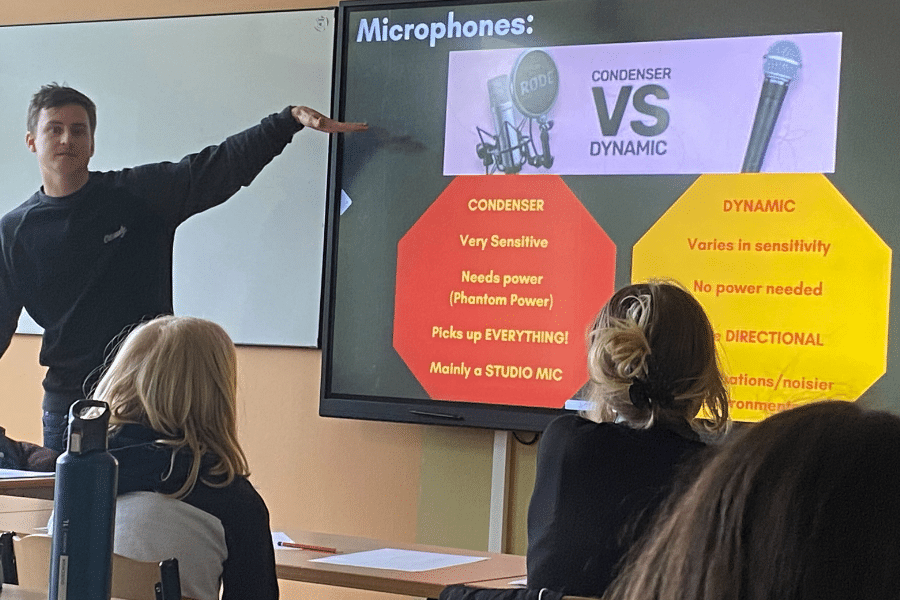
What’s the point of reporting on an unsolvable problem? Instead, identify solutions people can act on. News Decoder’s Program & Communications Manager Cathal O’Luanaigh gives a workshop on podcasting. Credit: News Decoder Journalism can be a...
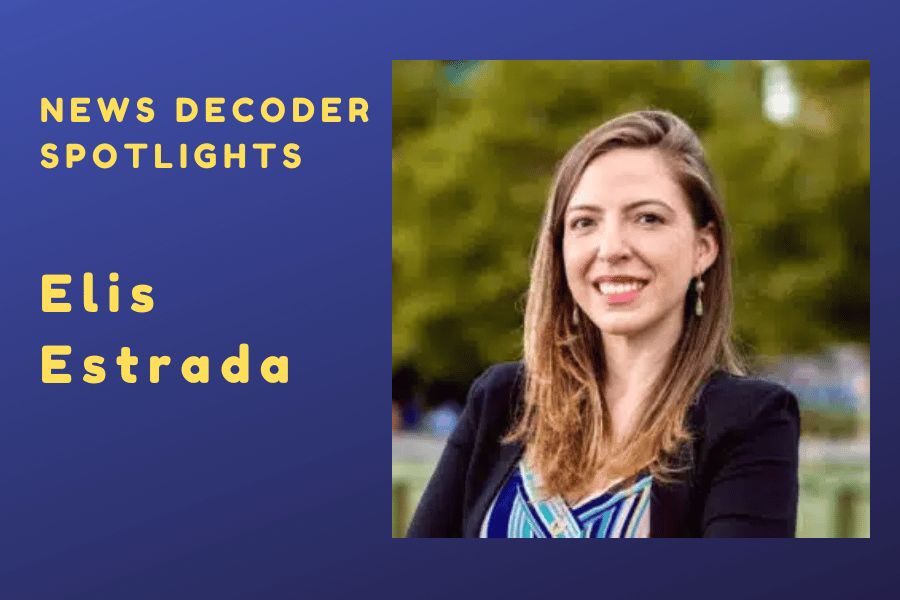
One of News Decoder’s new board members has made it her mission to help young people navigate the media landscape to better understand the world they live in. Elis Estrada, new addition to the Nouvelles-Découvertes board. Elis Estrada grew up watching local...
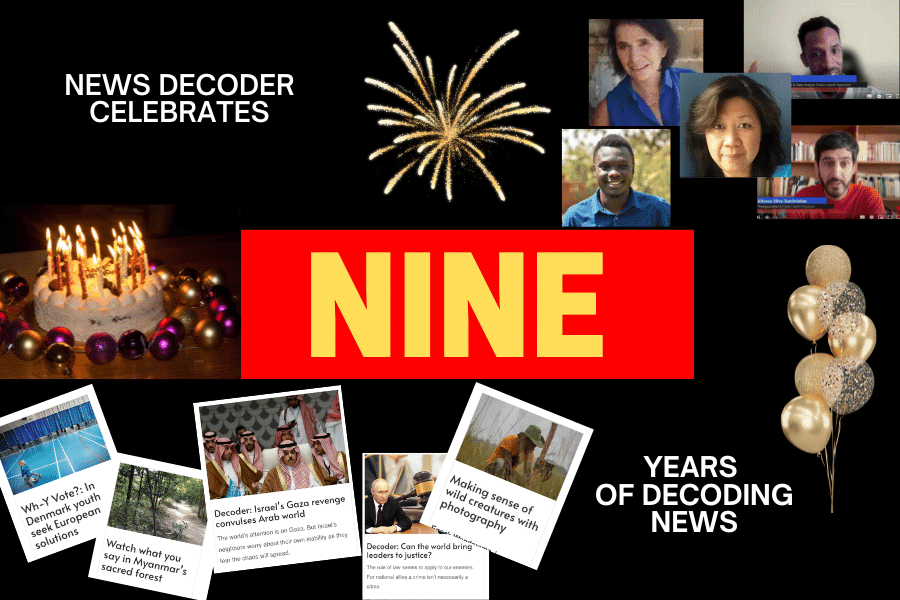
News Decoder started with one journalist who sought to build global awareness in young people. Over the next nine years dozens of other journalists signed on. Meet some of News Decoder’s correspondents. When News Decoder got its start it was with the idea of...
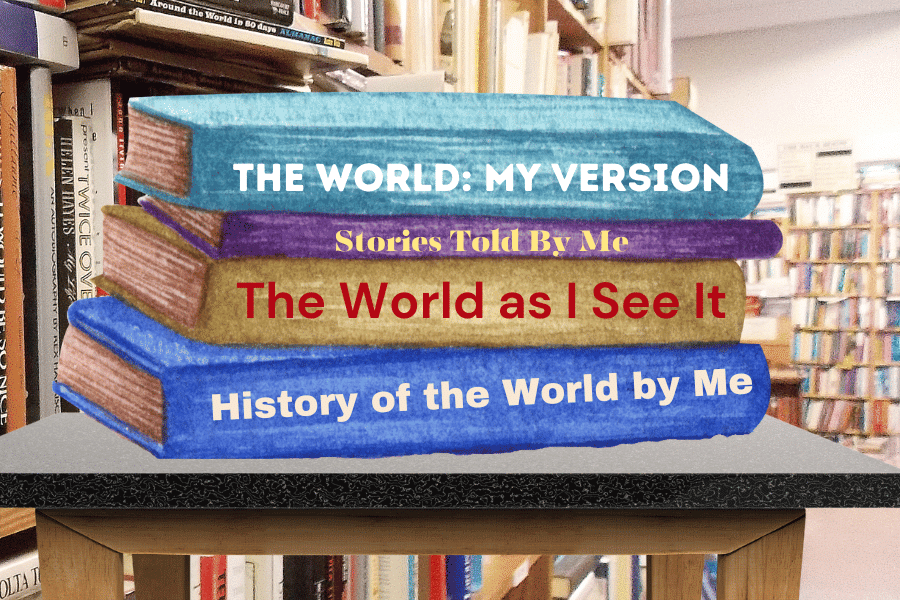
Historians dig up stories that document our past the way archeologists sift through relics. The more they learn the more we realize how much we don’t know. A stack of books in a bookstore that tell only one version of the world. (Illustration by News Decoder)...
Historians dig up stories that document our past the way archeologists sift through relics. The more they learn the more we realize how much we don’t know. News Decoder’s Editorial News Director Marcy Burstiner examines history and the versions of history that we’re told.
Exercise: Explore the idea of stories being told from different perspectives and of certain histories being silenced or underrepresented. Choose a current topic and have students look at it from different perspectives. What kinds of histories might be forged through telling the story in different ways?
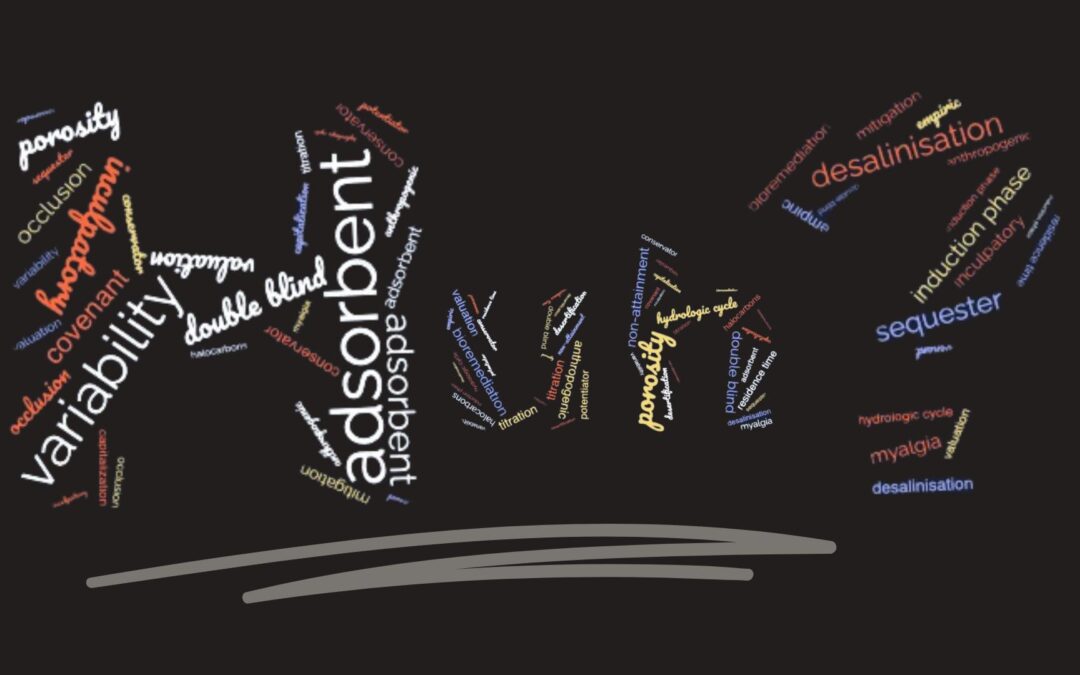
Within professions, people use terminology to be precise. But for communication, clarity requires simple language. A confusion of terminology forms the word Huh? (Illustration by News Decoder) This article was produced exclusively for News Decoder’s global news...
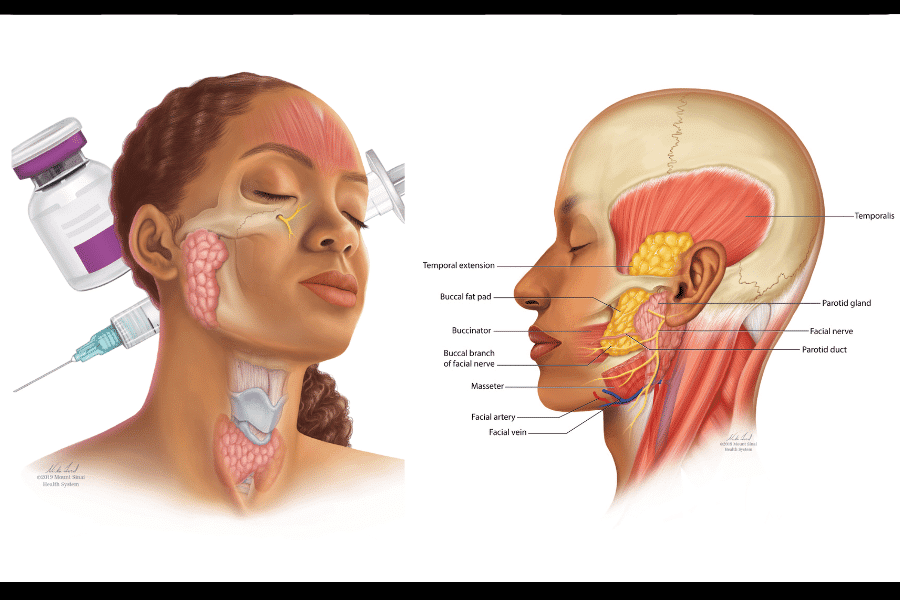
Ailments affect all kinds of people. But images doctors see in their textbooks and research journals don’t often reflect that. AI just makes it worse. Two medical illustrations by artist Ni-ka Ford. On the left is a depiction of botox injections. On the right is...
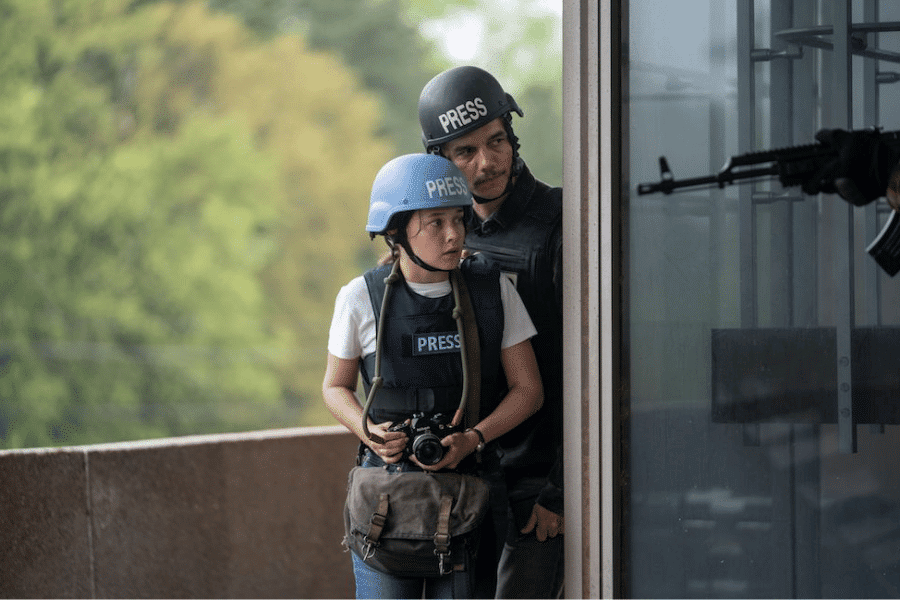
The movie “Civil War” gives little backstory, leaving viewers to experience war in the moment, the way the reporters in the film cover it. Scene from the movie Civil War. Credit: A24 This article was produced exclusively for News Decoder’s global news...
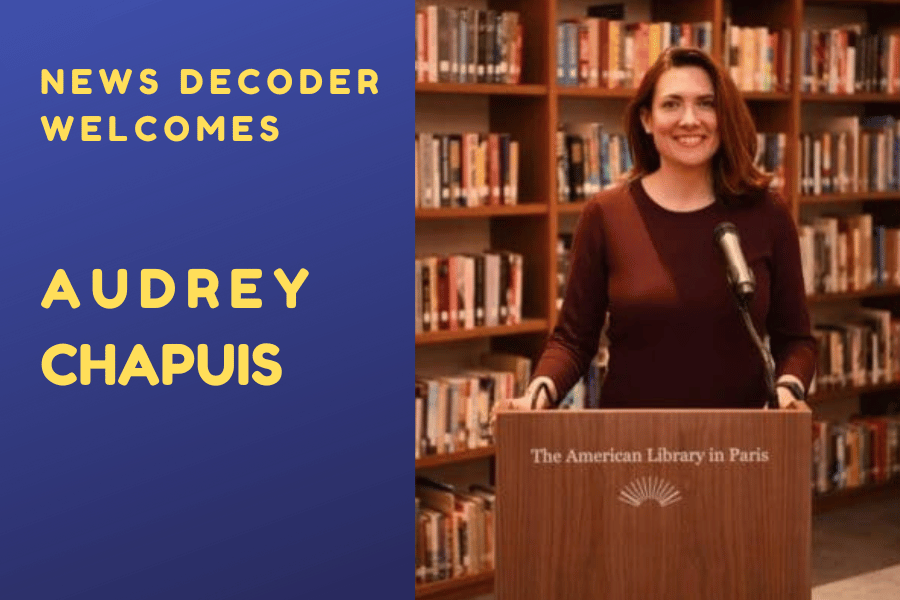
Our new board member wants to foster the insatiable curiosity we all have, whether through a book pulled off a shelf or a digital site like News Decoder. Audrey Chapuis giving a talk at the American Library of Paris. (Credit: Krystal Kenney) Ask Audrey Chapuis what...
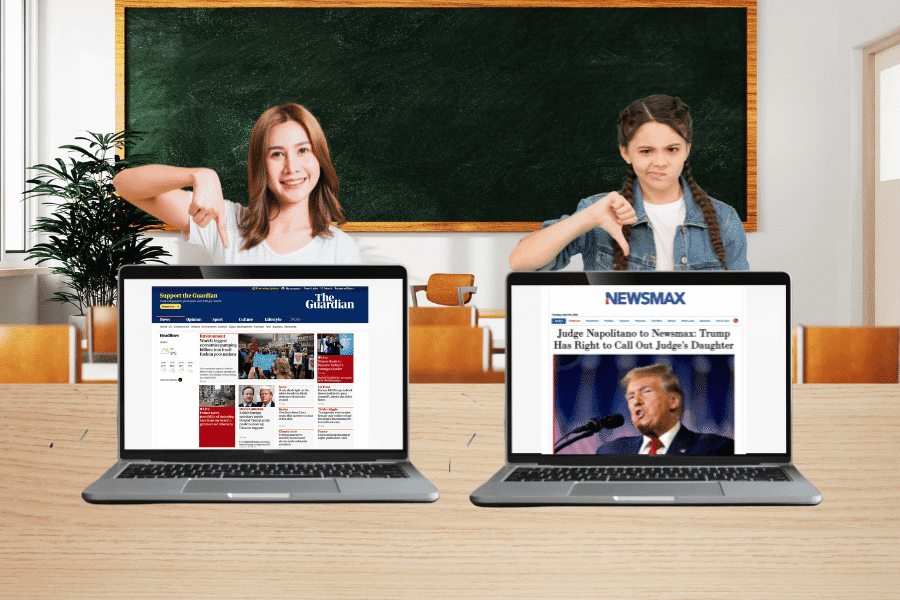
News and media literacy groups are calling on Europe to include journalism in media literacy education. Students need to know how to spot news they can trust. A teen points to a site that can be trusted while another gives a different site a thumbs down. Illustration...
Young people engage with the news in its many, diverse forms but they can’t always trust its reliability or may not verify sources. It is vital that young people be able to discern between real news and fake, verified trustworthy sources and polemic, propaganda or clickbait. In this piece, Aralynn Abare McMane talks to news and media literacy groups and explores why they are calling for Europe to include journalism in media literacy education.
Exercise: In order to better understand the wider issues surrounding media literacy, ask students to choose one of the organizations or projects mentioned in the article. They should undertake independent research into what they do. In groups, they can look into their chosen organization or project and prepare a short presentation summarizing what they do and the key issues they address. They should then reflect on why this organization exists, what problem it solves and how its objectives help students like them in the real world.