
Latin dance is popular worldwide. And whether they lead or follow, people find salsa can build community and improve their health.
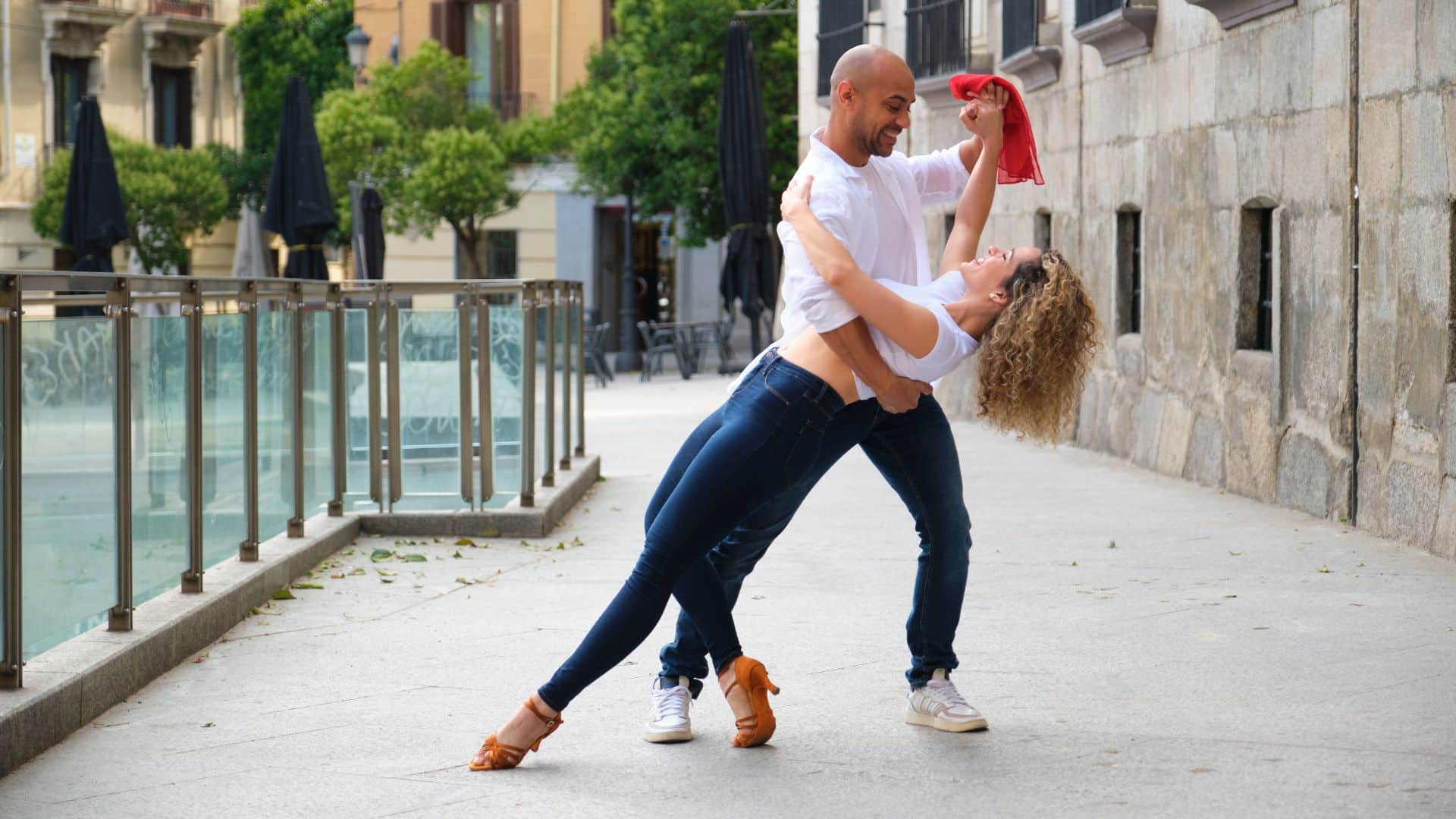
A man and woman practice salsa dancing. (Photo by edwardolive from Getty Images Pro)
To Dayani Waas, Cuban salsa dancing was a key that could unlock a door. The music felt intuitive to her body.
“Something about the sounds, instruments and songs made me come alive in ways other music hadn’t,” Waas said.
A passionate Dominican dance teacher helped open that door for Waas, who lives in San Francisco. “The way she taught and shared the significance of the dance made me really grow to love it,” Waas said.
A memorable teacher is also a community builder. On the other side of the United States in suburban New Jersey, Paula Principe has spread a love of salsa and Latin dancing in the former dance desert outside of New York City. She traded a budding professional dance career to foster what turned out to be desperately-needed post-pandemic community through Salsa at the Shore.
“People came up to me and told me ‘You’re saving people’ — people who were lonely, just divorced, or looking for friends,” Principe said.
Dancing your cares away
According to a 2023 systematic review in BMC Public Health, social connectedness is a benefit of Latin dancing and is protective against poor mental health outcomes, such as depression and anxiety.
When anxiety, stressful memories or a bad day force energy to get stuck in Waas’s body, she goes out dancing. “It feels like all that energy moves in a really intentional way, and I can give it back to the Earth,” she said.
During Principe’s weekly dance lessons and events that she hosts at local bars and restaurants, there is no cell phone in sight.
“Everyone is in the moment. [Dancing] is an excuse to touch and look at each other. It’s an appropriate form of intimacy,” she said.
Cuban salsa, also known as casino or just salsa, is partner dancing that involves a leader and a follower. Laura Fraser, who dances throughout the San Francisco Bay Area and in Mexico, affirms that for many dancers, it is important to be touched.
“It is lovely to have a temporary connection with leaders,” Fraser said.
Lead and follow
Always a strong leader in other aspects of her life, Fraser wanted to learn to partner dance to be more receptive.
“Over the years, I’ve learned to be a good follower, which is learning how to connect with someone else’s energy,” she said.
One type of Cuban salsa is rueda, in which pairs form a circle and do synchronized moves, swapping partners and directed by one leader or “caller.”
Ryan Mead, co-founder of Rueda Con Ritmo in California, touts the benefits of this dynamic community experience. “In a way, it’s more powerful than one-on-one partner dancing. It’s non-competitive and collaborative,” he said.
Along with feeling more connected with herself and others, Fraser said she appreciates the connection with the Earth that Cuban salsa provides.
Cuban dance and music originated from the Yoruba spiritual traditions of enslaved West African people. “A lot of the moves come from various orishas (deities) that express our energy through nature,” Fraser said. “If you’re dancing to Oshun, you’re dancing like water.”
The gentler, more intuitive movements in Cuban salsa saved her knees when she was injured doing more high-impact dancing. Now, at 65, there’s no better activity for her as she ages.
“Having to remember choreography challenges my brain,” she said.
Health benefits of dance
There is evidence that Latin dancing, such as salsa, reduces the risk of joint injuries by promoting flexibility and range of motion. In people who dance long-term and regularly, there also is a reduced risk of heart attack-related death by up to 50% and improved cognitive function and neuroplasticity.
“There aren’t so many ways at this age that I’m going to get so sweaty my hair is wet,” she said. “Particularly Cuban salsa dancing, which doesn’t require wearing high-heeled shoes, is something you can dance forever.”
Joining or even starting one’s own dance community does not have to be daunting. The dancers and founders I spoke with all agree that having fun is most important. Principe advises going with the intention of making friends, getting out of your comfort zone and learning something.
Participating in classes can help one study the steps and music. Waas advises to “tap into how the music is moving you more than specific and formal counts.”
She also emphasized the importance of feeling connected with one’s body first, before connecting with another person or even the ground.
“Connect with how your hips, legs and shoulders move. Connect with your heartbeat and breath,” she said.
Dance communities
Hosting free classes can be a way to mobilize an active community of dancers. That’s how Principe started at a local gym and was able to build her base through consistency and word-of-mouth.
Dance communities have a way of spreading organically. Principe, Fraser and Mead all collaborated with established dance teachers in their locales in the U.S., Cuba, and Mexico. The community Principe founded has inspired newer ones to crop up and fill gaps for other types of Latin dance.
Three years since Salsa at the Shore’s inception, Principe noticed that people continue to seek out her community on their own, and promotion is hardly needed. Dancers will even brave blizzard conditions to get in their dose of dancing.
Mead emphasized how salsa creates a third space people need that’s not home or work.
“I read once that humans are a combination of chimpanzees and bees,” he said. “We mostly stay in our little groups. But we are also driven to seek out huge, communal experiences.”
Contemporary Latin music is increasingly returning to its roots and featuring timeless salsa rhythms that are inspiring a desire for newer generations to learn how to dance. According to Spotify, global streaming of salsa music has increased by more than 40% in the past five years, with listeners doubling in the United States alone.
“Because of political reasons, Cuban dance and music don’t get the attention they deserve,” Mead said, “I encourage people to look it up because it’s so rich. Not just salsa, but mambo, cha-cha-cha, and conga also.”
Waas has experienced how salsa brings people together from all over the world. “There’s a joyful nature to it that we can experience even in really hard times,” she said.
Questions to consider:
1. How can dance build community?
2. In what way is dance healthy?
3. What activities do you participate in that brings you together with other people outside your home?

Angelica Recierdo is a health writer, poet and former nurse from the United States. She is a fellow in Journalism and Health Impact at the University of Toronto, Dalla Lana School of Public Health.