News Decoder’s EYES project pilots a new curriculum to inspire teachers and engage students in a deep dive into climate change in schools. A teacher discusses climate change with students. (Illustration by News Decoder) Secondary school students in Bahir Dar,...
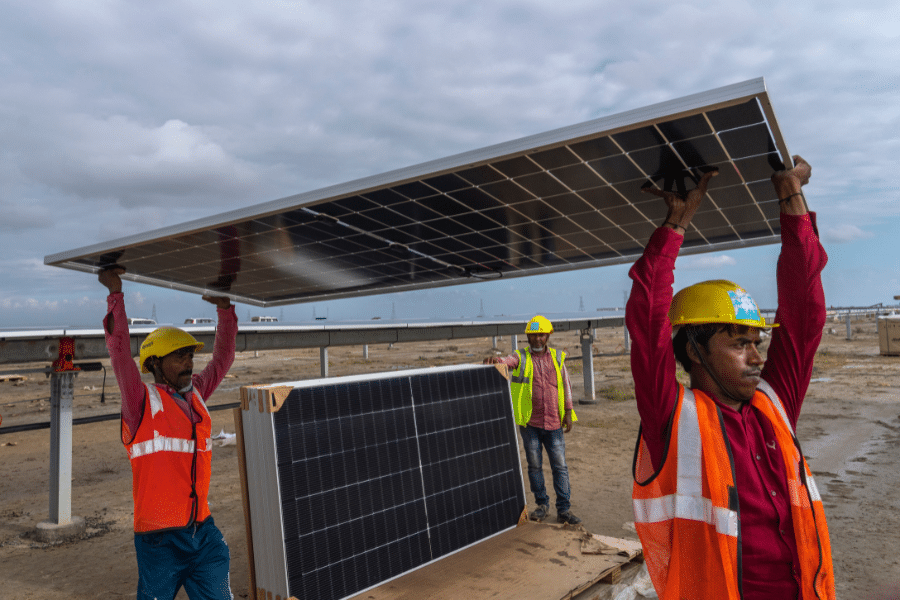
Meeting a growing energy demand can go hand-in-hand with the green transition. This is what India could show the world. Workers carry a solar panel for installation at the under-construction Adani Green Energy Limited’s Renewable Energy Park in Gujarat, India,...
India’s position as a growing global economic leader, a leading producer of renewable energy and as a large consumer of energy puts it at the center of the debate on climate-friendly energy transition. Preety Sharma looks at how if India successfully manages the move towards greener energies, it will serve as a model for low and middle-income countries as they develop economically while striving to meet climate goals.
Exercise: Individually, or in groups, students put their research skills to the test. Use the following questions as a guide to finding out more about this topic.
What is energy transition? How does it relate to the UN SDGs? What energies should we transition to and what are the issues surrounding using each of these? What would a ‘model for low and middle-income countries’ look like?
Find examples of countries that have grown and managed energy transition well.
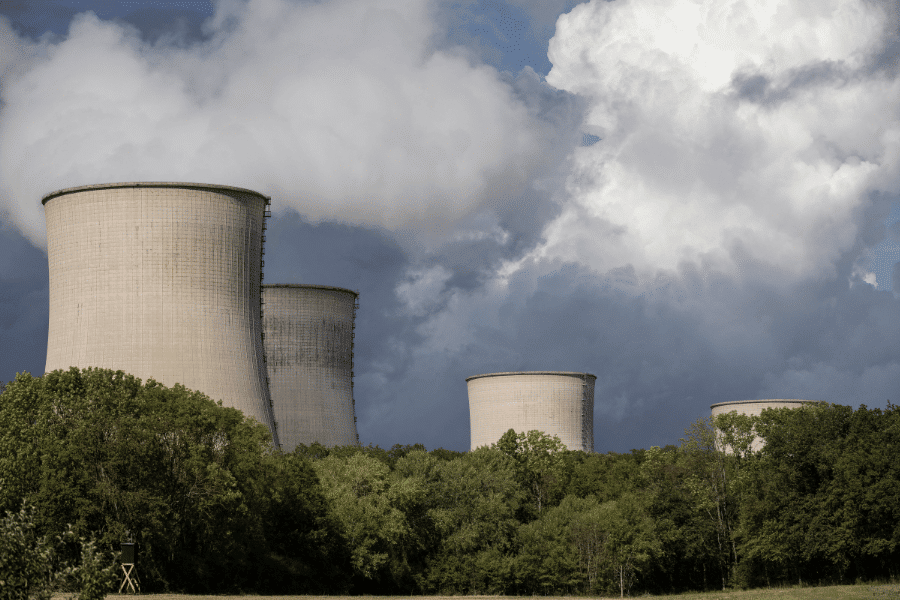
The fear of another Chernobyl makes nuclear energy bad for politics. But with Europe struggling to reduce carbon, is it good for the environment? The Cattenom Nuclear Power Plant in Cattenom, France, 8 September 2022. (AP Photo/Jean-Francois Badias) This...
News Decoder again partners with the Climate Academy to help students tell climate change stories and teachers to incorporate climate change into their classes. A globe in a classroom. (Photo by vitranc for Getty Images) Climate change may be the existential crisis of...
A heat pump isn’t nearly as sexy as an electric BMW or a floating wind turbine. But on an individual level, it might make a big difference. Flowers grow next to a heat pump installed at a residential house. (Photo by one pony/Getty Images) This article was...