
Despair sets in when we think a problem is too overwhelming to solve. But difficult isn’t the same as impossible.
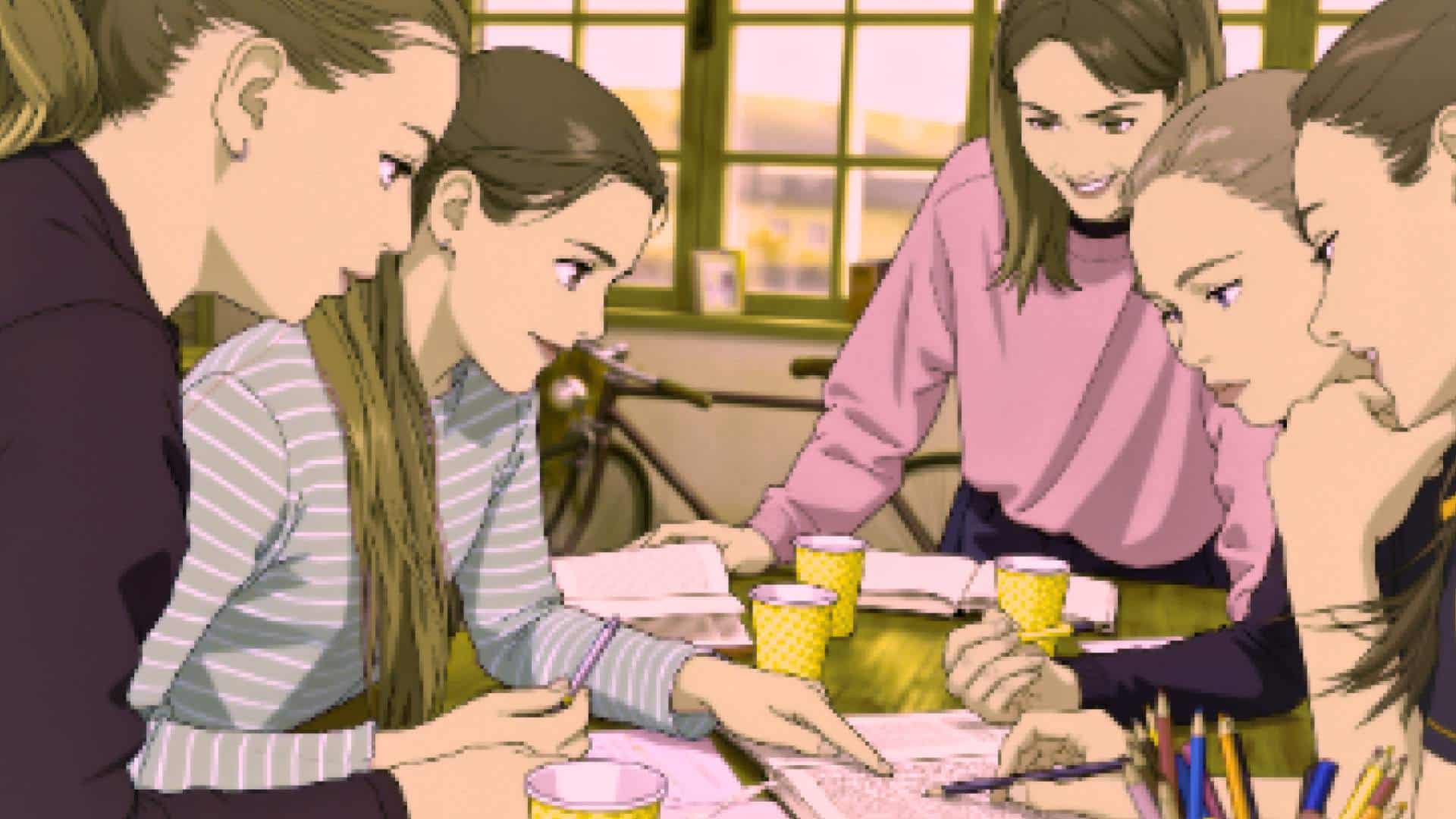
A group of teens work on a problem together. (Illustration by News Decoder)
Doesn’t it seem as if the world gets more complicated every day? It is difficult to keep track of all the global calamities, let alone make sense of them.
When News Decoder came into being 10 years ago, it was to combat one thing: the problem of too much news and information in a world of constant streaming and posting and too little context and understanding of what all this news and information means. News Decoder Founder Nelson Graves called this a “knowledge gap.”
But 10 years on, this gap is even more difficult to close. That’s because the problems have metastasized and each one seems more unsolvable — climate change, disease, hunger, genocide, racial hatred, homelessness, mass unemployment. How can you work to solve each problem when they are all interconnected? The result is widespread despair caused by the belief that these problems are unsolvable.
We need an antidote to this despair.
It is no longer enough to close the knowledge gap. We need to bust the myth that problems are unsolvable, when really they are just overwhelming. And they are overwhelming because too often the news and information young people get focuses on obstacles to solutions — the inability of governments and organizations to work together, and politicians who prioritize winning elections at all cost. Too often, media focuses on the same problems in the same places so young people don’t see the solutions that can be found in places media ignore.
Determination, not despair
Once young people see problems as solvable, they can find the energy to work towards those solutions. That’s why solutions journalism has become a cornerstone of our educational mission.
We teach students to apply a critical, curious lens to the media and the world around them — continually questioning, taking nothing at face value. And at the same time we show them how to find the solutions and the people working on those solutions all over the world. In doing so they might just see that the problem in their community that seemed unsolvable is being tackled elsewhere and those solutions can be applied back home.
Consider the story we published on Monday by University of Toronto Fellow Natasha Yu Chia Hu. In looking at the overwhelming and connected problems of food insecurity, poverty, obesity and diabetes she focused on a program New York City has launched to make the foods young people get in school healthier, and how other places around the world are tackling the problems in similar ways.
At News Decoder, students don’t just read about these solutions, they seek out the stories themselves. In the United States, student Aiden Huber explored the problem of food deserts. In Switzerland, Liv Egli explored the disconnect between environmentally-minded consumers and the beef they eat. In France, Clover Choi looked at the connection between war and food shortages.
And they engage in thoughtful conversations on these topics with experts and with their peers in other countries through our school-to-school cross-border webinars and our Decoder Dialogues.
From disempowerment to agency
By encouraging global perspectives and enabling cross-continental exchange, by nurturing their voices and giving them a platform to communicate with global audiences, we transform young people’s sense of disempowerment into agency.
Going into our second decade, News Decoder wants to do this in more ways.
We want to meet educators where they are and within their real-world constraints and opportunities to help them implement experiential learning and AI-resilient methodologies. This means more than listening; it means an active partnership.
We want to expand our reach to enable as many educators and young people as possible to benefit from our approach and build a truly diverse global community.
We intend to find new ways to diversify our network of correspondents, emphasising those in Global South nations to enable us to explore solutions in places the mainstream media ignores. And we want to create new ways for young people, journalists and experts to connect across borders — through live virtual roundtables and in-person workshops.
Working together across borders
In a world where so many laudable nonprofit organizations are vying for funds, we need to forge partnerships with like-minded organizations and share our knowledge and expertise in ways that benefit everyone working in the field.
At News Decoder, we keep our mission foremost: Informing, connecting and empowering young people to be engaged citizens and changemakers locally, nationally and globally. We need funds to do that, but fundraising isn’t our mission. Where we can work with other organisations to fulfill our mission and where we can share our resources towards that purpose, we will.
We have been doing this all along. With the University of Toronto we take on journalists-in-training and give them a platform to report on important, complicated issues. With The Environment and Human Rights Academy at the European School of Brussels II, we created a teaching curriculum for climate change that educators can implement in their classes, complemented by a 3-day in-person teacher training workshop. With Prisa Media of Spain and some seven other organizations, we joined WePod, a cross-border project to support the growth and sustainability of the European podcasting ecosystem. And with Mobile Stories in Sweden, we helped create open-access resources — video tutorials, articles and educators’ guides — to help young people report and write trustworthy news stories grounded in ethical practice.
All this is part of our desire to create a global community of young people who refuse to be discouraged by news and who instead use news to drill down into problems to identify solutions and work towards those solutions — whether that means pushing their government representatives to pass laws, voting out representatives who foment division, pressuring corporations to change their ways or using social media to rally the people around them to fight for change.
Moving forward, we’re making our educational experiences accessible to more young people by expanding open-access materials and creating public engagement forums. We’ll continue to adapt our classroom work to individual school needs while prioritizing communities where we can make the greatest difference: under-resourced or under-represented groups.
Together, as a global community, we can fight the despair that comes with the myth that problems are too overwhelming to solve.
Anyone who has worked with young people knows this: When they are inspired and energized, it is hard for anyone to stand in their way.
When young people believe problems are solvable, they act. Your gift can give them the encouragement, skills and platform to do so. On this Giving Tuesday, please consider a donation and help turn understanding into action.
And to everyone who has already given so generously — thank you. Everything we do is made possible by you.