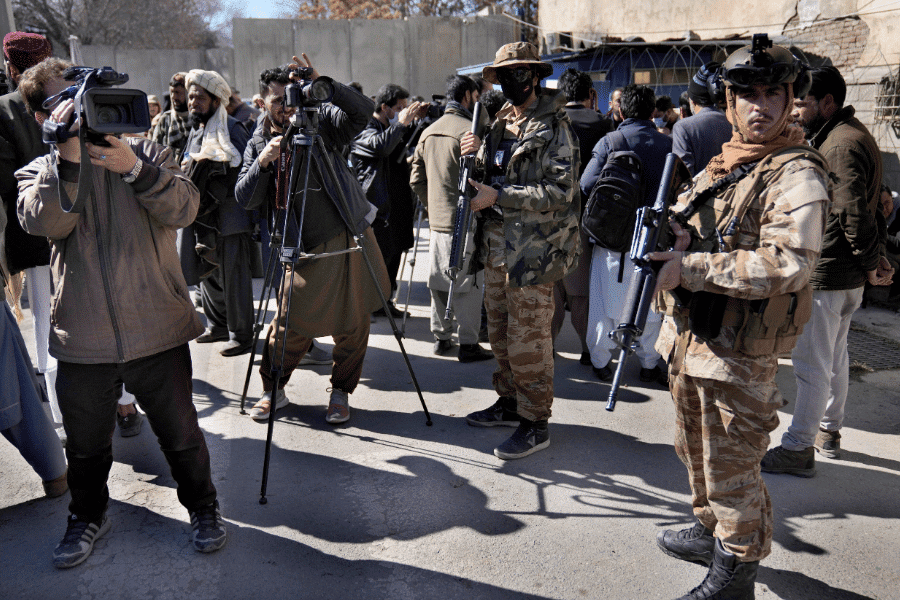
May 3 will mark World Press Freedom Day, reminding us that despite the important work journalists do, in many places it is difficult for them to do that job. Afghan cameramen cover a protest against U.S. President Joe Biden in Kabul, Afghanistan, 15 February 2022. (AP...
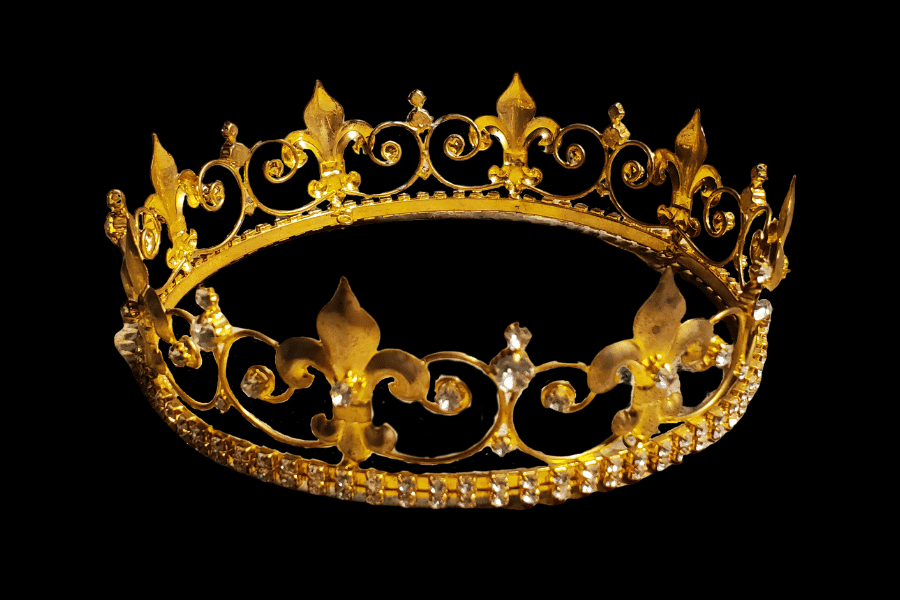
There are tales in history of common folk becoming supreme rulers. How difficult is that to do? This article was produced exclusively for News Decoder’s global news service. It is through articles like this that News Decoder strives to provide context to complex...
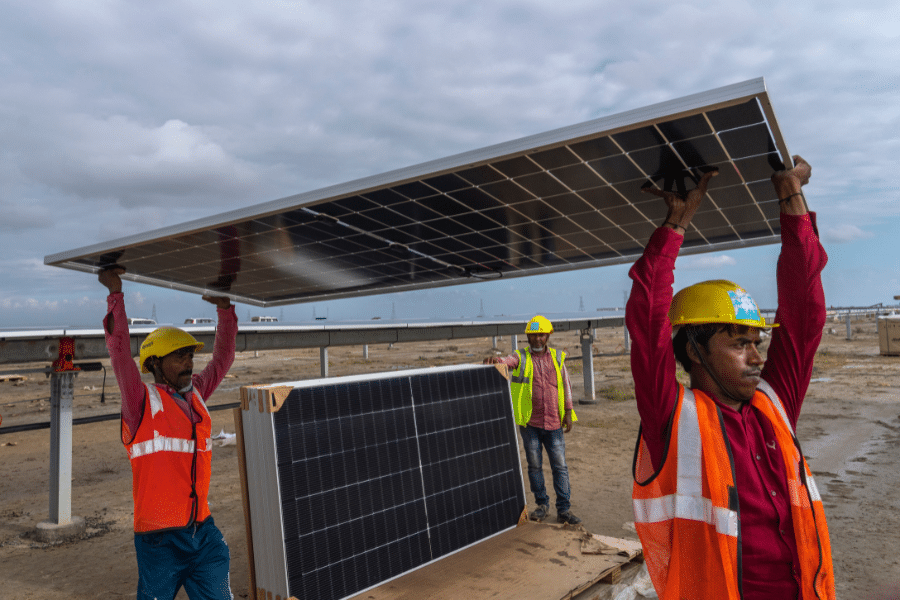
Meeting a growing energy demand can go hand-in-hand with the green transition. This is what India could show the world. Workers carry a solar panel for installation at the under-construction Adani Green Energy Limited’s Renewable Energy Park in Gujarat, India,...
India’s position as a growing global economic leader, a leading producer of renewable energy and as a large consumer of energy puts it at the center of the debate on climate-friendly energy transition. Preety Sharma looks at how if India successfully manages the move towards greener energies, it will serve as a model for low and middle-income countries as they develop economically while striving to meet climate goals.
Exercise: Individually, or in groups, students put their research skills to the test. Use the following questions as a guide to finding out more about this topic.
What is energy transition? How does it relate to the UN SDGs? What energies should we transition to and what are the issues surrounding using each of these? What would a ‘model for low and middle-income countries’ look like?
Find examples of countries that have grown and managed energy transition well.
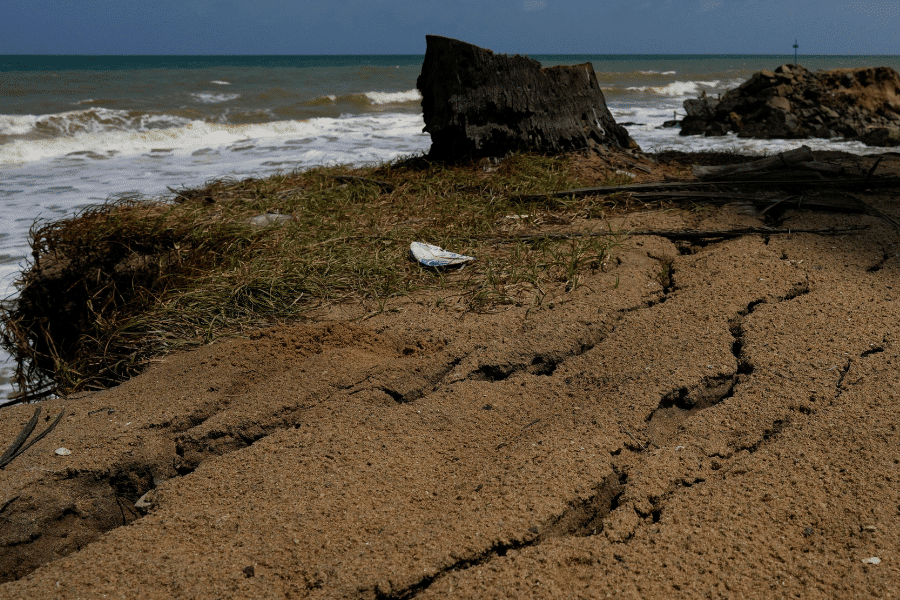
Sri Lanka is trying to do its part to combat climate change. But it will take a sea change to stop the ocean rising around the island nation. Cracks are visible from coastal erosion on sea shore in Iranawila, Sri Lanka, 19 June 2023. (AP Photo/Eranga Jayawardena )...
The upcoming election pits employment against the environment. Meanwhile China and the United States wait to see whether the new president will look east or west. Indonesian presidential candidate Prabowo Subianto, right, and his running mate Gibran Rakabuming Raka,...
India and Pakistan — both nuclear powers — have fought three wars over Kashmir. But neither will yield in one of the world’s intractable conflicts. Zero Bridge in Srinagar Kashmir. (Credit: P. Kijsanayothin for Getty Images Signature) Editor’s note: On 11...
This Decoder Replay by Ammar Nainar is an excellent complement to history lesson plans about decolonization and the Partition of India in 1947. How does the past continue to inform the present in ways that matter?
Exercise: Read the article with your history class after students learn about the Partition of India in 1947. Discuss how decisions made in the 1940s continue to affect people living in India and Pakistan to this day. What throughlines can students draw between past and present? Then, divide students into groups of 3-4. Each group will come up with a resolution to the dispute in Kashmir. Resolutions should consider: Who gets control of Kashmir? Which countries should be involved in negotiations? How feasible is Kashmiri independence?
Massive industrial complexes for nickel mining have transformed an Indonesian island long home to fishing villages and school children. Workers walk near excavators to gather soil containing nickel ore at PT Virtue Dragon Nickel Industry, a nickel processing complex...
Understanding nuance and context is a critical skill to develop in young people. In this photo essay from guest writer Garry Lotulung, students learn about the impact of the green transition on local communities in Indonesia, where nickel is mined to produce batteries for electric cars. Globally, transitioning to renewable energy is a positive — what’s the impact for Indonesians on the ground?
Exercise: In groups of 2-3, students will engage in a See-Think-Wonder activity with the photos in the article’s gallery. Each group will focus on a different photo, logging first what they see in the image, what they think is happening and what they wonder about after examining the image. The see stage develops students’ observation skills and focuses on gathering information without making interpretations. The think stage helps students develop critical thinking by interpreting and coming to conclusions using visual evidence in the photo. The wonder stage prompts inquiry and intellectual curiosity. After the See-Think-Wonder activity, read the article as a class.
More than one million people traveled to India in a one-year period for medical treatment. They came for the hospitals in Delhi not the beaches of Goa. Postcard from a hypothetical medical tourist in India. Illustration by News Decoder. Even as a majority of Indians...
Around the world, people are calling for the Taliban’s acts against women to be considered apartheid. Is how the world determines inequality itself unequal? Afghan women walk through the old market as a Taliban fighter stands guard in downtown Kabul,...
Six years after Rohingya fled genocide in Myanmar, a million are still living in a state of legal limbo in Bangladesh. The world seems not to care. Rohingya camps in Bangladesh. Photo by Norma Hilton. This article was produced exclusively for News Decoder’s global...