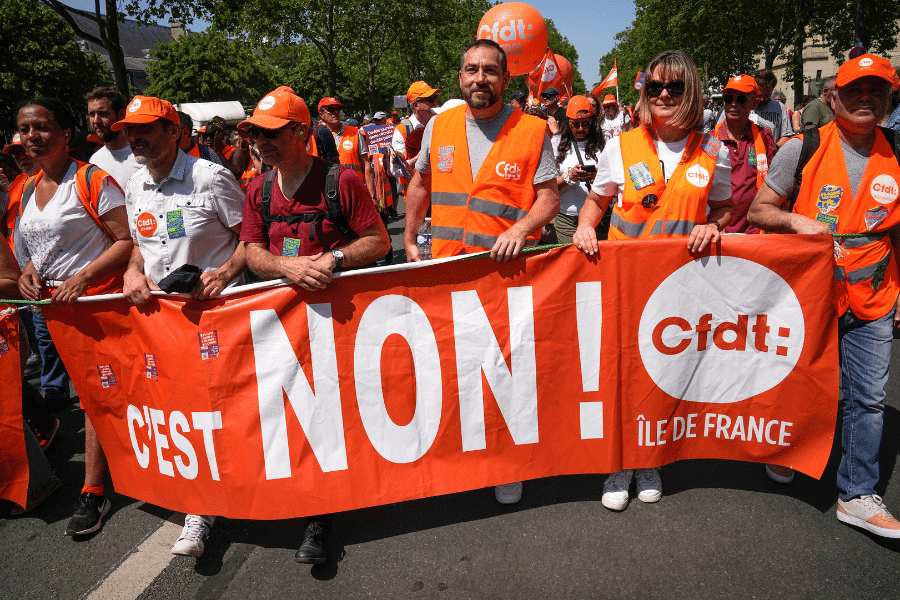
When you think of France, you might picture sitting at a café. But taking to the streets to air grievances is as French as Beaujolais. Protesters in Rennes, France march over pension reforms and more, April 2023. (Photo credit: Clover Choi) This article, by high...
We asked our reporters in five countries to talk to young people about the European elections. They know their voice matters. A European ballot box against the backdrop of European Union flags. (Illustration by News Decoder) The 720-member European Parliament is the...
We asked our reporters in five countries to talk to young people about the European elections. The ensuing Wh-Y Vote? series sheds light on how young people across the European Union feel about voting in European elections. What influence do they believe the EU has on their lives? What are the issues driving them to or from polling stations? Why are young people voting or not voting?
Exercise: Students read the article and give feedback on the main issues described in each country. Then, choose to focus on one of the five countries mentioned. Use the links below the article to read the full piece on youth voting in your chosen country. In groups, summarize the main issues that were highlighted and discuss them. Now, together in your country groups, make a campaign poster mobilizing young people to vote in the European elections. Use the articles to help focus the campaign, and visit official EU websites to find more information on why young people should vote.
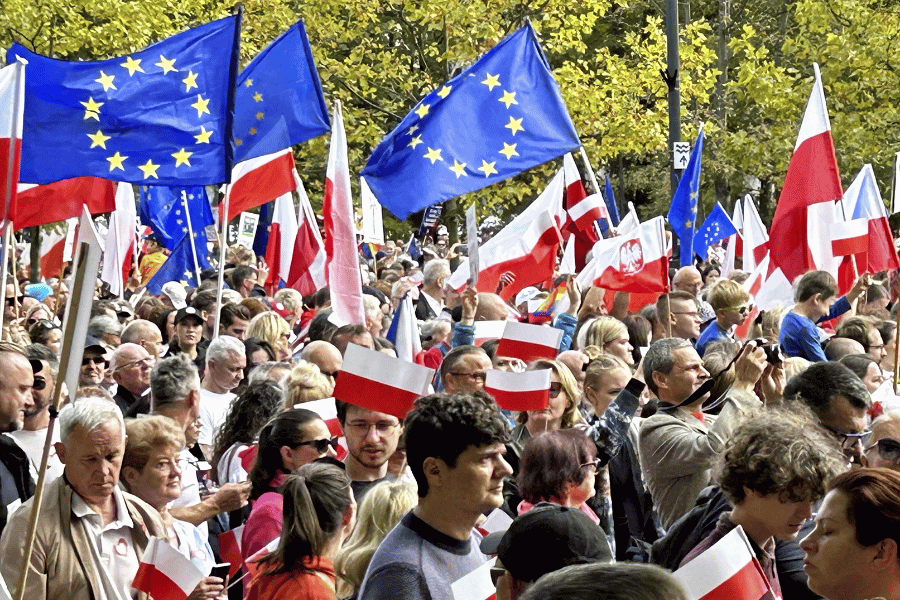
Young people in Poland know that European integration is important. But they struggle to connect to political bodies that seem far away. People wave both European and Polish flags at a rally conducted by opposition party ahead of the general election in Warsaw, Poland...
Hungary’s current government distances itself from the European Union. But young people share a different mindset. A government billboard reading “Let’s not dance to their tune” is seen with portraits of Open Society Foundation Chair Alex Soros...
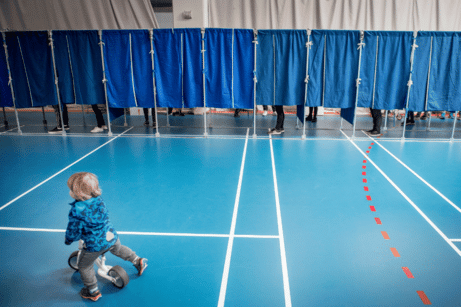
With fjords dying and seas rising, Danish youth will go to the polls knowing the nation’s problems are transnational. People vote at the Groendal Center in Copenhagen during the European Parliament elections in 2019. (AP Photo/Mads Claus Rasmussen/Ritzau...
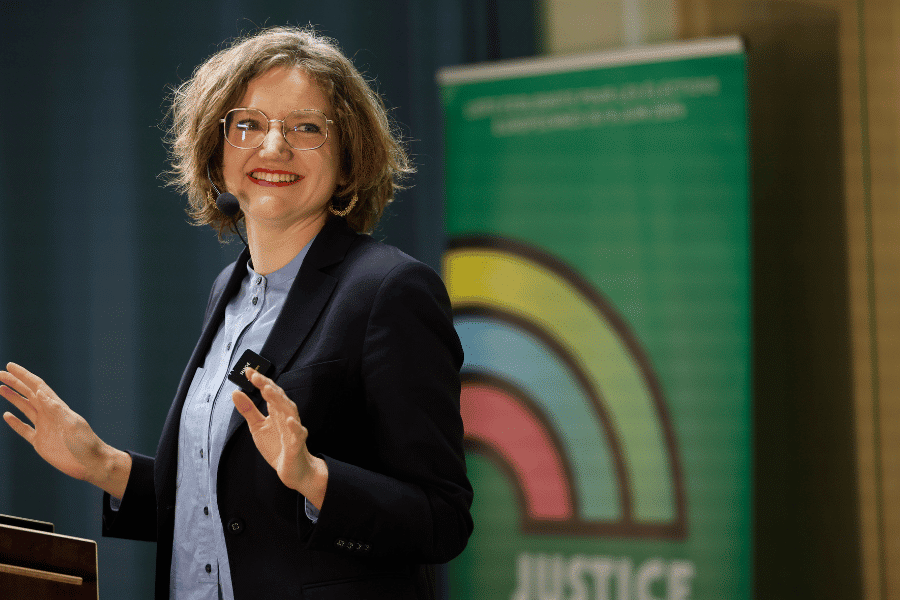
Freedom to travel across borders comes with EU citizenship. But will la jeunesse travel across town to vote as Europeans? French Green Party candidate for the European Elections Marie Toussaint speaks during a campaign rally in Strasbourg, France, 25 April 2024. The...
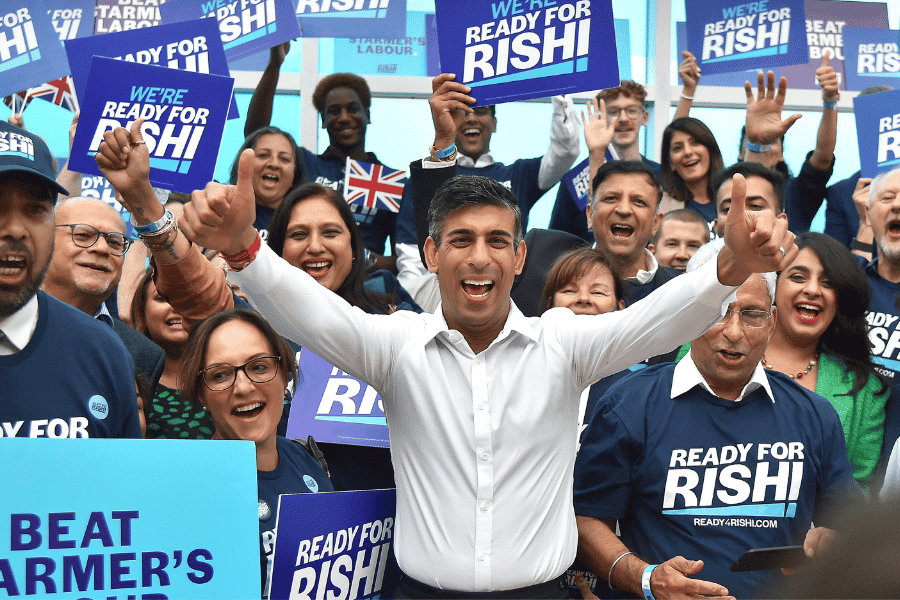
Brexit upended British politics. We look at the chaos that gave Rishi Sunak the office of prime minister as British voters decide whether to let him stay there. Rishi Sunak meets supporters as he arrives to attend a Conservative Party leadership election event in...
The world’s attention is on Gaza. But Israel’s neighbors worry about their own stability as they fear the chaos will spread. Saudi Arabia’s Foreign Minister Faisal bin Farhan Al Saud attends a meeting with U.S. Secretary of State Antony Blinken and...
The world’s attention is on Gaza. But Israel’s neighbors worry about their own stability as they fear the chaos will spread. News Decoder correspondent Alistair Lyon decodes the conflict’s effects on the region.
Exercise: Use the article as a starting point to understanding conflict and the effects of conflict on neighboring nations. Divide the students into groups. Each group represents a country in or bordering the conflict of your choice. Get students to research the root causes of the conflicts and the effects on their given country. Hold a crisis meeting in which each group voices its concerns about the conflict. Present and debate.
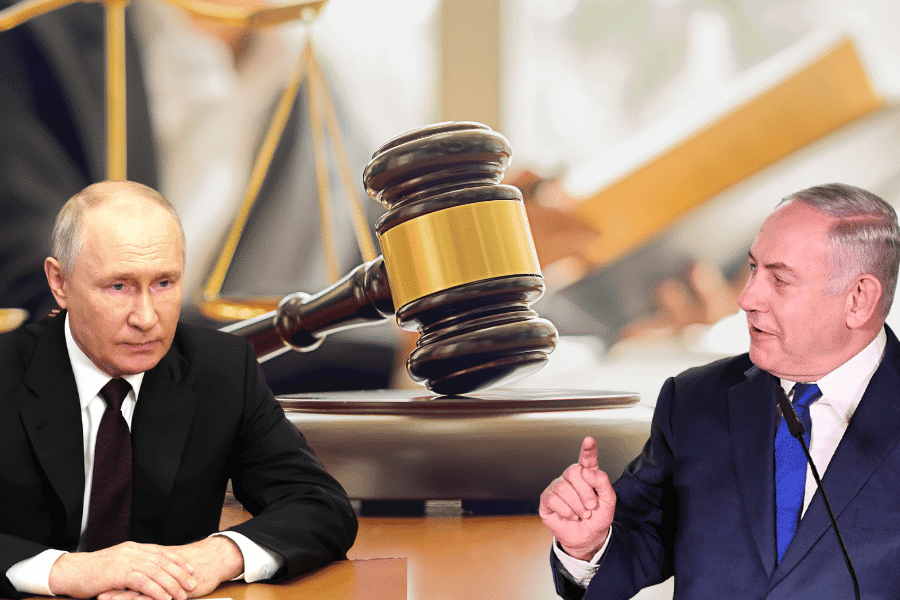
The rule of law applies when enemies commit crimes. For national allies, the same crime isn’t necessarily a crime. Vladimir Putin and Benjamin Netanyahu against a backdrop of a court. (Illustration by News Decoder) Is there a rule of law for the United States...
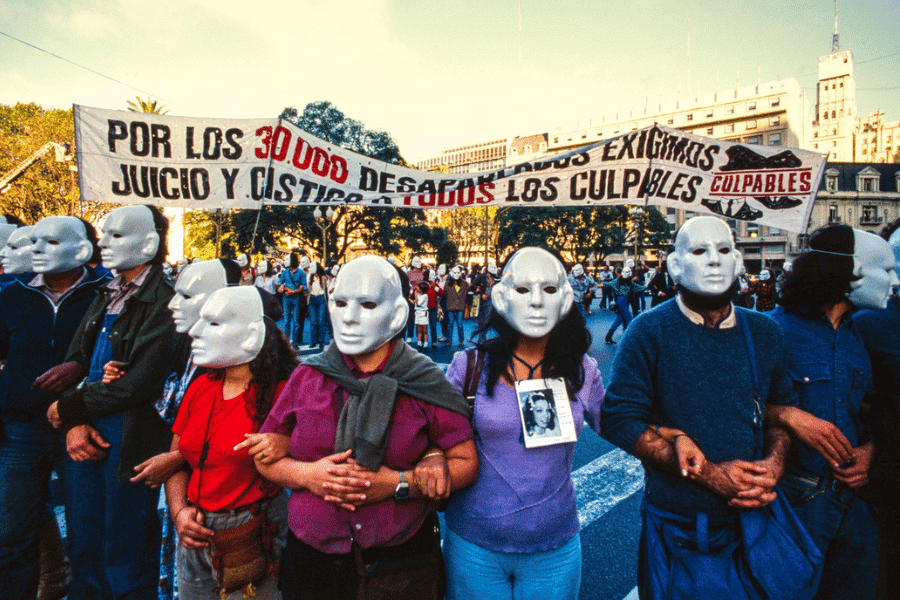
Photojournalist Enrique Shore captured the work of a commission investigating the disappearance of tens of thousands of Argentine dissidents. Human rights protesters wearing white masks representing the disappeared march in silence in Buenos Aires in 1985. (Credit:...
Photos tell stories. Sometimes they speak louder decades on. Photojournalist Enrique Shore spent time capturing the work of a commission investigating the disappearance of tens of thousands of Argentine dissidents. We take a look at his exhibition, ‘Evidence’, in photos that are as relevant now as ever.
Exercise: Choose an iconic photo or a photo that you like of a current or historic event. What does it represent? Why is it important? Why do you like or dislike the photo? What themes does it deal with? Why is it an important photo? Finish by discussing the difference between writers and photographers. Is how they report on events different? Which role would you prefer?